Vanway Precision Materials Tech Co.,Ltd


Next-Gen Data Center Cooling: Why Custom Extruded Aluminum Heat Sinks Win
Extruded Aluminum Heat Sinks Solving 500W+ TDP Thermal Challenges
Table of Contents
The High-TDP Challenge: Why Advanced Custom Extruded Aluminum Heat Sinks Are Data Center Game-Changers
The explosion of AI, machine learning, and cloud computing has pushed chip Thermal Design Power (TDP) past 500W to over 1000W per socket, creating severe thermal management challenges.
A recent peak workload event at a major cloud provider illustrates the danger: high-density GPU racks overheated within minutes, triggering thermal throttling that slashed processing speeds by 40%. Simultaneously, auxiliary fans ran at maximum capacity, driving up Power Usage Effectiveness (PUE) and risking severe server downtime.
While liquid cooling overhauls offer high performance, their extreme capital costs and complex plumbing remain major barriers. Consequently, air cooling is evolving rather than disappearing. Custom aluminum profile heat sinks have emerged as the ideal solution, delivering the perfect balance of high thermal conductivity, structural integrity, and cost efficiency to keep modern data centers cool and operational.
Cheap Aluminum Extrusions from China?China vs. Local Aluminum Extrusion Suppliers
Why Aluminum Profiles Dominate High-TDP Thermal Management
Engineers face a tough balancing act: maximizing heat dissipation while keeping rack weights and costs manageable. While pure copper offers strong brute-force cooling, its extreme weight and cost make it impractical at scale.
A mid-sized data center learned this firsthand when prototyping all-copper heat sinks for 700W GPUs. The heavy copper blocks caused severe motherboard sagging, exceeded rack chassis weight limits, and blew through their hardware budget.
Specialized aluminum profile alloys solve these challenges. High-conductivity alloys like 6063-T6 and 1070 approach copper’s thermal performance at a fraction of the weight, protecting sensitive PCBs. Additionally, mass-produced extruded aluminum significantly outperforms both copper and CNC-machined aluminum in cost-to-performance ratio, making it the premier choice for scalable, high-TDP cooling.
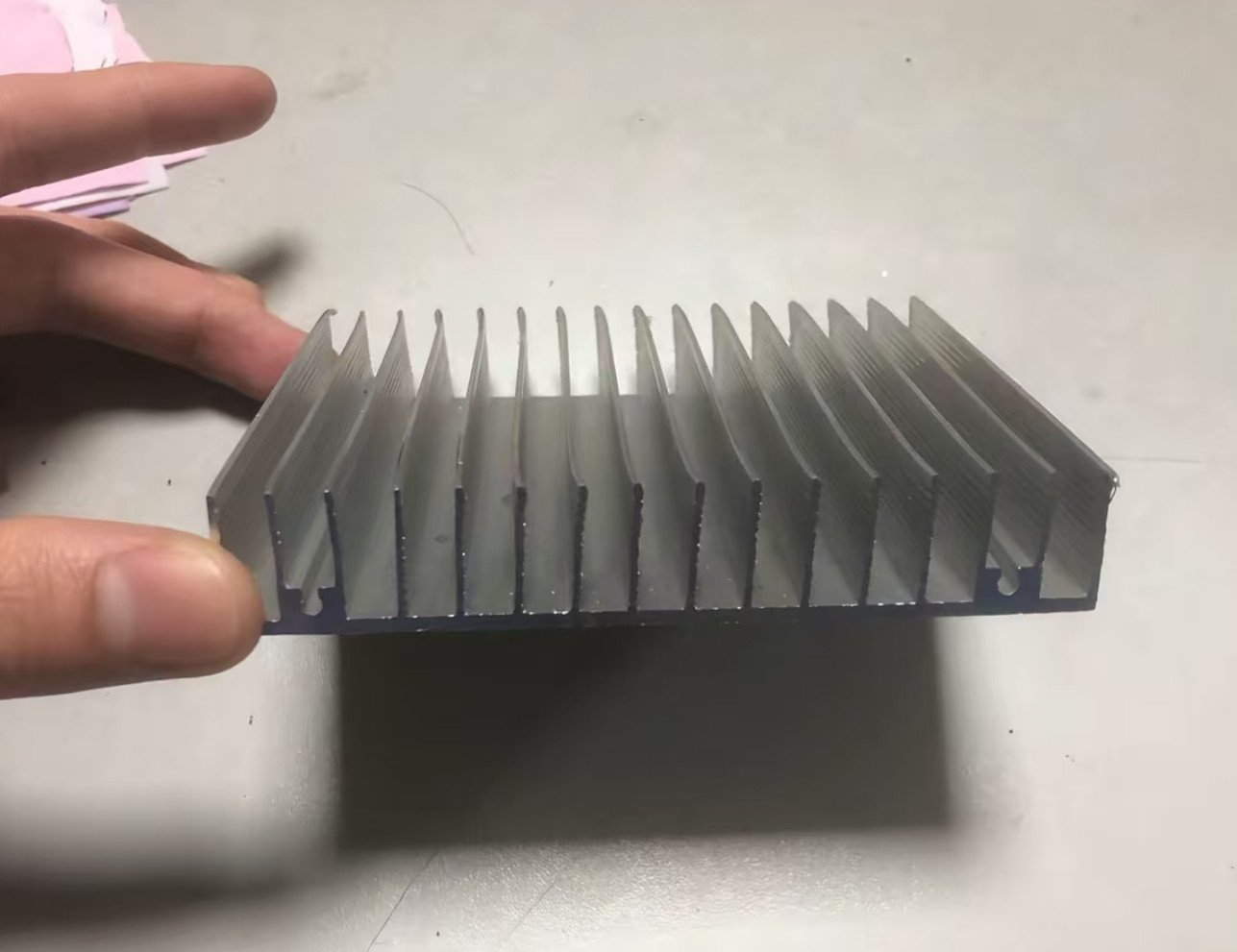
Aluminum vs Copper Heat Sinks: Which Material Is Best for Electronics Cooling?
How to Design Extruded Aluminum Heat Sinks for Your Thermal Management
In the modern electronics industry, controlling heat build-up represents one of the greatest challenges to product reliability. As microprocessors and power modules become smaller, they generate extreme heat that can easily destroy sensitive circuits. To solve this issue, engineers must understand how to design aluminum heat sinks for your thermal management to keep devices running safely.
Vanway Tech brings years of production experience to this guide, helping you transform raw thermal calculations into highly efficient cooling components. By definition, an extruded heat sink uses extended surfaces, or fins, to sweep heat away from a concentrated source and release it into the surrounding air. Consequently, careful attention to structural design ensures that your product achieves peak performance without suffering from thermal throttling.

How to Design Aluminum Heat Sinks for Thermal Management
DFM Engineering Benchmark
Practical Example: Industrial Extruded Aluminum Heat Sink Profile
Demonstrating how thermal geometry seamlessly translates into a mass-producible extrusion design. Vanway Tech custom-engineers heat sink profiles optimized for thermal impedance, mechanical rigidity, and cost-effective production.
Alloy & Temper
6063-T5
High Extrudability
Profile Width
120 mm
Max Surface Area
Fin Height
35 mm
Enhanced Convection
Fin Thickness / Pitch
1.5 / 4.0 mm
Airflow Balance
Surface Finish
Black Anodized
10–15 μm Layer
Design Rationale & Optimization Insights:
- Surface Area vs. Profile Size: The 120 mm width paired with a 35 mm fin height maximizes heat dissipation without creating an excessively bulky enclosure footprint.
- Airflow & Mold Feasibility: The 1.5 mm fin thickness and 4.0 mm pitch establish a precise equilibrium between forced/natural airflow convection, structural fin strength, and aluminum extrusion die longevity.
- Material & Surface Treatment: Utilizing 6063-T5 alloy ensures superior thermal conductivity and extrudability. The matte Black Anodized finish significantly boosts thermal emissivity while offering robust corrosion protection.
Have a Custom Heat Sink Design or Thermal Target?
Heat sink performance relies on total profile synergy—including base thickness, fin ratios, airflow, and mounting interfaces. Send us your CAD drawings for a free DFM review.
Related Vanway Tech’s Extruded Aluminum Heat Sinks For Thermal Management as Below:
Black Anodized Aluminum Heat Sink for 12V LED Module
Custom 50mm Cylindrical Aluminum LED Heat Sink
Extruded Aluminum Heat Sink Profile for 12mm LED Strip
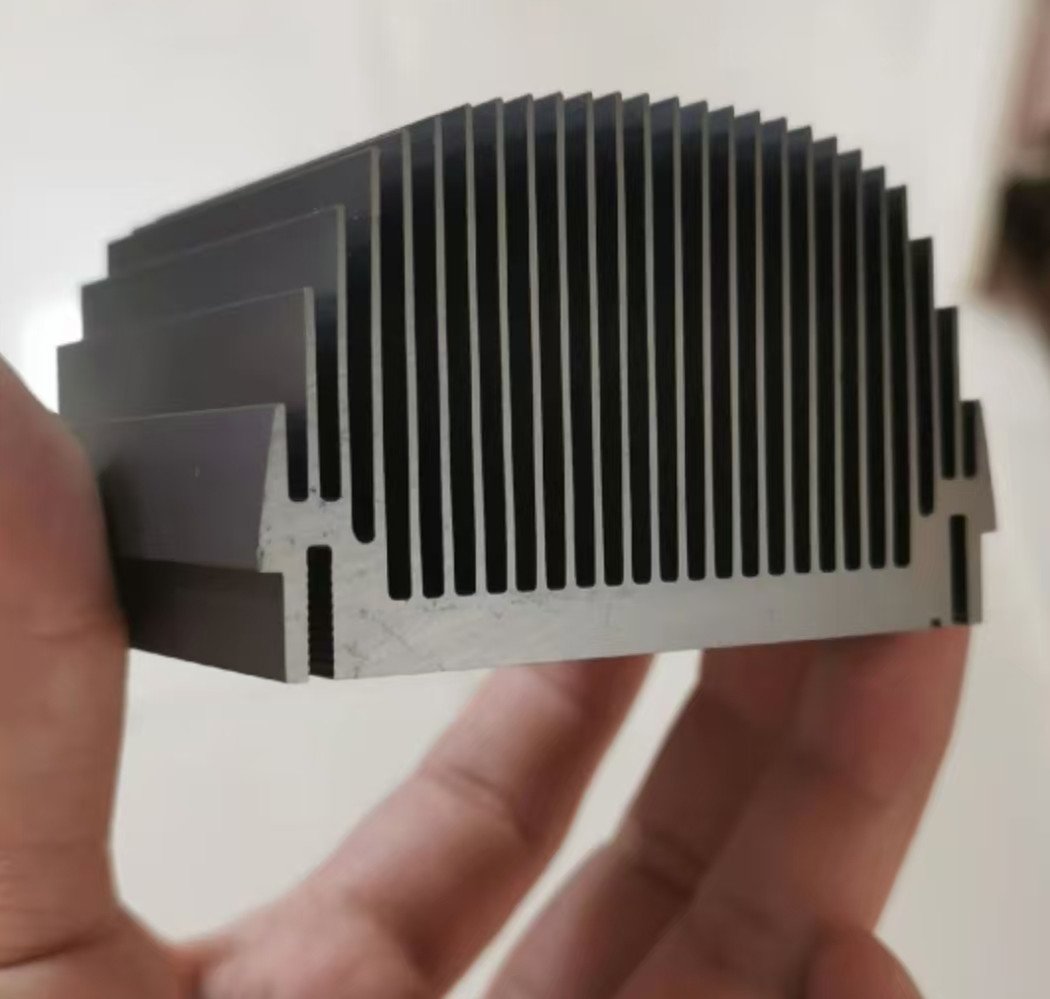
I. Core Thermal Principles Vanway Tech Considers Before Aluminum Heat Sink Design
Before our engineers draw a single line in CAD software, Vanway Tech always evaluates the foundational physics of heat transfer. If you do not establish these parameters early, you risk creating a heat sink that is either too weak or unnecessarily heavy. To stay aligned with international cooling benchmarks, our team routinely reviews the thermal testing methodologies established by the IEEE Components, Packaging and Manufacturing Technology Society.
Understanding Heat Transfer Modes in Electronic Cooling
Conduction: Moving Heat from the Source to the Aluminum Base
Thermal management starts with conduction, where heat moves directly through solid materials. Specifically, the heat source passes thermal energy into the flat base plate of the aluminum heat sink. Vanway Tech ensures that the contact surface remains perfectly flat because even tiny air gaps will block heat flow.
Convection: Dissipating Heat from Fins to the Surrounding Air
Once the heat travels into the base, convection takes over to carry that energy away. The metal surfaces transfer the heat to the passing air molecules, which float away from the system. Therefore, you must design a massive amount of surface area to make this fluid-to-metal exchange effective.
Radiation: The Role of Surface Finishes in Thermal Release
Although conduction and convection do most of the heavy lifting, radiation also assists in cooling, especially in natural airflow environments. Vanway Tech utilizes specific chemical finishes to enhance this effect, which allows the aluminum to radiate infrared energy directly into the environment.
Defining Your Thermal Resistance and Power Dissipation Targets
To start your design layout, you must first calculate the total power dissipation, which engineers measure in Watts. Additionally, you need to establish the maximum safe operating temperature of your semiconductor. By subtracting the ambient room temperature from this maximum target, Vanway Tech calculates the required thermal resistance of your heat sink. A lower thermal resistance rating means the heat sink removes heat faster, which represents the primary goal of any custom cooling project.
Watch the following video to gain a better understanding of the concept of thermal power management.
II. Step-by-Step Fin Geometry Optimization for Maximum Efficiency
Optimizing the geometry of your cooling fins represents the most critical stage of the entire design process. Vanway Tech carefully balances the height, thickness, and spacing of these fins because small changes drastically alter airflow behavior.
Determining the Ideal Fin Height and Thickness
Balancing Thermal Performance and Structural Rigidity
Taller fins naturally provide more surface area for cooling, but they also create manufacturing difficulties. If you make the fins too tall and thin, they can bend during production or become inefficient near the tips. Therefore, Vanway Tech calculates the precise height-to-thickness ratio to ensure maximum thermal efficiency while maintaining structural strength.
Calculating the Optimum Fin Spacing (Pitch)
Avoiding Airflow Resistance in Natural Convection Designs
If your system relies on natural convection without fans, you must space the fins relatively far apart. Tight spacing blocks natural air currents because stagnant air gets trapped between the walls. Consequently, Vanway Tech maintains wider gaps in passive designs so that hot air can rise freely and escape.
Maximizing Surface Area for Forced Convection Systems
On the other hand, if your system includes a powerful fan, you can pack the fins much closer together. Forced air easily cuts through narrow gaps, which allows us to crowd more surface area into a smaller physical footprint.
Selecting the Right Base Plate Thickness to Prevent Hotspots
Many designers focus entirely on the fins and forget about the thickness of the base plate. If you make the base too thin, the heat cannot spread sideways before it reaches the fins, which creates dangerous hotspots directly above the chip. Vanway Tech engineers a sufficiently thick base plate to spread the thermal energy evenly across all available fins.
DFM Engineering Quick Reference
Aluminum Heat Sink Design & Optimization Decision Matrix
A quick guide to balancing thermal performance, airflow resistance, structural rigidity, and extrusion feasibility for industrial enclosures.
| Design Parameter | Natural Convection (Passive) | Forced Convection (Active Fan) | Vanway Tech DFM Optimization Rule |
|---|---|---|---|
| Fin Spacing (Pitch) Airflow & Boundary Layer |
Wider Pitch (4.0 – 8.0+ mm) Prevents air stagnation; allows natural buoyancy-driven thermal currents to rise freely without drag. |
Narrow / Dense Pitch (1.5 – 3.0 mm) Forced airflow penetrates narrow channels, maximizing surface density within a compact footprint. | Match pitch to system airflow velocity. Passive designs below 3.0 mm pitch risk severe thermal stagnation. |
| Fin Height & Aspect Ratio Surface Area vs. Rigidity |
Moderate Height Relies on natural draft; overly tall fins add flow resistance without proportional thermal gain. |
Taller Fins (High Aspect Ratio) Dramatically increases dissipation surface area to utilize high static-pressure fan airflow. | Maintain fin height-to-thickness ratio ≤ 10:1 to 15:1 for standard extrusion to prevent fin bending and tip inefficiency. |
| Fin Thickness Structural Strength & Flow |
Thicker Fins (1.5 – 2.5 mm) Ensures structural stiffness and efficient heat conduction from base root to fin tip. |
Thinner Fins (1.0 – 1.8 mm) Reduces weight and enables tighter fin packing for maximum heat dissipation per volume. | Avoid excessively thin fins (<1.0 mm) on tall profiles to prevent deformation during extrusion, anodizing, or assembly. |
| Base Plate Thickness Lateral Heat Spreading |
Thicker Base (≥1.5× Fin Base) Spreads concentrated heat laterally across all fins before natural convection carries it away. |
Optimized Base Plate Balances lateral thermal spreading resistance with forced convection efficiency to avoid extra weight. | Base plate thickness must be sufficient to eliminate high heat-flux hotspots directly above chips/IGBTs. |
Key Engineering Design Principles:
- Prevent Base Hotspots: Never under-spec base thickness; a thin base plate causes severe thermal bottlenecks, leaving outer fins underutilized.
- Observe Aspect Ratio Limits: Extreme fin height-to-thickness ratios (>15:1) increase extrusion pressure, die wear, and unit costs.
- Match Cooling Mode to Geometry: Passive systems require wide spacing to allow warm air to escape, whereas active systems leverage tight fin packing for compact performance.
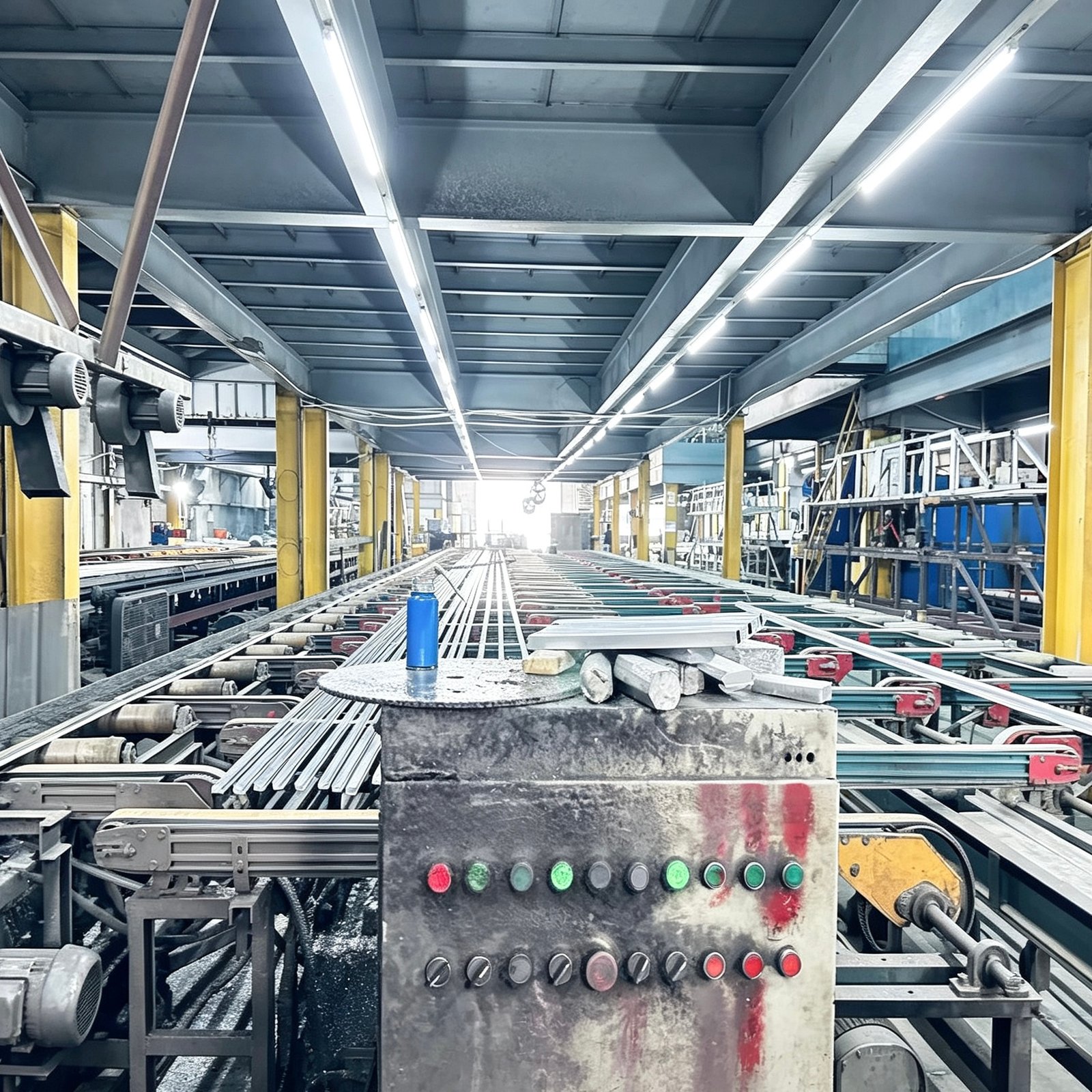
III. Material Selection: Choosing the Perfect Aluminum Alloy
Material choice heavily influences how fast your component conducts heat, as well as how easily a manufacturer can extrude the profile. While copper carries heat faster, Vanway Tech prefers aluminum alloys due to their incredible weight advantages and superb structural properties.
Why Vanway Tech Recommends 6063 and 6061 Aluminum Alloys For Heat Sinks Extrusion?
Thermal Conductivity Comparisons for Optimal Heat Extraction
For the vast majority of thermal projects, Vanway Tech utilizes 6063 aluminum alloy. This specific metal features a high thermal conductivity rating of roughly 200W/M.K, which makes it ideal for fast heat extraction.
| Property | 6063-T5 | 6063-T6 | 6061-T6 |
|---|---|---|---|
| Thermal Conductivity | ~200 W/m·K | ~200 W/m·K | ~167 W/m·K |
| Density | ~2.70 g/cm³ | ~2.70 g/cm³ | ~2.70 g/cm³ |
| Extrudability | Excellent | Excellent | Good |
| Machinability | Good | Good | Excellent |
| Typical Heat Sink Use | High | High | Moderate |
According to the official material standards published by The Aluminum Association, both 6063 and 6061 alloys provide the structural integrity required for industrial enclosures while maintaining highly predictable thermal properties. However, if your project demands extreme mechanical strength or structural load-bearing capabilities, we suggest 6061 alloy instead…
Machining and Mechanical Strength Trade-offs
While 6063 extrudes into incredibly smooth finishes with ultra-thin fins, 6061 responds better to complex CNC drilling and tapping. By evaluating your structural requirements alongside your thermal targets, Vanway Tech helps you select the perfect compromise between raw cooling power and physical durability.
Related Articals You May Interested In:
How to Choose the Right Alloy and Temper for Your Aluminum Extrusion Profile Project
Aluminum vs Copper Heat Sinks: Which Material Is Best for Electronics Cooling?
How to Choose the Right Surface Finishing for Aluminum Profiles?
IV. Designing for Manufacturability (DFM) in Extruded Aluminum Extrusion Heat Sinks
An amazing theoretical design means nothing if a factory cannot actually manufacture the part. For that reason, Vanway Tech applies strict Design for Manufacturability (DFM) rules to ensure your profile remains cost-effective and easy to extrude.
Understanding the Extrusion Aspect Ratio (Fin-to-Gap Ratio)
How High Aspect Ratios Impact Tooling Wear and Die Life
The aspect ratio represents the relationship between the height of a fin and the gap between two fins. Standard extrusion presses struggle when this ratio exceeds $10:1$ because the immense pressure can snap the steel tongues off the extrusion die. While the Aluminum Extruders Council
provides standard guidelines for classic profile geometry, Vanway Tech utilizes advanced tooling designs and heavy-duty presses to push past these traditional limits. Consequently, we routinely achieve advanced aspect ratios up to $24:1$ or higher, which allows for exceptionally dense fin structures.
Critical Extrusion Tolerances and Flatness Requirements
Why Interface Flatness Prevents Air Gaps and Thermal Resistance
As raw aluminum exits the hot die, the metal can warp slightly during the cooling process. Because a curved base plate creates terrible thermal resistance, Vanway Tech implements precise face-milling steps. We use high-speed CNC machines to shave the base perfectly flat, which guarantees seamless contact with your electronic components.
Incorporating Assembly Features Directly into the Profile
Designing Built-in Screw Slots, Clips, and Interlocking Joints
One of the greatest benefits of the extrusion process involves adding functional features directly into the metal shape. Vanway Tech can integrate screw bosses, slide-in slots, and clip attachments directly into your profile. As a result, you eliminate the need to drill extra holes later, which drastically lowers your overall assembly labor costs.
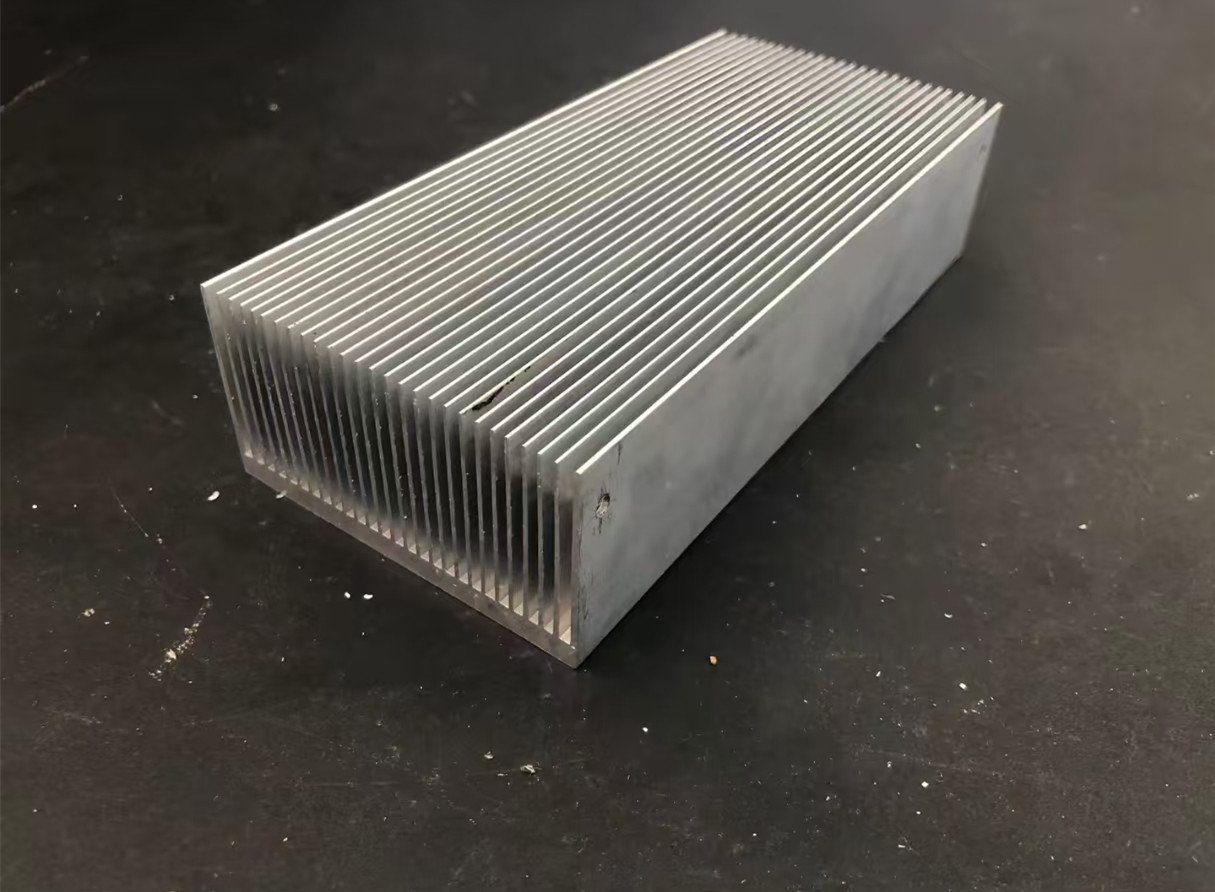
Aluminum Extrusion Processing Capability – Vanway Tech
V. FAQs Of Extruded Aluminum Heat Sinks
Q1. Which aluminum alloy is best for an extruded heat sink?
A: 6063 is widely used for extruded aluminum heat sinks because it offers good thermal conductivity, excellent extrudability, and the ability to produce complex fin geometries. 6061 can be considered when higher mechanical strength or machining performance is more important. Vanway Tech can recommend the appropriate alloy and temper based on your thermal, mechanical, and manufacturing requirements.
Q2. Can Vanway Tech manufacture a custom aluminum heat sink from my CAD drawing?
A: Yes. Vanway Tech can manufacture custom extruded aluminum heat sinks based on customer CAD drawings or technical specifications. Our engineering team can review fin geometry, wall thickness, base thickness, mounting features, and extrusion feasibility during the DFM stage before tooling and production.
Q3. What fin thickness and height can you manufacture?
A: The achievable fin thickness and height depend on the alloy, profile width, extrusion ratio, fin geometry, and tooling design. For example, Vanway Tech has produced representative heat sink designs with 1.5 mm fin thickness and 35 mm fin height. Final dimensions are confirmed during engineering review to ensure both thermal performance and reliable extrusion production.
Q4. What surface finishes are available for aluminum heat sinks?
A: Vanway Tech offers surface treatments including natural anodizing, black anodizing, and powder coating, depending on the application. Black anodizing can increase surface emissivity and may improve radiative heat transfer in certain natural-convection applications, while anodizing also provides additional surface protection. The appropriate finish should be selected according to the operating environment and thermal requirements.
Q5. Can you CNC machine aluminum heat sinks after extrusion?
A: Yes. Secondary CNC machining can be performed after extrusion to add mounting holes, slots, tapped holes, cutouts, and other application-specific features. This allows the extruded profile to be optimized for high-volume production while maintaining the mechanical interfaces required for assembly.
Q6. Can Vanway Tech provide heat sink prototypes before mass production?
A: Yes. Prototype production can be arranged before mass production so that customers can verify profile dimensions, mounting compatibility, surface finish, and overall design. Where required, the prototype stage can also be used to identify extrusion or machining issues and optimize the design before final tooling and larger-volume production.
Q7. What information do I need to provide for a custom aluminum heat sink quotation?
A: For an accurate quotation, it is helpful to provide your CAD drawing or dimensional drawing, required alloy and temper, profile dimensions, heat load, cooling method, surface finish, machining requirements, required length, estimated order quantity, and target application. If the thermal requirements are not fully defined, Vanway Tech can review the available information and identify the key parameters that need to be confirmed.
Q8. Why should I choose a custom extruded aluminum heat sink instead of a standard profile?
A: A custom extrusion can be designed around the actual heat load, available installation space, airflow conditions, mounting points, and required cooling surface area of your equipment. Compared with modifying a standard profile, a purpose-designed extrusion can reduce unnecessary material, simplify assembly, and provide a better balance between thermal performance and production cost for medium- and high-volume applications.
VI. Why Partner with Vanway Tech for Your Custom Thermal Designs
Vanway-Tech丨 Premium Quality Extruded Aluminum Heat Sinks Manufacturer and Exporter From China Since 2015
Vanway Tech Heat Sink Manufacturing Capabilities
Vanway Tech provides custom extruded aluminum heat sink solutions for industrial electronics, power electronics, LED systems, telecommunications equipment, and other thermal management applications. Our manufacturing process covers aluminum extrusion, secondary CNC machining, surface treatment, prototyping, tooling, and dimensional inspection.
| Capability | Vanway Tech Specification |
|---|---|
| Aluminum Alloys | 6063-T5 / 6063-T6 / 6061-T6 / 6005A |
| Extrusion | Custom aluminum heat sink profiles |
| Fin Thickness | 1.00-3.00mm |
| Fin Height | 20-50mm |
| Maximum Profile Width | Not Larger Than 300mm |
| CNC Machining | Milling / drilling / tapping |
| Surface Treatment | Anodizing / black anodizing / powder coating |
| Machining Tolerance | ±0.05 mm |
| Custom Tooling | Available |
| Quality Control | Dimensional inspection / surface inspection |
*Actual fin thickness and fin height depend on profile geometry, alloy, extrusion ratio, tooling design, and production requirements. Final specifications are confirmed during engineering and DFM review.
When you choose Vanway Tech, you gain a dedicated manufacturing partner who understands the intricate balance between thermal theory and factory floor reality. We do not just look at your drawings; instead, our engineering team actively optimizes your designs to reduce weight, boost thermal performance, and lower manufacturing costs.

Vanway Tech houses advanced extrusion lines, precision CNC machining centers, and automated anodizing stations under a single roof. Because we control every single step of production, we eliminate supplier delays and guarantee exceptional quality from prototype to mass production.
V. Heat Sink Selection & DFM Inquiry Checklist
To help our engineering team calculate precise thermal resistance (Rth) and deliver an accurate quotation within 24 hours, please review and provide the following critical design parameters:
1. Thermal Environment Specs
Target Heat Load & Airflow
- Maximum TDP Wattage (W)
- Max Allowable Junction Temp (Tj max)
- Cooling Mode: Natural Convection or Forced Air (CFM)
- Ambient Temperature Limit (°C)
2. Dimensional Constraints
Enclosure & Footprint Limits
- Maximum Length × Width × Height Envelope
- Base Plate Thickness Requirement
- Fin Height and Maximum Aspect Ratio Limit
- Mounting Hole / Thread Specifications
3. Post-CNC & Surface Finish
Machining & Protection
- Base Flatness Tolerance (e.g., ±0.02 mm)
- Surface Finish: Matte Anodize / Clear Coating
- Thermal Interface Material (TIM) Application
- 2D/3D Files (STEP, IGES, or DWG Format)
VI. Manufacturing Process Comparison: Extrusion vs. CNC vs. Die Casting
Selecting the right manufacturing technology depends on your production volume, fin density, and thermal dissipation requirements:
| Feature / Method | Aluminum Extrusion | Full CNC Machining | Die Casting |
|---|---|---|---|
| Thermal Conductivity | High (~200 W/m·K, 6063 Alloy) | Very High (Block Alloy) | Moderate (~100 W/m·K, ADC12) |
| Tooling Cost & NRE | Low ($800 – $2,500) | Zero Tooling Fee | High ($8,000 – $25,000+) |
| Unit Cost (Mass Production) | Lowest (Optimal for B2B Scale) | High (Due to Machining Time) | Low to Moderate |
| Geometric Complexity | 2D Profile Extrusion + CNC | Unlimited 3D Geometries | Complex 3D Enclosures |
VII. Quality Assurance, Testing & Thermal Validation Protocol
Vanway Tech enforces strict in-house quality control from raw aluminum billet to final shipment to prevent thermal failure or assembly defects:
1. Thermal & Material Audit
Spectrometer & CFD Testing
Optical Emission Spectrometry verifies alloy composition (6063/6061) prior to extrusion, accompanied by CFD thermal resistance modeling.
2. Precision Dimensional QC
CMM & Laser Scanning
Full CMM measurement guarantees base flatness within ±0.02 mm and confirms profile fin pitch tolerances according to EN 755-9 standards.
3. Coating & Reliability Test
Salt Spray & Thickness Gauge
Anodizing film thickness (ISO 7599) and 48-hour ASTM B117 salt spray testing ensure long-term corrosion resistance in harsh industrial environments.
VIII. Cost Factors: Understanding Custom Heat Sink Quotations
Transparent pricing is central to our engineering partnership. The unit quotation for a custom extruded heat sink is determined by four core cost variables:
1. Alloy Weight & Raw Material Index
Aluminum Ingot Market Price
Material cost directly scales with profile cross-sectional weight. Optimizing fin thickness without sacrificing heat dissipation minimizes total aluminum weight per piece.
2. Fin Aspect Ratio & Tooling Maintenance
Extrusion Pressure & Die Wear
Ratios exceeding 15:1 require specialized high-strength die steel and slower extrusion press speeds, slightly increasing extrusion processing fees.
3. Post-Extrusion Secondary CNC Machining
Cycle Time for Holes, Fly-Cutting & Tapping
Complex mounting hole patterns, counterboring, or fly-cutting for ultra-flat contact bases (±0.02 mm) add CNC machine run-time.
4. Surface Finish & Export Packaging
Anodizing Micron Rating & Custom Crate Protection
Thicker anodizing layers (20+ μm) or specialized protective interleaving/fumigated wooden crates for ultra-long profiles affect final unit costs.

The Ultimate B2B Buyer’s Guide to Sourcing Extruded Aluminum Heat Sinks in [2026]
🛠️ Ready to Upgrade Your High-TDP Thermal Performance?
Don’t let heat limit your server’s true potential. Whether you are prototyping a 500W+ GPU cooler or scaling mass production for modern data center racks, our engineering team is here to help you get the best cost-to-performance ratio.
Have a design ready? 📩 [Send Us Your Drawings & Get a Free Quote]
Our team will respond within 24 hours with a thermal manufacturability review and a factory-direct price.


Contact With Vanway Tech Team for Premium Aluminium Extrusion Products!
Enquire with UsConnect with Vanway Tech Team for Premium Aluminium Extrusion Products.
Contact InfoWe are looking forward to hearing from you!
-
Email: info@vanway-tech.com
-
Address: No. 588, Wuyi South Road, CSJ Moldware Town, Wujin, Changzhou, Jiangsu, China
Scan Below Codes to Contact Us Immediately.