Vanway Precision Materials Tech Co.,Ltd


The Ultimate B2B Buyer’s Guide to Sourcing Extruded Aluminum Heat Sinks in [2026]
Five Key Factors to Choose Quality Extruded Aluminum Heat Sink Suppliers | Vanway Tech
Table of Contents
Selecting reliable custom extruded aluminum heat sink suppliers is important for maintaining consistent thermal performance, dimensional fit, and production quality in electronic cooling applications.
For global B2B buyers, supplier evaluation should go beyond unit price. Key factors include the specified aluminum alloy and temper, material traceability, extrusion accuracy, heat sink geometry, secondary machining, quality inspection, and production capacity.
These factors can affect how consistently an extruded aluminum heat sink performs and fits the final assembly.
For importers, electronic engineers, and wholesale buyers, this guide explains the key criteria for evaluating an extruded aluminum heat sink manufacturer. It also covers what you should verify before ordering custom aluminum heat sinks, including material documentation, dimensional requirements, customization capability, and quality control.
As a custom aluminum heat sink manufacturer, Vanway Tech uses these criteria to support B2B buyers evaluating aluminum extrusion heat sink projects and custom production requirements.
| Feature / Standard | What You Should Verify | Supplier Capability to Look For |
|---|---|---|
| Material & Alloy | Specified alloy, temper, chemical composition, and material records | Documented 6063-T5 or other specified alloy with batch-level traceability |
| Thermal Performance | Alloy selection and heat sink geometry based on the application | Thermal conductivity considered together with fin height, fin thickness, spacing, and base design |
| Dimensional Control | Base thickness, fin geometry, overall dimensions, flatness, and cut length | Controlled extrusion tolerances with CNC machining available for selected critical dimensions |
| Quality Assurance | Incoming material, in-process, and final inspection records | Documented QC procedures and production-batch traceability |
| Customization | Profile geometry, tooling, machining, and surface treatment requirements | Custom extrusion tooling, CNC machining, cutting, and specified surface finishing |
1. Verify Aluminum Alloy, Temper, and Material Traceability
The aluminum alloy and temper affect the thermal, mechanical, and extrusion characteristics of an extruded aluminum heat sink. For B2B buyers, supplier evaluation should focus on the specified alloy, material documentation, batch traceability, and application requirements rather than simply choosing the lowest-cost material.
1.1 6063-T5 vs. Other Alloys: Why It Matters
6063-T5 is a common choice for an aluminum extrusion heat sink because it offers a practical balance of thermal conductivity, extrudability, strength, and surface finish. However, it is not the only alloy suitable for heat sink applications. The appropriate alloy depends on thermal requirements, structural loads, machining requirements, and profile geometry.
| Alloy Grade | Approx. Thermal Conductivity* | Typical Strength Level | Machinability | Common Application |
|---|---|---|---|---|
| 6063-T5 | ~201 W/m·K | Moderate | Good | Extruded heat sinks and complex profiles |
| 6061-T6 | ~167 W/m·K | Higher | Good | Structural heat sinks and CNC-machined components |
| 1060 | ~230 W/m·K | Lower | Limited due to softness | Applications prioritizing thermal conductivity |
*Thermal conductivity values can vary with material condition, product form, and source data. Buyers should verify the applicable material specification for the selected alloy and temper.
For 6000-series alloys, alloy composition and processing conditions can affect the final material properties. Therefore, you should verify the specified alloy and temper through appropriate material documentation rather than relying only on the supplier’s product description.
According to the Aluminum Association Standards, maintaining precise magnesium-to-silicon (Mg2Si) ratios during billet homogenization is critical to achieving maximum thermal conductivity in 6000-series alloys.
1.2 Material Certification & Spectrometer Testing
When purchasing custom aluminum heat sinks, you should request material documentation identifying the specified alloy and temper. A Mill Test Certificate (MTC) may include chemical composition, mechanical properties, heat or lot information, and other material data depending on the supplier and applicable specification.
When additional alloy verification is required, suppliers may use Optical Emission Spectrometry (OES) or another suitable chemical-analysis method. OES is primarily used to identify and verify elemental composition; it should not be treated as a substitute for all mechanical or environmental compliance documentation.
RoHS and REACH documentation should be reviewed separately when environmental or market-specific compliance is required.
For an extruded aluminum heat sink manufacturer, batch-level material traceability can also help buyers link incoming material records to the corresponding production batch.


Custom extruded aluminum heat sink manufacturing process at Vanway Tech
1.3 How Vanway Tech Verifies Aluminum Material
Vanway Tech verifies incoming aluminum against the specified alloy, temper, material documentation, and identification requirements before production.
For applicable projects, material records can be linked to the relevant heat, lot, or extrusion production batch. Additional chemical or mechanical verification can be arranged when required by the project specification.
This approach helps you verify the material used for custom aluminum heat sinks instead of relying only on visual inspection or supplier claims.
2. Check Dimensional Tolerance and Extrusion Consistency
For high-power electronic cooling applications, dimensional accuracy can affect mounting, thermal interface contact, and assembly. Features such as base flatness, fin geometry, profile dimensions, and cut length should therefore be defined on the technical drawing.
A small gap between a heat sink base and its mating component can increase thermal contact resistance, particularly when the application depends on a controlled Thermal Interface Material (TIM) layer.
2.1 Base Flatness and Critical Mounting Surfaces
For an aluminum extrusion heat sink with a critical mounting surface, you should specify the required flatness, thickness, width, and other dimensional tolerances on the drawing.
The applicable extrusion tolerance should be determined according to the profile dimensions, alloy, temper, and relevant extrusion standard. Where tighter tolerances are required on selected surfaces, secondary CNC machining can be used.
Rather than applying one flatness value to every heat sink, buyers should define the tolerance according to the actual mating surface and thermal interface requirements.

2.2 Uniform Fin Structure and Cutting Quality
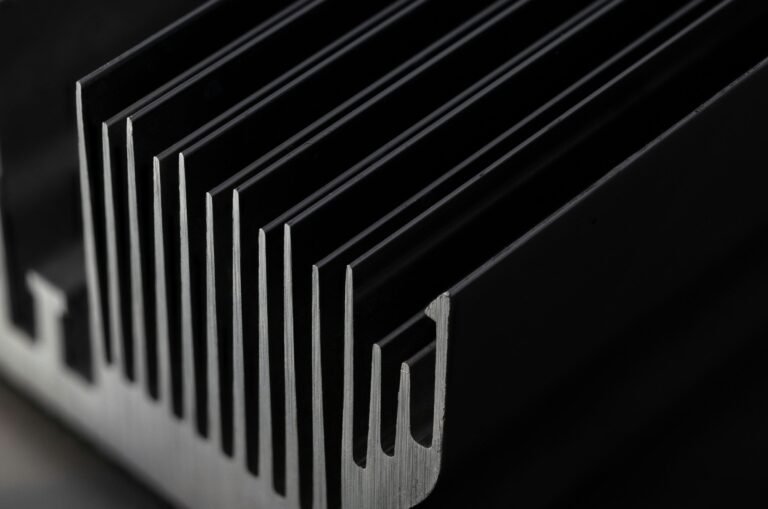
A qualified extruded aluminum heat sink should maintain consistent fin height, fin thickness, fin spacing, and base geometry throughout the production batch.
You should check for:
- Consistent fin spacing
- Uniform fin thickness
- Correct fin height
- Deformed or damaged fins
- Burrs after cutting
- Correct cut length
- Surface damage
- Profile distortion
Stable extrusion tooling and controlled production conditions help reduce fin deformation and dimensional variation between batches.
For critical applications, the approved drawing should define which dimensions require inspection and what tolerance applies to each feature. This gives buyers measurable acceptance criteria instead of relying only on visual quality.
3. Evaluate Custom Extrusion and Secondary Processing Capability
Standard heat sink profiles may not meet the installation space, thermal load, mounting, or machining requirements of every application. When sourcing custom extruded aluminum heat sink suppliers, you should evaluate whether the supplier can support profile development, extrusion tooling, secondary machining, and surface treatment as part of the same production process.
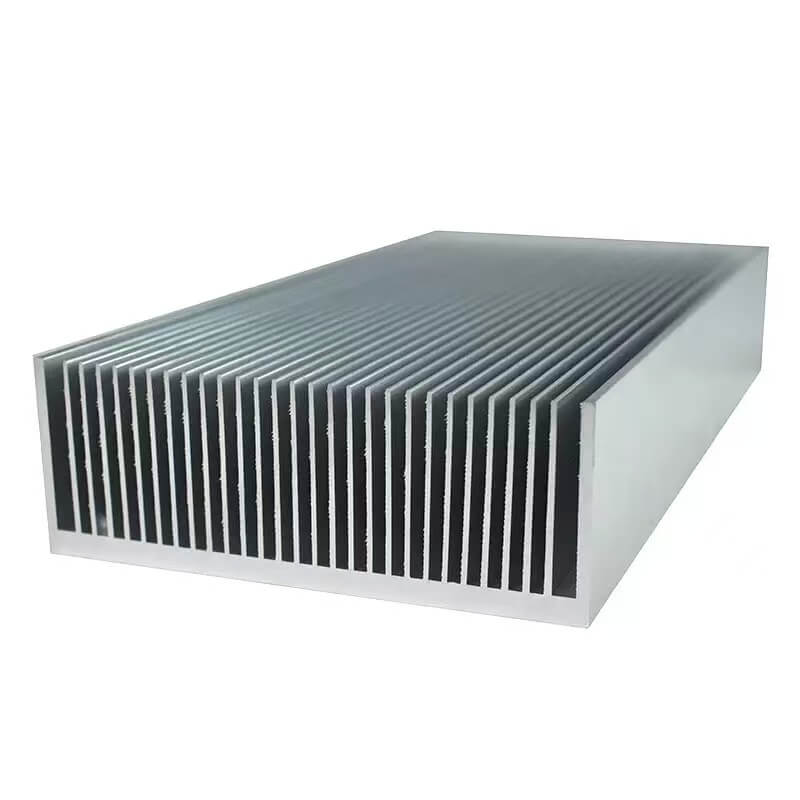
3.1 Custom Heat Sink Profile Design
Custom heat sink development may involve adjusting the base thickness, fin height, fin thickness, fin spacing, groove positions, and mounting features according to the application and technical drawing.
For thermal applications, profile geometry should be considered together with the expected heat load, airflow conditions, available installation space, and required mounting method. A custom extrusion can help integrate these requirements into one profile instead of modifying a standard heat sink after production.
Vanway Tech reviews customer drawings and application requirements to determine the appropriate extrusion profile, tooling, alloy, temper, and secondary processing requirements for custom aluminum heat sinks.
3.2 Secondary CNC Machining and Surface Treatment
After extrusion, selected heat sink features can be processed by CNC machining. Typical operations include:
- Drilling
- Tapping
- Milling
- Slotting
- Cutting to length
- Mounting-hole machining
Surface treatments such as anodizing, powder coating, or other specified finishes can also be applied according to the application requirements.
For an extruded aluminum heat sink manufacturer, combining extrusion with secondary processing can simplify supplier coordination and allow critical machined features to be inspected against the approved drawing.
Vanway Tech supports extrusion, cutting, CNC machining, and surface treatment for applicable heat sink projects.


4. Review Quality Control and Compliance Documentation
Consistent production quality depends on defined inspection procedures and documented acceptance criteria. When evaluating an extruded aluminum heat sink manufacturer, buyers should review how the supplier controls incoming materials, production dimensions, finished products, and batch traceability.
4.1 Incoming, In-Process, and Final Inspection
A practical quality-control process can include three stages:
- Incoming material inspection — Verify the specified alloy, temper, material documentation, and identification.
- In-process inspection — Check critical profile dimensions, fin geometry, machining features, and other drawing requirements during production.
- Final inspection — Verify finished dimensions, cut length, surface condition, machining features, and packaging requirements before shipment.
Inspection records should be linked to the relevant production batch where traceability is required. The inspection scope should be based on the customer’s approved drawing and agreed quality requirements rather than applying the same inspection criteria to every heat sink.
Vanway Tech uses incoming material verification, production controls, and final drawing checks to support quality control for applicable custom aluminum heat sinks.
4.2 ISO, RoHS, and Market-Specific Compliance
Buyers should distinguish between a supplier’s quality-management certification and product-specific compliance documentation.
| Standard / Regulation | Scope & Description | Official Reference |
|---|---|---|
| ISO 9001 | Relates to a company’s quality management system. | Official ISO 9001 standard |
| RoHS | Addresses restrictions on certain hazardous substances in applicable electrical and electronic products. | European Commission’s RoHS Directive |
| REACH | Covers the registration, evaluation, authorisation, and restriction of chemicals in the European Union. | European Commission’s REACH Regulation |
Therefore, buyers should request the specific certificates, declarations, or test documentation required for their application and destination market.
Compliance documentation can support a buyer’s quality and regulatory review, but it should not be presented as a guarantee that a product will automatically pass customs or satisfy every market-specific requirement.
For projects requiring material or environmental documentation, Vanway Tech can provide the applicable records according to the agreed project requirements.
5. Stable Production Capacity & Professional B2B After-Sales Service
Vanway-Tech丨 Premium Quality Extrueded Aluminum Profiles Manufacturer and Exporter From China Since 2015

Ready to optimize your project? Talk to Vanway Tech engineers and get your custom aluminum extrusion sample started.
5.1 Flexible MOQ & Stable Bulk Delivery
Reliable wholesale extruded aluminum heat sink suppliers support small-batch trial orders and large-volume bulk production.
They arrange scientific production scheduling to ensure on-time delivery for long-term B2B projects.
5.2 Professional Pre-Sales & After-Sales Technical Support
Professional teams provide thermal solution consultation, free sample verification, and 24-hour overseas English support.
They quickly resolve tolerance problems, custom modification demands, and order adjustment issues. This greatly reduces cross-border sourcing risks.
6. What Affects Extruded Heat Sink Sourcing Costs?
Understanding the B2B cost breakdown helps sourcing managers negotiate fair pricing and reduce total cost of ownership (TCO) without compromising cooling efficiency.
6.1 Raw Material Volatility & LME Benchmark
Aluminum billet costs account for 50%–70% of total unit price. Base pricing is tied directly to global market indexes like the London Metal Exchange (LME) Aluminum Futures. Professional suppliers provide transparent pricing models that reflect live ingot spot prices plus a fixed extrusion conversion fee.
6.2 Tooling & Extrusion Die Investment
- Simple Profiles: Standard rectangular profiles require low initial die costs ($300–$800) and short lead times.
- High Aspect Ratio Fins: Ultra-thin, dense fins require custom high-strength tool steel dies (H13 steel), which cost more upfront ($1,500–$4,000) but deliver higher cooling capacity per unit volume.
6.3 Surface Treatments & CNC Secondary Machining
Surface finish choice impacts both cost and performance:
Hard Anodizing (Type III): Provides extreme wear and dielectric resistance for military/marine environments, increasing surface treatment cost by 20%–35%.
Clear/Black Anodizing: Increases surface emissivity by up to 0.85–0.90, enhancing radiant heat dissipation at a minimal cost increase.

Mill Finish Aluminum vs Clear Anodized Aluminum: How to Choose the Right Finish
7. Final Conclusion
The best extruded aluminum heat sink suppliers do not only offer low prices. They deliver stable material quality, precise extrusion tolerance, reliable custom capability, standardized QC systems, and consistent bulk delivery.
For industrial electronic cooling projects, choosing a professional aluminum extrusion heat sink manufacturer greatly improves product stability. It also reduces after-sales failure rates in long-term wholesale cooperation.
Reach out to the Vanway Tech engineering team to discuss flexible batch options or get a straightforward quote on your next run.

CHOOSE THE BEFITTING ALUMINUM EXTRUSIONS
Custom Aluminum Extrusions
Aluminum Heat Sinks
Industrial Aluminum Extrusions
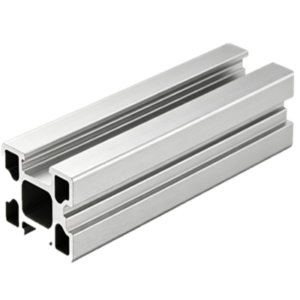
T-Slot Aluminum Extrusions
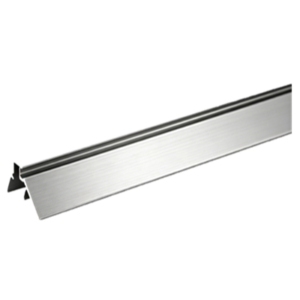
Decorative Aluminum Trim & Led Aluminum Channel Profiles
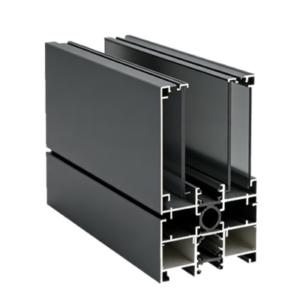
Window & Door Aluminum Profiles
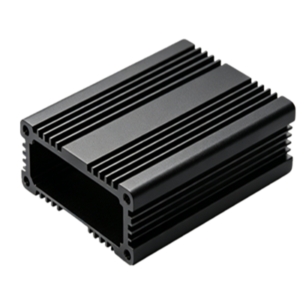
Aluminum Extrusion Enclosures
Structural Aluminum Extrusion Framing
Aluminum Angle Extrusions
Extruded Aluminum Tubes
Aluminum U Channel Profiles
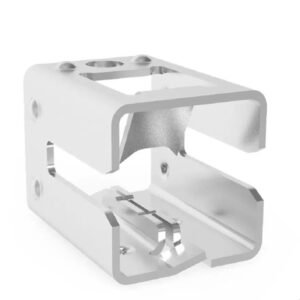
CNC Machined Aluminum Parts
8. FAQs of Custom Aluminum Heat Sinks
Q1. What is the ideal aluminum alloy for extruded heat sinks?
A: 6063-T5 is the industry standard due to its excellent balance of high thermal conductivity (≈ 201 W/m·K), structural strength, and smooth anodizing finish.
Q2. What is the typical lead time for custom aluminum extrusion molds?
A: Mold creation and sample verification usually take 7 to 12 days, while bulk production typically requires 15 to 20 days depending on order quantity.
Q3. How do I ensure thermal performance before placing a bulk order?
A: Request raw material composition test reports, thermal simulation data, and sample prototyping for physical thermal testing.
Q4. What information should I provide when requesting a custom heat sink quote?
A: Provide the profile drawing or 3D file, required aluminum alloy and temper, heat sink dimensions, fin height and spacing, base thickness, cut length, surface finish, CNC requirements, estimated order quantity, and application requirements. If thermal performance is critical, also provide the target heat load, airflow conditions, or required thermal resistance. Vanway Tech can review these requirements and recommend a suitable custom aluminum heat sink extrusion and processing route.
Q5. Can a supplier provide material traceability for each production batch?
A: Yes. Buyers can request material documentation identifying the specified alloy, temper, heat or lot information, and corresponding production batch. For projects requiring additional verification, chemical composition and mechanical test records can also be requested. Vanway Tech maintains material and production records to support batch-level traceability for applicable extruded aluminum heat sink orders.
Q6. Should I choose 6063-T5 or 6061-T6 for a custom heat sink?
A: The choice depends on the application requirements. 6063-T5 is commonly used for extruded heat sinks because it offers a good balance of thermal conductivity, extrudability, surface finish, and strength. 6061-T6 provides higher strength and is often considered when the heat sink also has structural or heavy CNC machining requirements. Vanway Tech can evaluate the alloy, temper, profile geometry, and application requirements before production.
Q7. What heat sink dimensions should be checked during incoming inspection?
A: Buyers should check the dimensions that affect thermal performance and assembly, including base thickness, overall width and height, fin height, fin thickness, fin spacing, mounting-hole dimensions, flatness of critical surfaces, and cut length. The inspection criteria should follow the approved technical drawing and specified tolerances. For critical aluminum extrusion heat sink applications, sample inspection should also check fin deformation, surface condition, and fit with the mating component.
Q8. Can aluminum heat sinks be CNC machined after extrusion?
A: Yes. Extruded heat sinks can be CNC machined after extrusion for operations such as drilling, tapping, milling, slotting, and creating mounting features. CNC machining is useful when the extruded profile alone cannot achieve the required assembly geometry or dimensional tolerance. Vanway Tech can combine extrusion with cutting, CNC machining, and surface treatment for custom extruded aluminum heat sink suppliers projects that require additional fabrication.
Related Articals You May Like
How to make your Aluminum Solar Panel Frame more cost-effective in 2026?
Skived vs. Forged vs. Forged Aluminum Heat Sinks – Sourcing the Right Aluminum Heat Sink
Top-Rated Custom Extruded Aluminum Heat Sink Suppliers in USA & Canada in 2026
How to make your solar module frame aluminum extrusions more cost-effective?
Top 10 Custom PV Module Aluminum Frame Extruders in Gujarat & India (2026)
Aluminum Extrusion Die Cost Breakdown:What Affecting Pricing
How to Evaluate Aluminum Heat Sink Suppliers Reliable Or Not
Contact With Vanway Tech Team for Premium Aluminium Extrusion Products!
Enquire with UsConnect with Vanway Tech Team for Premium Aluminium Extrusion Products.
Contact InfoWe are looking forward to hearing from you!
-
Email: info@vanway-tech.com
-
Address: No. 588, Wuyi South Road, CSJ Moldware Town, Wujin, Changzhou, Jiangsu, China
Scan Below Codes to Contact Us Immediately.