Vanway Precision Materials Tech Co.,Ltd


How to Choose the Ultimate Extruded Aluminum Enclosure – 2026 Guide
The Ultimate Comparison: Extruded Aluminum Enclosure vs. Sheet Metal & Die-Cast
Table of Contents
An enclosure can look perfect on a drawing and still become a costly headache once production starts. Heat builds up, custom features drive up tooling costs, or lead times push your launch date further away. Often, the trouble starts with one decision: extruded aluminum, sheet metal, or die-cast?
Each manufacturing method has its sweet spot, and choosing the wrong one can cost more than you save. In this guide, Vanway Tech breaks down the real trade-offs in thermal performance, design flexibility, tooling costs, and lead times so you can choose the right enclosure for your application before small design decisions turn into expensive production problems.
What Is an Aluminum Extrusion Enclosure?
An extruded aluminum enclosure is a precision extruded aluminum profile tailored for housing sensitive electronic, electrical, and mechanical components. Primarily made of 6063-T5 aluminum alloy, it acts as a protective casing, a modular chassis frame, a heat-dissipating shell, and a customized equipment housing. Featuring excellent thermal conductivity, corrosion resistance, high structural rigidity, and a seamless surface finish option (such as anodizing or powder coating), it is widely used in industrial automation, telecommunications, and power electronics with a customizable cross-section and precision CNC machining.
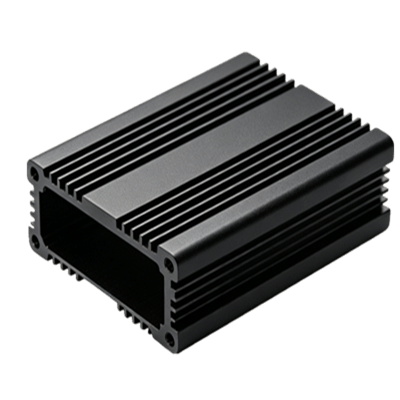
Black Anodized Heat Dissipation Aluminum Extrusion Enclosures for LED Driver Housing
What Are The Advantages of Extruded Aluminum Enclosures?
- Robust Structural Rigidity. Made of 6063-T5 aluminum alloy, it delivers high strength to support and protect delicate power equipment.
- Superior Thermal Protection. Precise extrusion tolerances ensure tight component assembly while enabling efficient heat dissipation.
- Corrosion Resistance. An anodized surface achieves exceptional rust resistance, extending lifespan in harsh environments.environments.
- Full Customization. Easily customized in profile cross-sections, T-slots, and CNC machining to fit diverse system demands.
Extruded Aluminum Enclosure vs. Sheet Metal vs. Die-Cast: Key Differences
| Comparison Factor | Extruded Aluminum Enclosure | Sheet Metal Enclosure | Die-Cast Aluminum Enclosure |
|---|---|---|---|
| Manufacturing Process | Heated aluminum billet pushed through a die to create a continuous profile | Sheet cut, punched, bent, and joined | Molten aluminum injected into a die cavity |
| Geometry | Best for constant cross-sections and linear designs | Best for folded panels, covers, brackets, and larger cabinets | Best for complex 3D bodies, bosses, ribs, and integrated features |
| Length Customization | Usually straightforward by cutting the profile to length | Depends on panel and fabrication design | Changes to overall body dimensions may require tooling changes |
| Internal PCB Rails / Slots | Can be integrated into the extrusion profile | Usually formed or added through brackets and other features | Can be integrated into the casting if tooling supports it |
| Heat-Dissipation Features | Longitudinal fins can be integrated into the profile | Heat sinks often require separate components or added features | Ribs and other cast features can be integrated into the body |
| Tooling Investment | Requires an extrusion die for a custom profile | May require punches, bending tools, or fixtures depending on complexity | Requires a casting die and associated tooling |
| Secondary Machining | End plates, holes, slots, connector openings, and mating faces | Cutouts, holes, bends, welding, and fastener installation | Machining may be needed for threads, sealing faces, and precision interfaces |
| Sealing | Requires controlled end plates, joints, gaskets, and cable entries | Depends on seams, joints, panel fit, and gasket design | A cast body can integrate a sealing flange, but cover and connector interfaces still need design and validation |
| EMI / Grounding | Can provide conductive paths when joints and contact areas are properly designed | Can provide conductive paths when seams, fasteners, and bonding are controlled | Can provide conductive paths when contact surfaces, joints, and bonding are controlled |
| Typical Design Advantage | One profile can serve several lengths or product variants | Flexible panel layouts and larger enclosure formats | Complex integrated 3D geometry |
| Main Design Constraint | Cross-section is constant along the extrusion direction | Panel joints, bends, and fabrication details must be managed | Complex tooling, draft, wall transitions, and casting design need consideration |
| Cost Driver | Die, profile weight, extrusion complexity, machining, finish, and quantity | Sheet material, cutting, bending, joining, finishing, and assembly | Tooling, casting cycle, machining, finishing, and production volume |
| Best Initial Use Case | Linear electronic housings, PCB enclosures, and finned profiles | Control cabinets, formed covers, and panel-based housings | Compact bodies with integrated bosses, ribs, or complex contours |
How to Match the Enclosure Design to Your Application?
Choosing the right enclosure depends on your product’s geometry, thermal requirements, production volume, and budget. An extruded aluminum housing suits consistent cross-sections and linear heat dissipation, a sheet metal enclosure works well for bent panels and large cabinets, while a die-cast aluminum enclosure supports complex, integrated features. Compare tooling, machining, assembly, and finishing costs to find the most practical solution for your application.

High Strength Extruded Profile Aluminum Enclosures for Robot Joint Electronic Housing
When Should You Choose an Extruded Aluminum Housing?
Choose an extruded aluminum housing when your product needs a consistent cross-section, efficient linear heat dissipation, and flexible length options. It works well for electronic devices, industrial controllers, communication equipment, and LED drivers. Custom-machined end plates can accommodate connectors, mounting holes, and other interface requirements. However, designs with complex three-dimensional shapes or numerous side-facing features may require extensive secondary machining, making another manufacturing process more practical.
When Is a Sheet Metal Enclosure the Better Option?
A sheet metal enclosure is a practical choice for large cabinets, thin-wall structures, removable panels, and layouts that rely on flat surfaces and bent sections. Cutting, punching, and bending can simplify manufacturing when the design uses standard sheet-metal features. However, buyers should consider how material thickness, fasteners, welds, and seam locations affect assembly time, structural rigidity, and ingress protection. A well-planned design can reduce fabrication costs and simplify maintenance without compromising enclosure performance.
When Does a Die-Cast Aluminum Enclosure Make More Sense?
A die-cast aluminum enclosure is worth evaluating when the design requires integrated mounting bosses, reinforcing ribs, complex outer contours, or features extending in multiple directions. The main trade-off is the upfront cost of the die, along with any required post-machining and finishing. Die casting is not automatically the most economical choice for high-volume production. Compare the total cost using this formula:
Total Cost = Tooling Cost + (Unit Cost x Order Quantity)
For a fair comparison, include secondary machining, finishing, assembly, and inspection costs. Die casting becomes more attractive when tooling costs can be spread across sufficient production volume and the design remains stable. For prototypes, frequent design changes, or smaller orders, extrusion or sheet metal may offer better overall value.
Thermal Performance: Which Enclosure Design Dissipates Heat Better?
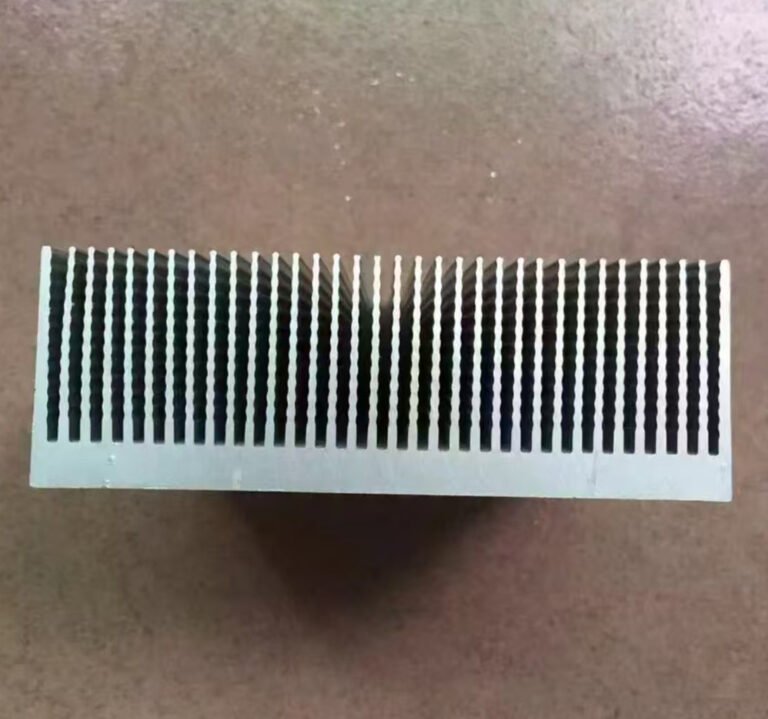
An extruded aluminum housing can be an effective thermal management solution, especially for electronic devices that need long, integrated heat-dissipation fins. However, extrusion does not automatically deliver better cooling than sheet metal or die casting. Actual performance depends on the aluminum alloy, available surface area, fin geometry, heat-source location, mounting method, airflow, and thermal contact resistance.

Extruded Aluminum vs. Sheet Metal vs. Die-Cast: Thermal Design Comparison
| Design factor | Extruded aluminum enclosure | Sheet metal enclosure | Die-cast aluminum enclosure |
|---|---|---|---|
| Heat-dissipation features | Longitudinal fins can be integrated into the profile | Flat surfaces provide cooling area; separate heat sinks may be needed | Ribs and other features can be integrated into the body |
| Surface area | Fin geometry can increase exposed area | Depends on panel size, shape, and airflow | Depends on casting geometry and available space |
| Design flexibility | Best suited to constant cross-sections | Well suited to folded panels and large enclosures | Supports complex three-dimensional features |
| Heat-source interface | Contact surfaces can be CNC-machined as required | May require a separate heat spreader or mounting plate | Contact surfaces may require post-machining |
| Main thermal consideration | Fin spacing, fin thickness, airflow, and heat conduction through the profile | Panel thickness, heat spreading, and the interface with the heat source | Wall transitions, local heat paths, and casting geometry |
For products such as industrial controllers, communication equipment, LED drivers, and power electronics, an aluminum extrusion enclosure can be a strong starting point when heat must travel from an internal component to a longitudinal finned surface. Sheet metal may be suitable when the heat load is modest or a separate heat sink can be installed. Die casting is worth considering when the enclosure requires complex integrated features alongside its thermal design.
The final choice should be based on the complete thermal path, not just the manufacturing process.
How to Calculate the Required Thermal Resistance
Thermal resistance describes how much the temperature rises for each watt of heat transferred. A preliminary system-level thermal resistance budget can be calculated using the standard equation below:
Formula: Thermal Resistance Budget
Rθ,total = (Tlimit – Tambient) / Q
Where:
- Rθ,total = Allowable total thermal resistance, in °C/W
- Tlimit = Maximum allowable component temperature, in °C
- Tambient = Ambient air temperature, in °C
- Q = Heat that must be dissipated, in watts (W)
Example Calculation for a 20 W Electronic Device
Assume an electronic device generates 20 W of heat, operates in a 35°C ambient environment, and has a maximum allowable component temperature of 85°C.
| Thermal Design Input | Example Value |
|---|---|
| Heat to dissipate (Q) | 20 W |
| Ambient temperature (Tambient) | 35°C |
| Maximum component temperature (Tlimit) | 85°C |
| Available temperature difference (ΔT) | 50°C |
Calculation Result:
Rθ,total = (85°C – 35°C) / 20 W = 2.5°C/W
This means the complete thermal path must have a total thermal resistance no greater than 2.5°C/W under the assumed operating conditions.
Engineering & System Design Note:
This is an illustrative calculation, not a test result for a Vanway Tech enclosure. It also does not mean the enclosure alone must achieve 2.5°C/W.
The total thermal path includes component-to-interface resistance, thermal pads or grease, conduction through the enclosure, and heat transfer from its outer surface to the surrounding air. For example, if the component-to-housing interface contributes 0.5°C/W, the remaining thermal path has a budget of 2.0°C/W. The actual allocation must account for all relevant thermal resistances and heat paths.
What Should You Specify Before Requesting a Custom Enclosure?
Before selecting an aluminum extrusion enclosure, provide the heat load, maximum ambient temperature, component temperature limit, PCB layout, mounting orientation, and expected airflow. Also identify the heat-source contact area and any thermal interface material.

Vanway Tech can use these project requirements, together with the profile geometry and machining needs, to evaluate a suitable custom extrusion design. Where temperature limits are critical, confirm performance through thermal simulation or physical testing under defined conditions. Record the heat load, ambient temperature, mounting arrangement, airflow, and measurement locations so that results can be reproduced and compared.
Tooling Cost, Machining, and Production Volume: Which Option Costs Less?
The lowest tooling cost does not always mean the lowest total cost. When comparing an extruded aluminium electronic enclosures, a sheet metal enclosure, and an extruded aluminum enclosure box with a die-cast alternative, buyers should consider tooling, material usage, machining, finishing, assembly, and production volume together.
Each manufacturing process has a different cost structure. The right choice depends on enclosure geometry, required tolerances, order quantity, and how much secondary processing the finished part needs.
1. How Tooling and Manufacturing Costs Differ
| Cost factor | Aluminum extrusion | Sheet metal fabrication | Die casting |
|---|---|---|---|
| Initial tooling | Custom extrusion die for the profile | May require punches, bending tools, or dedicated fixtures | Casting die and associated tooling |
| Material cost | Depends on profile weight, alloy, and material utilization | Depends on sheet thickness, blank size, and material waste | Depends on casting weight, alloy, yield, and material utilization |
| CNC machining | May be needed for end plates, holes, threads, and precision interfaces | May be needed for precision holes, mounting faces, and interfaces | May be needed for threads, sealing surfaces, and critical dimensions |
| Secondary processing | Cutting, drilling, tapping, milling, and surface finishing | Cutting, punching, bending, welding, and finishing | Trimming, machining, deburring, and finishing |
| Assembly | End plates, fasteners, gaskets, and other components | Panels, brackets, fasteners, and welded joints | Covers, seals, fasteners, and additional components |
| Main cost consideration | Profile complexity, weight, machining, and finishing | Number of parts, bends, joints, and assembly labor | Tooling investment, casting cycle, machining, and production yield |
Extrusion is worth evaluating when one profile can serve multiple enclosure lengths or product variants. Sheet metal can be economical for panel-based designs that require relatively little dedicated tooling. Die casting can make sense when complex three-dimensional features can be integrated into the body and the production volume supports the tooling investment.
These are general design tendencies, not guaranteed cost rankings. A profile with extensive CNC machining may cost more than expected, while a sheet metal enclosure with numerous parts and assembly steps may have a higher labor cost.
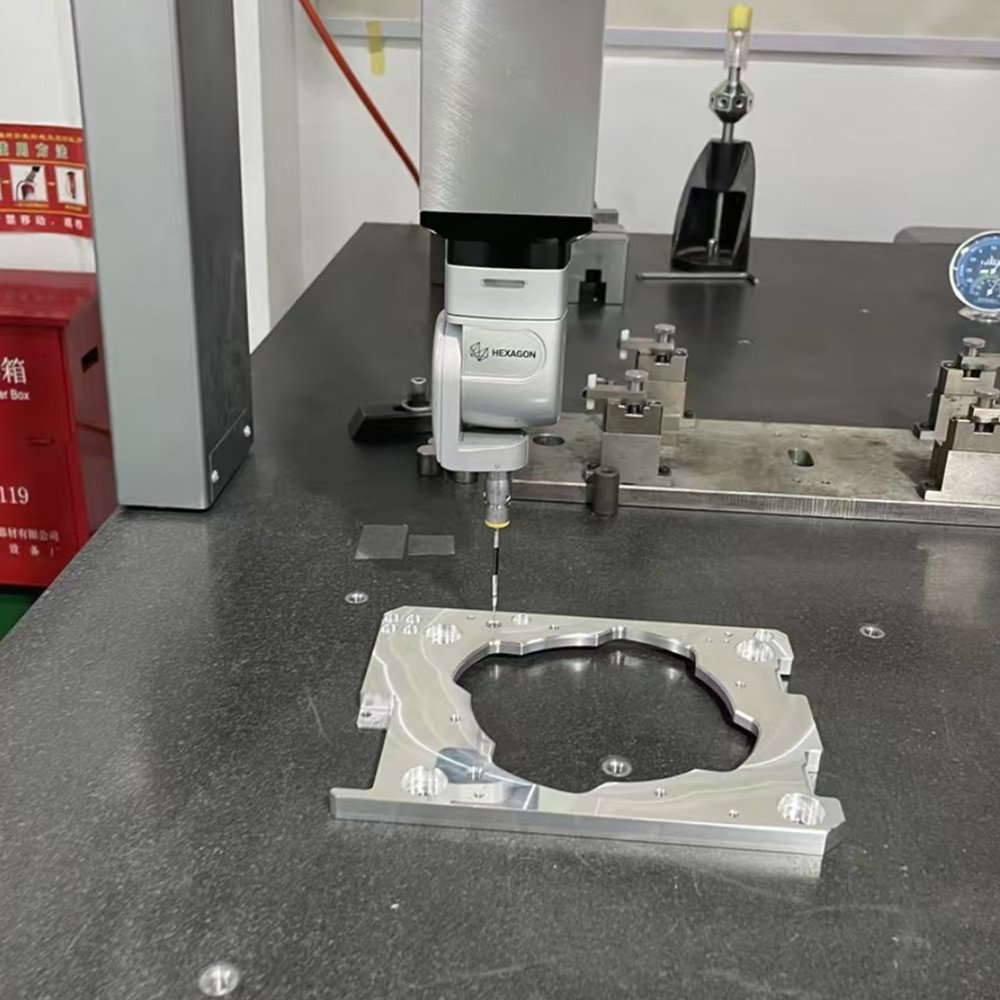
Custom CNC Machine Aluminum Machining: B2B Manufacturer Guide
2. Calculate Total Cost Using Fixed and Variable Costs
A practical way to compare manufacturing processes is to separate fixed costs from per-unit variable costs.
Total Cost = Fixed Costs + (Variable Cost per Unit x Order Quantity)
Fixed costs may include tooling, programming, setup, and other one-time engineering or production preparation charges. Variable costs may include material, machining time, finishing, assembly, and inspection for each unit.
To compare different manufacturing routes, calculate the estimated unit cost as well:
Unit Cost = Variable Cost per Unit + (Fixed Costs / Order Quantity)
This model helps buyers understand how tooling investment is distributed across an order. It does not replace a detailed quotation, because actual variable costs and production yields can differ substantially between processes.
3. Example: How Order Quantity Changes Unit Cost
The following figures are illustrative assumptions only, not supplier quotations or industry-average prices. They demonstrate how different fixed costs affect unit economics.
Assume two hypothetical manufacturing options:
- Option A: Fixed costs of $2,000 and a variable cost of $8 per unit.
- Option B: Fixed costs of $20,000 and a variable cost of $5 per unit.
Option B has higher initial costs but a lower assumed variable cost per unit.
| Order quantity | Option A unit cost | Option B unit cost | Lower calculated unit cost |
|---|---|---|---|
| 100 | $28.00 | $205.00 | Option A |
| 1,000 | $10.00 | $25.00 | Option A |
| 5,000 | $8.40 | $9.00 | Option A |
| 10,000 | $8.20 | $7.00 | Option B |
| 20,000 | $8.10 | $6.00 | Option B |
For these assumptions, the break-even quantity occurs where the total costs are equal:
$2,000 + ($8 x Q) = $20,000 + ($5 x Q)
Q = 6,000 units
Below 6,000 units, Option A has the lower calculated total cost. Above 6,000 units, Option B has the lower calculated total cost. At 6,000 units, both options have a total cost of $50,000, or approximately $8.33 per unit.
This is a mathematical example, not a claim that extrusion, sheet metal, or die casting has these actual costs. In a real project, each process will have its own tooling charges and variable production costs.

Aluminum Extrusion Sourcing: How Mastering MOQ Unlocks 15%+ Procurement Savings
4. What Buyers Should Include in a Fair Cost Comparison
Before selecting a process for a custom extruded aluminum enclosure box, request quotations based on the same drawing, material specification, finish, inspection requirements, and order quantity.
Check these items before comparing prices:
- Tooling and setup: Confirm what the initial charge covers and whether future design changes require additional fees.
- Material and scrap: Compare finished-part weight, material utilization, and expected production yield.
- CNC and secondary machining: Identify all holes, threads, milled surfaces, connector openings, and precision interfaces.
- Surface finishing: Include anodizing, powder coating, or other specified treatments.
- Assembly: Account for end plates, gaskets, fasteners, welding, and labor.
- Quality control: Include dimensional inspection, first-article approval, and any required thermal or ingress-protection testing.
- Order quantity: Compare the actual initial order and expected repeat orders rather than assuming the full forecast will be purchased at once.
Also consider the cost of design changes. A product with an evolving PCB layout or connector arrangement may benefit from a process that allows easier modifications, even if its initial unit price is not the lowest.
The best manufacturing route is the one that meets the functional requirements at the lowest justified total cost. For Vanway Tech projects, sharing the enclosure drawing, required quantity, alloy, surface finish, machining details, and performance requirements provides a more reliable basis for evaluating a custom extrusion solution against alternative manufacturing methods.
Material, Tolerance, and Surface Finish Requirements for Custom Enclosures
| Design feature | Example RFQ requirement | Why it matters |
|---|---|---|
| Base alloy and temper | 6063-T5, if suitable for the design | Defines material and temper requirements |
| Profile wall thickness | 2.0 mm nominal | Must be checked against profile geometry and extrusion feasibility |
| Cut length | 150.0 ± 0.5 mm | Controls overall housing length |
| CNC-machined mating face | 0.10 mm flatness over 100 mm, if required | Helps control panel and gasket contact |
| Mounting hole | Ø5.00 ± 0.05 mm, if required | Controls fastener fit |
| PCB slot width | 1.60 ± 0.10 mm, as an example only | Must account for PCB thickness, clearance and assembly method |
| Surface finish | Black anodizing or specified coating system | Defines appearance and process requirements |
| Sealing interface | Drawing-defined gasket groove and mating surface | Supports repeatable sealing |
| Inspection | First-article dimensional report | Confirms critical features before mass production |
Critical mating faces, PCB slots, gasket grooves, and connector openings should be identified on the drawing. Confirm the required tolerance and inspection method with the extrusion supplier before tooling release.
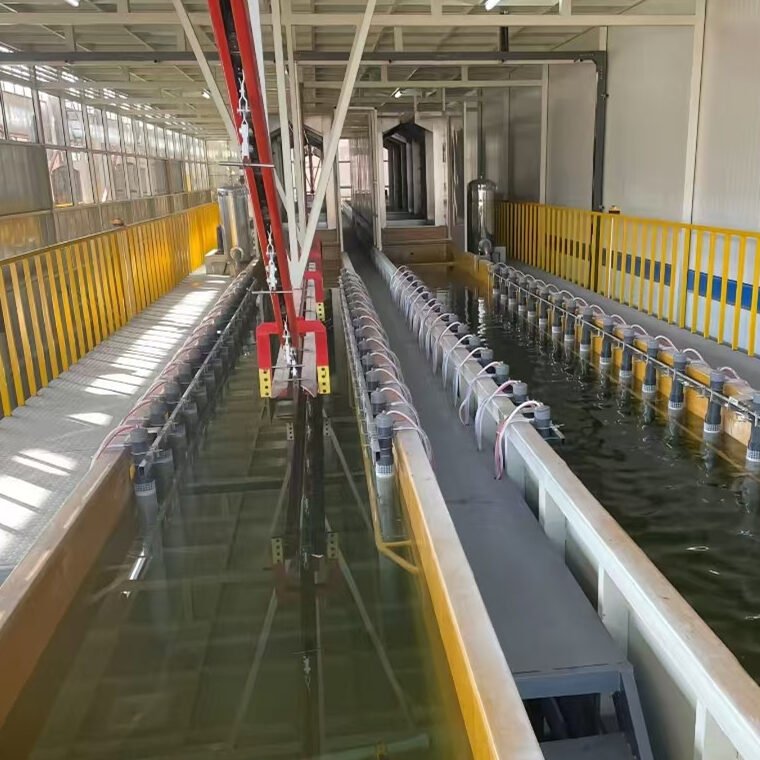
Anodized,PVDF or Powder Coating: Which Aluminum Finish Lasts Longest Near the Sea?
How to Choose an Extruded Aluminum Enclosure Box for Your Application?
Selecting the perfect enclosure involves balancing distinct design goals—from thermal performance and geometric complexity to tooling investment and lead time. This often makes finding the ideal standard component difficult for custom electronics. Since many developers begin with a specific application requirement, such as multi-length adaptability, integrated thermal fins, or a rugged outdoor rating, understanding the core manufacturing processes is essential.
Choosing between customized extruded aluminum enclosures, sheet metal fabrication, or die-casting often becomes a pivotal design decision that can compromise product performance or blow through your budget if made incorrectly.
Use the following comparison table to analyze your specific application needs and compare critical performance factors now:
| Your primary requirement | First process to evaluate | Reason | Main risk to check |
|---|---|---|---|
| One enclosure design with multiple lengths | Extrusion | The same profile cross-section can be cut to different lengths | End-panel design, profile tolerances, and machining cost |
| Integrated longitudinal heat-sink fins | Extrusion | Fins can be incorporated into the profile geometry | Fin geometry, airflow, and actual thermal performance |
| Large enclosure with folded panels | Sheet metal | Panels can be cut, bent, and assembled into different layouts | Seams, joining, rigidity, and sealing |
| Complex 3D shape with integrated bosses and ribs | Die casting | Features can be integrated into the molded body | Die cost, casting feasibility, and secondary machining |
| Low initial tooling exposure for a complex panel layout | Evaluate sheet metal first | Some designs can use standard fabrication processes without a custom extrusion or casting die | Fabrication and assembly labor |
| Tight CNC-machined connector interfaces | Any process, depending on body geometry | Critical interfaces can be machined if the design allows | Datum selection, tolerance stack-up, and machining access |
| Required IP-rated outdoor enclosure | Compare all three | Any process may be feasible with a properly designed and validated enclosure | Gaskets, joints, cable entries, corrosion, and test evidence |
| Long linear electronics housing | Extrusion | Profile geometry can support PCB slots and length variations | Cross-section limitations and end closure |
| High-volume product with stable complex geometry | Compare extrusion and die casting | Tooling and per-part production costs need to be evaluated together | Tooling amortization, cycle cost, scrap, and design changes |
RFQ Checklist: What to Send an Extruded Aluminum Enclosure Manufacturer?
RFQ Checklist: What to Send an Aluminum Enclosure Manufacturer
Provide these essential engineering specifications to get an accurate, fast quote for your custom aluminum enclosure.
✓
1. 3D CAD Files & 2D Engineering Drawings
Send 3D files (
STEP or IGES) for geometry, plus 2D PDFs for critical tolerances, thread specifications, and datum references.✓
2. Aluminum Alloy & Temper Grade
Specify the required alloy (e.g., 6063-T5/T6 for extrusions, 6061-T6 for high strength, or ADC12 for die-casting).
✓
3. Surface Finishing & Aesthetics
Indicate finish type: Clear/Black Anodizing, Sandblasting (bead blast), Powder Coating (RAL code), Silk Screening, or Laser Engraving for logos.
✓
4. Secondary Machining & End Plate Cutouts
Detail connector cutouts, LED holes, mounting slots, countersunk holes, and threaded PEM studs/inserts on end plates or main body.
✓
5. Order Quantities & Expected Annual Usage (EAU)
State prototype quantity (e.g., 5–10 pcs) vs. initial production run (e.g., 500 pcs). Volume directly impacts die amortization and piece price.
✓
6. IP Rating, Gaskets & Special Packaging
Mention ingress protection needs (e.g., IP65/IP67), silicone gaskets, acrylic light pipes, pre-assembly needs, or custom packaging requirements.
Vanway-Tech丨 Premium Quality Extrueded Aluminum Enclosure Manufacturer From China Since 2015

How Vanway Tech Evaluates Custom Extruded Aluminum Enclosure Designs
Vanway Tech evaluates custom extruded aluminum enclosure requirements based on the profile drawing, internal component layout, mechanical interfaces, thermal requirements, surface finish, and production quantity.
For a new enclosure project, the design review should identify critical dimensions, PCB mounting features, end-panel interfaces, machining operations, and sealing requirements before tooling is finalized. Where thermal management or environmental protection is important, the customer should also define the required operating conditions and validation criteria.

The final manufacturing route should be selected according to the enclosure geometry, functional requirements, tooling investment, and expected production volume. Project-specific tolerances, finishing options, and inspection requirements should be confirmed in the quotation and approved drawing.
Reach out to the Vanway Tech engineering team to discuss flexible batch options or get a straightforward quote on your next run.

Contact our technical engineering team today to review your project requirements, verify pretreatment specifications, and request sample test reports.
FAQs About Extruded Aluminum Enclosures
Q1. What is the difference between an extruded aluminum enclosure and a die-cast enclosure?
A: An extruded aluminum enclosure is formed from a continuous profile and cut to the required length. A die-cast enclosure is formed in a mold that can create more complex three-dimensional features. Extrusion is often worth evaluating for linear housings and designs with multiple lengths, while die casting may suit integrated bosses, ribs, and complex body geometry.
Q2. Is an extruded aluminum housing good for heat dissipation?
A: It can be, especially when the profile includes appropriately designed heat-dissipation features. Actual thermal performance depends on the heat load, surface area, fin geometry, airflow, mounting, and thermal interface between the components and the housing. Validate the design under defined operating conditions.
Q3. Can an extruded aluminum enclosure box achieve IP65 or IP67?
A: It may be possible, but the rating depends on the complete enclosure design and its verification. End plates, gaskets, fasteners, cable entries, connector openings, and assembly conditions all affect sealing. Specify the required IP rating and applicable test criteria before production.
Q4. Are extruded aluminum enclosures cheaper than sheet metal or die-cast enclosures?
A: Not in every case. Cost depends on profile complexity, tooling, material usage, machining, assembly, finishing, and order quantity. Compare the full cost of each manufacturing route using the same functional requirements and production volume.
Q5. Can extruded aluminium electronic enclosures be customized for different PCB sizes?
A: Yes, a profile can be designed with suitable PCB slots or internal mounting features, and different lengths may be produced from the same cross-section. The slot geometry, PCB thickness, clearances, connector locations, and end-panel interfaces should be confirmed in the design.
Q6. What information should I provide when requesting a custom aluminum enclosure quote?
A: Provide the 2D drawing and 3D CAD file if available, overall dimensions, alloy and temper, PCB layout, mounting requirements, heat load, required IP rating, EMI or grounding requirements, finish, order quantity, and inspection criteria. Identify critical dimensions and any tests that must be completed before production approval.
Related Articals You May Like:
Ultimate Guide to Source Custom Aluminum Extrusions From China
The Ultimate B2B Buyer’s Guide to Sourcing Extruded Aluminum Heat Sinks in [2026]
How to Choose Extruded Aluminum Heat Sink Suppliers: 5 Must-Check Factors


Contact With Vanway Tech Team for Premium Aluminium Extrusion Products!
Enquire with UsConnect with Vanway Tech Team for Premium Aluminium Extrusion Products.
Contact InfoWe are looking forward to hearing from you!
-
Email: info@vanway-tech.com
-
Address: No. 588, Wuyi South Road, CSJ Moldware Town, Wujin, Changzhou, Jiangsu, China
Scan Below Codes to Contact Us Immediately.