Vanway Precision Materials Tech Co.,Ltd


Ultimate Guide to Source Custom Aluminum Extrusions From China
How to Source Custom Aluminum Extrusions From China: The Risk-Free OEM Procurement Playbook
Table of Contents
5 Steps to Source Custom Aluminum Extrusion From China
In 2026, despite shifting global supply chains, sourcing custom aluminum extrusions directly from China remains one of the most cost-effective strategies for high-precision OEM parts—provided you navigate technical specs and quality control correctly.
If you need to source custom aluminum extrusion directly from China, finding a reliable supplier is key. As a dedicated manufacturer, Vanway Tech created this step-by-step guide to help you navigate overseas procurement, reduce tooling costs, and ensure strict quality control.


As a leading custom aluminum extrusion manufacturer based in China, Vanway Tech created this step-by-step sourcing guide. Whether you need complex industrial profiles, lightweight automotive components, or sleek architectural frames, this strategy ensures a smooth, risk-free procurement process.
Case Study: Optimizing DFM to Reduce Tooling Revisions for a German OEM
Project Overview: A German industrial enclosure manufacturer required a high-precision custom profile with integrated concealed snap-fit channels and tight wall thickness tolerances (± 0.08 mm). By executing Vanway Tech’s front-end DFM protocol in May 2026, the engineering team reduced standard die revision cycles from 3 down to just 1 pass.
May 4, 2026
Initial CAD Design Audit & Extrusion Risk Identification
The German engineering team submitted 3D CAD models specifying a uniform 1.2 mm wall thickness with sharp internal right-angle joints. Vanway Tech’s engineering team conducted a comprehensive DFM audit, identifying two major extrusion risks: high metal-flow friction at sharp corners leading to die cracking, and localized material shrinkage (sink marks) along the exposed decorative face.
May 7, 2026
Joint DFM Re-Engineering & 3D Flow Simulation
Vanway Tech proposed re-engineering the profile cross-section by adding a 0.5 mm internal corner radius and incorporating internal structural support ribs. Using CAD/CAM metal flow simulation software, Vanway Tech demonstrated how the optimized die geometry would equalize extrusion pressure and eliminate sink marks. The client approved the revised DFM drawings within 24 hours.
May 15, 2026
Precision H13 Die Tooling Fabrication
Vanway Tech CNC-machined the custom die from high-grade H13 chromium hot-work tool steel. Specialized vacuum heat treatment and nitriding were applied to enhance surface hardness and wear resistance under high-pressure extrusion conditions.
May 22, 2026
First Trial Extrusion (T1) & Targeted Micro-Adjustment
The first trial batch was extruded on Vanway Tech’s automated press line. Coordinate Measuring Machine (CMM) inspection confirmed 95% of critical dimensions met specs immediately. To resolve a minor 0.05 mm deviation on the snap-fit retention rib, Vanway Tech executed a single, targeted wire-EDM polish pass on the die bearing length.
May 27, 2026
Final Sample Approval & Mass Production Release
The second trial sample achieved 100% compliance with ISO 2768-m fine-grade tolerances and passed all mechanical snap-fit tests. Bypassing the traditional 2nd and 3rd die re-cut cycles, the German client formally approved the production sample and authorized full mass production for 15 metric tons.
Key Sourcing Benchmark:
By addressing flow bottlenecks during initial DFM simulation rather than relying on trial-and-error extrusion runs, Vanway Tech compressed total sample lead time from 6 weeks to just 23 days—saving the German OEM over $1,800 in redundant tooling modification costs.
I. The Full Step-by-step aluminum extrusion sourcing process
Requirement Specification → Supplier Verification → Quotation & Sample Confirmation → PI & Deposit Payment → Mold & Mass Production → Pre-shipment Inspection → FOB Shipment → Import Customs & Final Receipt
How to Order: Step-by-Step B2B Workflow
From initial CAD submission to final door-to-door or FOB delivery.
01
Specs & CAD
02
Audit Verification
03
Quote & Sample
04
PI & Deposit
05
Mold & Production
06
Pre-Ship Quality Audit
07
FOB Shipment
08
Customs & Receipt

Step 1: Define Technical Specifications & Tolerances
Before you source custom aluminum extrusion,prepare detailed technical requirements. China aluminum extrusion supplier operates strictly according to your engineering drawings.
- Select the Right Alloy: Choose the aluminum grade based on structural and functional demands. For example, 6063 provides excellent surface finishing for architectural applications. Meanwhile, 6061 delivers higher tensile strength for structural parts.
- Set Precision Tolerances: Specify critical dimensions on your 2D CAD or 3D STEP files. Standard commercial tolerances follow international benchmarks like ASTM B221 Standards. However, tight-tolerance parts need explicit notes for the die design team.
- Determine Surface Finishing: Decide early whether your custom profile requires anodizing, powder coating, sandblasting, or electrophoresis.

Step 2: Vet and Qualify the Right Manufacturer
Not every online entity is a true direct supplier. To successfully source custom aluminum extrusion at factory-direct pricing, you must verify the supplier’s actual manufacturing capabilities.
When evaluating potential partners, look for key indicators of a true aluminum profile manufacturer:
- In-House Extrusion Lines: Verify press capacity (measured in metric tons). Larger tonnage presses allow extruding wider and more intricate cross-sections.
- On-Site Tooling & CNC Machining: At Vanway Tech,our in-house capabilities for aluminum extrusion die design and manufacturing drastically shorten prototyping and lead times.
- Quality Certifications: Ensure the factory holds ISO 9001 and ISO 14001 certifications to maintain strict process control.
Procurement Pro-Tip: How to Verify a True Direct Extrusion Factory
To avoid markups and communication lag from intermediaries, buyers should request three essential verification items before placing a tooling deposit:
- Extrusion Press Tonnage Specs: Request video proof of their press line nameplates (e.g., 800T, 1800T, or 3600T presses) matching their claimed cross-sectional size limits.
- In-House CNC & Anodizing Audit: Confirm whether post-processing (precision cutting, milling, anodizing) is done in-house or outsourced, as outsourcing adds 7–10 days to lead times.
- Die Ownership & Rebate Policy: Ensure the contract explicitly states that you own the custom die tooling, with a clear Tooling Cost Rebate Clause (e.g., 100% die fee refund upon reaching 5 metric tons of cumulative order volume).
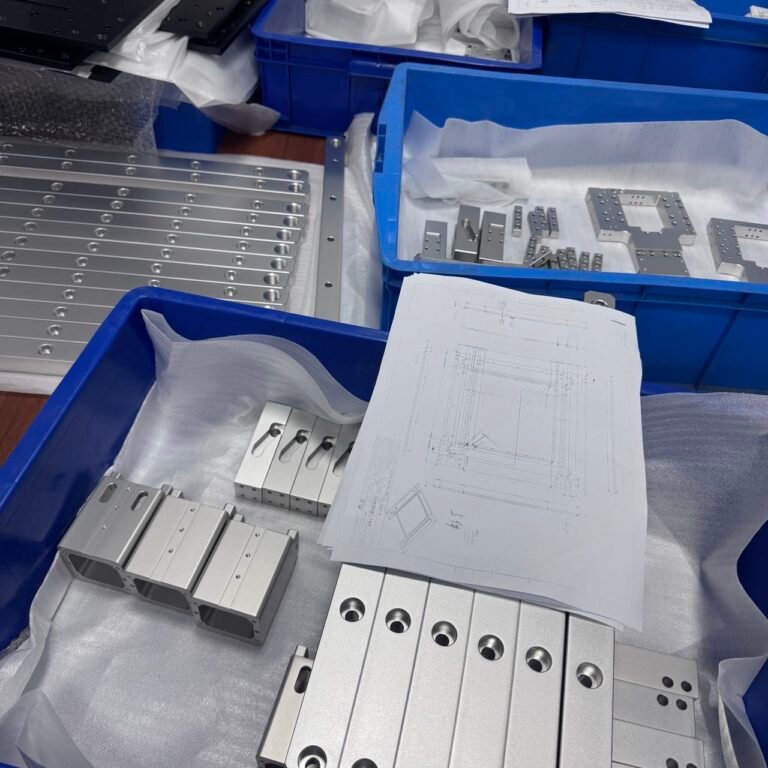
Step 3: Tooling, Die Design, and Sample Approval
Once you select a reliable manufacturing partner, the production phase begins with custom tooling. Aluminum extrusion dies must account for material shrinkage and flow dynamics during high-pressure pressing.
Pro Tip for Buyers: Always request structural sample validation prior to mass production.
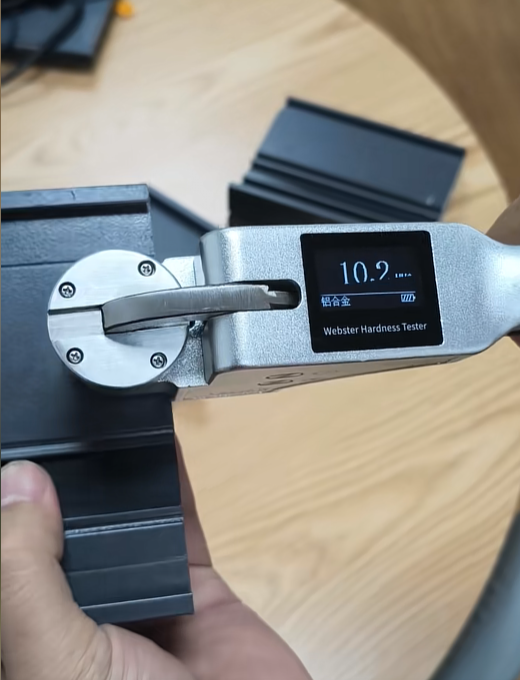
Your supplier will push a trial batch through the new die and inspect key physical metrics:
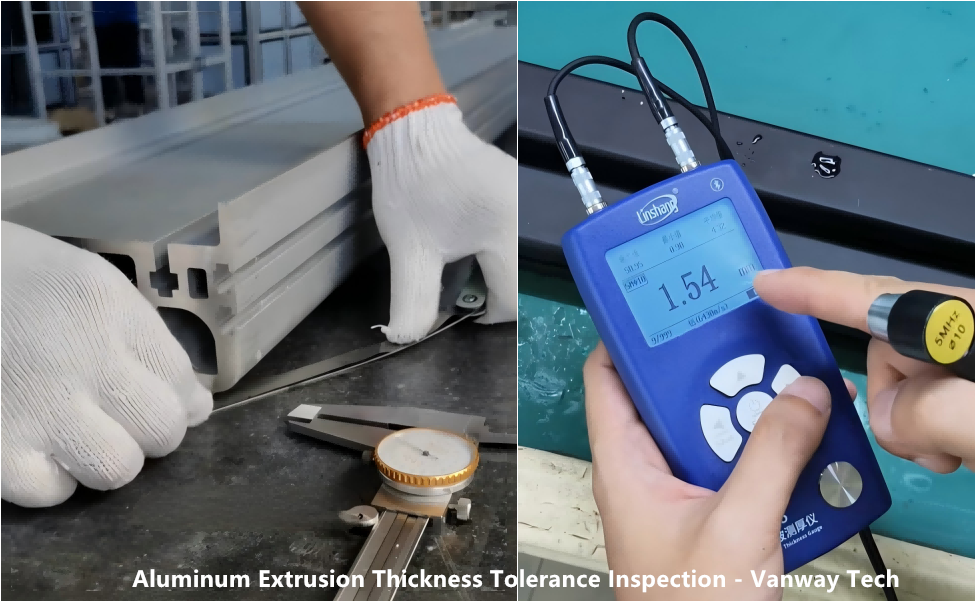
- Dimension accuracy using optical measuring tools.
- Wall thickness consistency across the profile.
- Hardness levels after heat treatment (T5/T6 tempers).
Refer to guidelines published by the Aluminum Extruders Council (AEC) to better understand how proper die design directly impacts profile performance and cost efficiency.
Aluminum Extrusion Die Cost Breakdown: What Affecting Pricing
China Aluminum Extrusion Sourcing Benchmark (2026 Procurement Guide)
| Profile Complexity | Average Tooling Cost (USD) | Sample Lead Time | Standard Factory MOQ | Tooling Refund Threshold |
|---|---|---|---|---|
| Simple Solid Trim (< 50 mm) | $250 – $450 | 7 – 10 Days | 500 kg – 1,000 kg | Refunded at 3 Metric Tons |
| Complex Hollow / Multi-Cavity | $500 – $1,200 | 12 – 15 Days | 1,000 kg – 2,000 kg | Refunded at 5 Metric Tons |
| Large Precision Heat Sink / Enclosure | $1,500 – $3,500+ | 15 – 20 Days | 2,000 kg+ | Refunded at 10 Metric Tons |


Step 4: Quality Control & Mass Production Oversight
Quality management must occur during production, not after the shipment arrives at your dock. As an experienced aluminum profile supplier, Vanway Tech enforces rigorous Quality Assurance (QA) protocols at every stage:
- Raw Material Inspection: Verifying billet purity before extrusion.
- Inline Dimensional Audits: Monitoring profiles continuously as they exit the cooling table.
- Surface Inspection: Checking for die lines, scratches, or color inconsistencies after surface treatment.
Anodizing Film Thickness Inspecting – Vanway Tech
Vanway Tech Quality Assurance (QA) & Inspection Flow Matrix
| Process Stage | Inspection Focus & Action | Testing Equipment / Method | Referenced Standard | Acceptance Parameters |
|---|---|---|---|---|
| Stage 1: Raw Material Audit | Chemical composition analysis & billet purity verification prior to extrusion. | Optical Emission Spectrometer (OES) | ASTM B221 / EN 573-3 | 6063 Purity: Fe ≤ 0.35%, Si: 0.20–0.60%, Mg: 0.45–0.90%; 100% Primary Ingot Traceability. |
| Stage 2: Inline Extrusion Audit | Continuous dimensional & mechanical monitoring on the cooling table. | Digital Calipers & Webster Hardness Tester | ISO 2768-m / EN 755-9 | Hardness: ≥ 8 HB (T5) / ≥ 12 HB (T6); Wall Thickness Tolerance: ± 0.08 mm. |
| Stage 3: Secondary CNC Inspection | Verification of hole centers, miter angles, and milled slots post-machining. | Coordinate Measuring Machine (CMM) & Gauges | ISO 2768-f (Fine Grade) | Hole Pitch: ± 0.05 mm; Angle Tolerance: ± 0.2°; Zero Burr Allowance under 10x Optical Magnification. |
| Stage 4: Surface Quality Check | Inspection of anodizing film thickness, gloss level, and color consistency. | Film Thickness Gauge & Spectrophotometer | ISO 2360 / QUALANOD | Film: 8–12 μm (Indoor) / 15–25 μm (Outdoor); Color Variance: ΔE ≤ 1.0; Salt Spray ≥ 1,000 hrs. |
| Stage 5: Pre-Shipment Audit (OQA) | Film adhesion testing, PE film application & packaging durability inspection. | Cross-Cut Tester & Carton Drop Testing | MIL-STD-105E (AQL 0.65) | 0% Paint Flaking (Class 4B/5B); 0.05 mm PE Protection Film applied; 100% Pallet Stability. |
Step 5: Packaging, Freight, and Logistics
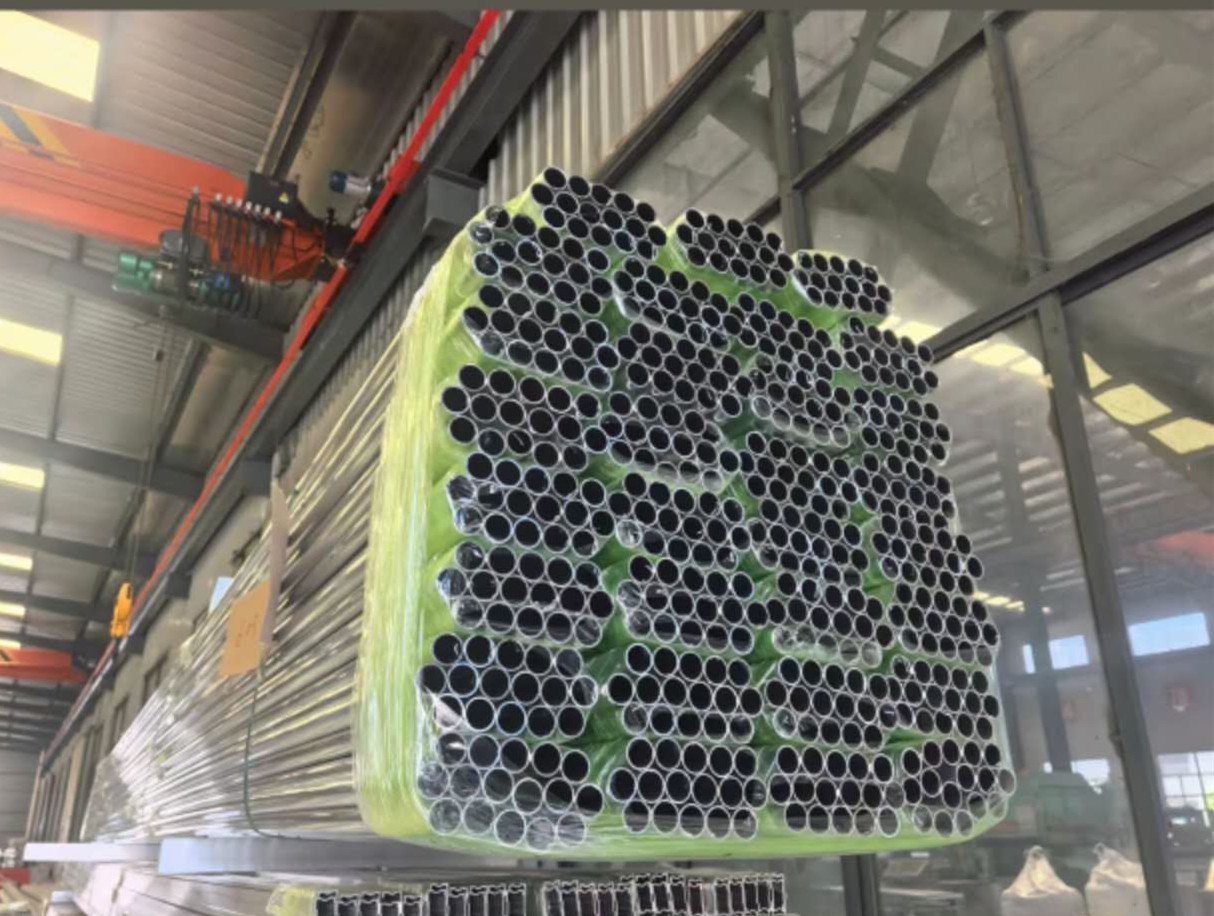
Long custom extrusions are vulnerable to scratches, surface oxidation, and irreversible bending during international transit. To guarantee zero-defect delivery across long-distance ocean and air logistics, Vanway Tech enforces a multi-layer protective packaging specification and rigorous palletization standard tailored for overseas B2B buyers.

How To Calculate FCL Cost For Aluminum Glass Railing Bulk Import
1. Surface Interleaving & Micro-Friction Prevention
To prevent surface friction, micro-scratches, and galling on high-gloss anodized or powder-coated surfaces, profiles must never contact bare aluminum during transit:
- Low-Tack PE Film: Apply 0.05 mm low-tack, UV-resistant PE protective film across all decorative faces, ensuring clean removal without adhesive residue after up to 6 months of storage.
- Non-Abrasive Interleaving Paper: Insert 80 g/m² neutral, non-acidic craft paper or high-density EPE (Expanded Polyethylene) foam sheets between profile layers to cushion against vibration-induced abrasion during sea transit.
- Spiral Plastic Wrapping: Bundle profiles into tight hexagonal sub-packs wrapped with 0.08 mm stretch film to eliminate internal movement within the outer shipping crate.
2. Structural Framing: Custom Crates vs. Steel Pallets
Depending on profile length (up to 6.0 meters), wall thickness, and shipping mode (FCL vs. LCL), standard cardboard cartons are insufficient for international ocean freight:
- Reinforced ISPM-15 Fumigated Wooden Crates: Constructed using 15 mm solid plywood panels with internal structural cross-bracing to withstand stacked loading up to 2.5 metric tons without crushing.
- Heavy-Duty Galvanized Steel Pallets: Designed specifically for ultra-long profiles (> 5.8 meters) and heavy-duty industrial framing to facilitate 4-way forklift handling while completely preventing sagging or bending during port operations.
- Corner & Edge Protectors: Fit high-density V-shaped paperboard or plastic edge protectors along all bundle corners to absorb impact forces during container loading.
3. Seamless Customs Clearance & B2B Cargo Labeling
Mislabeled or poorly documented cargo causes costly port demurrage and customs delays. Every export package leaving Vanway Tech includes standardized identification marks:
- Dual-Language Barcode Labels: Affix weatherproof vinyl labels on both ends of every crate featuring the Master PO Number, Part Number, Alloy & Temper, Quantity (Pcs/Meters), and Gross/Net Weight.
- Customs Compliance Tagging: Complete ISPM-15 heat-treatment stamping for solid wood components, accompanied by a detailed Packing List pouch secured in a waterproof sleeve on the external crate body.
Vanway Tech Export Packaging Specifications & Transport Methods
| Extrusion Profile Type | Primary Surface Protection | Outer Structural Packaging | Max Stack Capacity | Target Application & Transport Mode |
| High-Gloss Trim / Mirror Polish | 0.05 mm PE Protective Film + EPE Foam Interleave | ISPM-15 Plywood Box with Internal Foam Padding | Up to 1.5 Metric Tons | LCL Sea Freight / Air Cargo (Luxury Interior Trims) |
| Standard Architectural (6063-T5) | Non-acidic Interleave Paper (80 g/m²) + Stretch Film | Heavy-Duty Wooden Crate with Steel Strapping | Up to 2.5 Metric Tons | FCL Ocean Freight (Window Frames, Wall Reveals) |
| Heavy Industrial / Solar Frames | Hexagonal Bundling with PE Shrink Wrap | Galvanized Steel Pallet with Corner Protectors | Up to 3.5 Metric Tons | 40ft High-Cube Container (Heavy Structural Parts) |

Global Shipping with Superior Aluminum Extrusion Profiles Export Packaging
II. Maximize Your Sourcing Efficiency with Vanway Tech
Sourcing custom aluminum extrusions from China does not have to be complicated. By clarifying your technical specs, partnering directly with an experienced factory, and enforcing strict quality control, you can secure high-precision extrusions at competitive global costs.
As a specialized custom aluminum extrusion manufacturer, Vanway Tech provides end-to-end solutions—from initial die design to deep CNC fabrication and surface finishing.
- Explore our Custom Aluminum Extrusion Guide to learn more about profile engineering.
- Check out our specialized Extruded Aluminum Profiles Applications & Industries Solutions to see how we serve global clients.
- Ready to start your project? Contact the Vanway Tech engineering team today for a fast design review and instant quote.
Vanway-Tech丨 Premium Quality Extruded Aluminum Profiles Manufacturer and Exporter From China Since 2015

| Manufacturing Capability | Vanway Tech |
|---|---|
| Established | 2015 |
| Aluminum Alloys | 6063 / 6061 / 6005A* |
| Temper | T5 / T6* |
| Surface Finishes | Anodizing / Powder Coating / Brushing* |
| Secondary Processing | Cutting / CNC / Drilling / Punching* |
| Custom Tooling | Available + Effective |
Send us your CAD drawing, PDF or sample. Our engineers can review the profile geometry, wall thickness, alloy, finish and secondary operations before quotation.
Ready to optimize your project? Talk to Vanway Tech engineers and get your custom aluminum extrusion sample started.
III. Frequently Asked Questions (FAQs)
Q1: What aluminum alloys are best for custom aluminum extrusion?
A: The most common alloys are 6063 and 6061. 6063 offers an excellent surface finish, making it ideal for architectural profiles and complex decorative designs. 6061 provides superior yield strength and structural durability, which is perfect for industrial machinery, automotive parts, and high-load components.
Q2: How can I verify if a supplier is a real manufacturer or a trading company?
A: Ask for live factory audit videos, ISO 9001 certifications, and specific details about their extrusion press tonnage and in-house CNC machining capabilities. A direct custom aluminum extrusion manufacturer like Vanway Tech manages the complete process internally—from die design to precision machining and surface finishing—ensuring lower costs and faster lead times.
Q3: What critical technical files are required to get an accurate extrusion quote?
A: You should provide a 2D drawing (PDF or DWG format) specifying critical tolerances, surface finish, and alloy temper (e.g., T5 or T6), along with a 3D file (STEP or IGES format) for precise weight, wall thickness, and mold design evaluation.
Q4: How long does it take from die design to mass production for custom aluminum profiles?
A: Typically, custom mold/die creation and first sample validation take 10 to 15 days. Once the sample is approved by the client, mass production usually takes 2 to 3 weeks, depending on the profile complexity, order volume, and required surface treatments.
Q5: What is your Minimum Order Quantity (MOQ) for custom aluminum extrusions?
A: Our standard MOQ for custom profiles starts at 500 kg to 1,000 kg per die setup, depending on profile size and alloy selection. For initial prototyping or new product verification, we offer flexible trial orders to help clients validate design and market potential before full mass production.
Q6: What standard dimensional tolerances do you guarantee for custom extruded profiles?
A: We standardly manufacture to ISO 2768-m and EN 755-9 extrusion tolerances. For high-precision industrial components or custom architectural trims, our in-house secondary CNC machining can achieve tight tolerances down to ±0.05 mm, ensuring perfect fitment during final assembly.
Q7: Who owns the custom extrusion die, and how are mold costs handled?
A: The customer retains 100% ownership of all custom extrusion dies. Vanway Tech provides exclusive tooling management, guaranteeing your die will never be used for third-party production. Additionally, we offer a mold fee refund policy: once your cumulative order volume reaches the agreed target (e.g., 5 to 10 metric tons), 100% of the die cost will be reimbursed.
Q8: What surface finishing standards and coating thickness options do you support?
A: We offer integrated surface treatments compliant with international standards, including Type II Anodizing (8–15 μm), Type III Hard Anodizing (25–50 μm), Qualicoat-certified Powder Coating (60–80 μm), and Mirror Polishing. Every batch undergoes strict salt spray testing and color-matching inspection before packing.
IV. Related Contents You May Interested In
Mill Finish Aluminum vs Clear Anodized Aluminum: How to Choose the Right Finish
Custom Decorative Aluminum Profiles & Extrusion Trims: Ultimate B2B Sourcing Guide
4040 vs 4080 T-Slot Aluminum Extrusion: How to Stop Over-Engineering & Cut Frame Costs
Aluminum Extrusion Die Cost Breakdown: What Affecting Pricing
How to Remotely Evaluate Custom Aluminum Extrusion Suppliers: Mold Tolerance & MOQ
Aluminum Extrusion Sourcing: How Mastering MOQ Unlocks 15%+ Procurement Savings
Contact With Vanway Tech Team for Premium Aluminium Extrusion Products!
Enquire with UsConnect with Vanway Tech Team for Premium Aluminium Extrusion Products.
Contact InfoWe are looking forward to hearing from you!
-
Email: info@vanway-tech.com
-
Address: No. 588, Wuyi South Road, CSJ Moldware Town, Wujin, Changzhou, Jiangsu, China
Scan Below Codes to Contact Us Immediately.