Vanway Precision Materials Tech Co.,Ltd


Custom CNC Machine Aluminum Machining: B2B Manufacturer Guide

Written by Chloe Xue
Manufacturing & CNC Machining Specialist | DFM & Aluminum Components Expert
Chloe specializes in custom aluminum component manufacturing, high-precision CNC machining, and DFM (Design for Manufacturability) optimization. She helps global B2B engineering teams refine technical drawings, reduce production costs, and accelerate lead times.
Connect on LinkedInTable of Contents
Precision CNC Machining: Aluminum Component Tolerance Guide
High-precision CNC aluminum machining has become essential for B2B manufacturers that need tight tolerances, repeatable quality, and reliable delivery.
When sourcing custom CNC machine aluminum components, precise tolerance control directly impacts fit, function, and manufacturing costs. Standard tolerances (±0.1mm) work well for basic enclosures and brackets, but high-precision applications demand much tighter limits.
As a direct custom CNC machine aluminum manufacturer and global supplier, Vanway Tech helps engineers and procurement teams balance precision with production efficiency.


Case Study:
At the begining of May 2026, A European medical device client approached us for a critical 6061-T6 aluminum optical sensor housing, they faced severe signal misalignment due to thermal expansion and a tight ±0.01mm tolerance requirement.
By optimizing toolpaths and implementing a two-stage stress-relief heat treatment, Vanway Tech maintained critical hole locations within ±0.008mm across 1,000+ units, cutting their assembly defect rate by 17%.
Project Performance Metrics (Before vs. After):
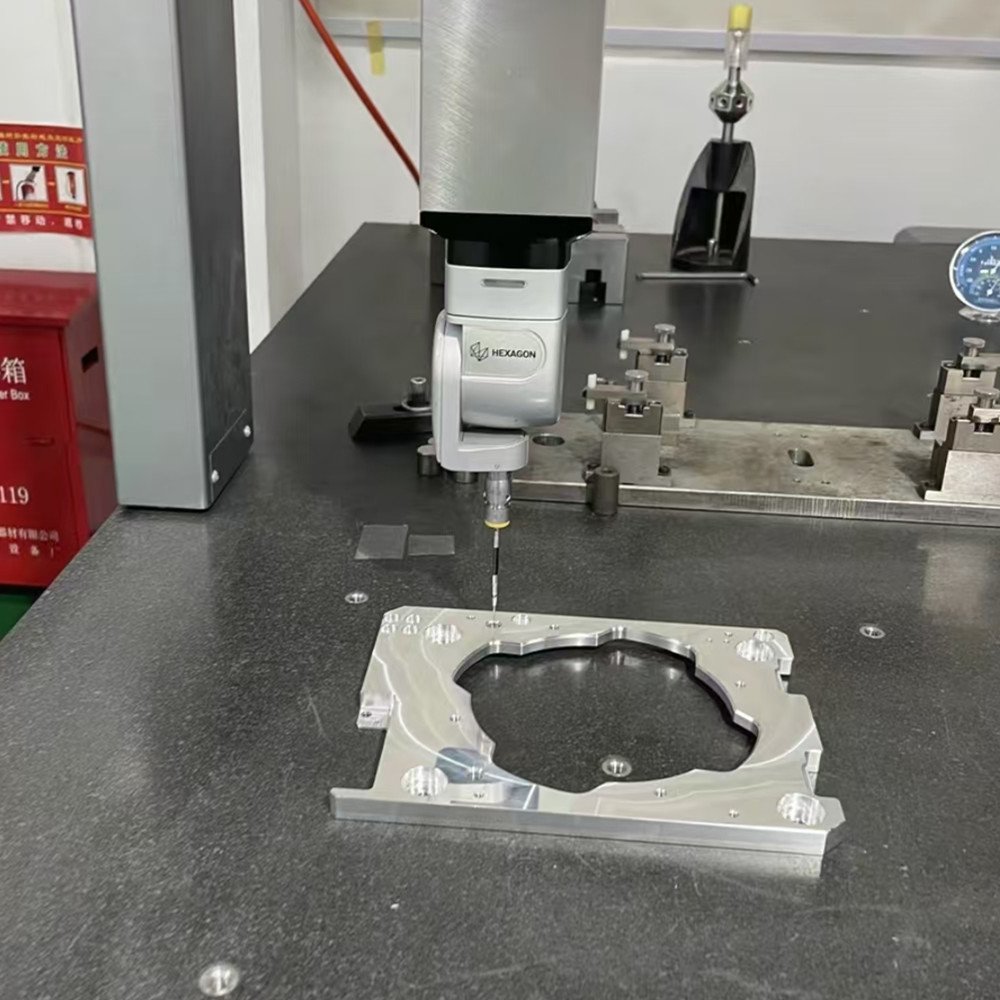
By conducting a thorough DFM (Design for Manufacturability) review, Vanway Tech optimized non-critical mating surface tolerances while implementing T651 stress-relief heat treatment and 5-axis CMM inspection for critical bore locations.
| Metrics & Parameters | Original Client Design (Before Optimization) | Vanway Tech Process (After Optimization) | Key Performance Improvement |
| Material Grade | Aluminum 6061-T6 | Aluminum 6061-T651 (Added Stress Relief) | Enhanced material structural stability |
| Critical Bore Tolerance | +/-0.005 mm (Over-engineered) | +/-0.008 mm (Bores) / +/-0.05 mm (Non-mating) | Rationalized tolerances to avoid over-machining |
| Concentricity | 0.015 mm | 0.006 mm (Monitored via 5-Axis CMM) | Concentricity precision improved by 60% |
| Machining Scrap Rate | 35% | Less than 1.5% | Scrap rate reduced by 95.7% |
| Unit Production Cost | $120.00 USD / pcs | $78.00 USD / pcs | Direct manufacturing cost reduced by 35% |
| Production Lead Time | 4 Weeks (Due to rework) | 10 Business Days (Stable batch delivery) | Delivery timeline shortened by 64% |
- Critical Bore Tolerance: +/-0.005 mm (Over-engineered) → +/-0.008 mm (Optimized & Stable)
- Scrap Rate: 35% → Less than 1.5%
- Concentricity: 0.015 mm → 0.006 mm (Measured via CMM)
- Unit Cost: $120.00 → $78.00 (35% cost savings)
- Production Lead Time: 28 Days → 10 Business Days
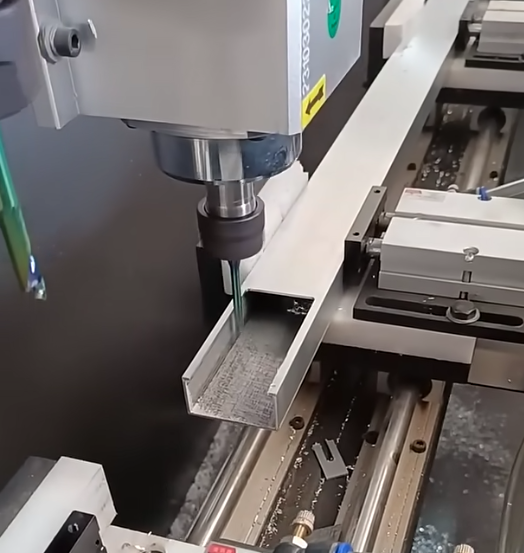
Ready to optimize your project? Talk to Vanway Tech engineers and get your OEM Custom CNC Aluminum Fabrication sample started.
Custom CNC Aluminum Machining Tolerances for Extruded Aluminum Profiles
Tolerance means the allowed difference in a part’s size. Aluminum is easy and fast to machine, but it expands when heated. So, we need to control the machine temperature and check the parts carefully.
For custom CNC machine aluminum parts, the standard tolerance is usually about ±0.125 mm (±0.005 in). For special high-precision features, we can reach ±0.005 mm (±0.0002 in). Tighter tolerances need more machining time, more inspections, and higher costs.
- Standard Tolerance — ISO 2768-m: A practical choice for mounting brackets, structural profiles, general covers, and other non-critical components.
- Fine Tolerance — ISO 2768-f: Suitable for bearing seats, mating surfaces, optical mounts, and other features where assembly accuracy matters.
- Custom Precision Tolerance: Vanway Tech applies tighter tolerances only to critical dimensions. This approach helps customers achieve the accuracy they need without adding unnecessary production costs.
At Vanway Tech, we believe precision should serve the application—not simply increase the specification. By controlling critical dimensions selectively, we help B2B customers balance accuracy, performance, and production cost.
Standard vs. Precision Custom CNC Machine Aluminum Tolerances
| Machining Type | Typical Tolerance | Best Use Cases | Cost Impact |
| Standard CNC Milling | ±0.125 mm | Brackets, housings, structural frames | Base Cost |
| Precision CNC Milling | ±0.025 mm | Engine components, fluid valves | Moderate (+20–30%) |
| High-Precision CNC Turning | ±0.010 mm | Shafts, high-speed rotating parts | High (+50%+) |
| Ultra-Precision / Grinding | ±0.005 mm | Aerospace, medical instruments | Highest |
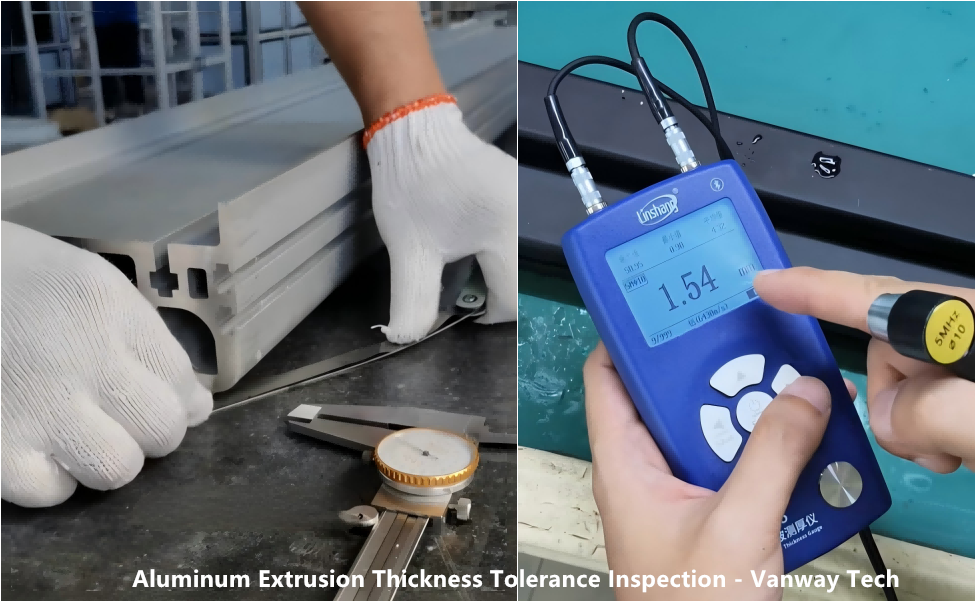
Key Factors Affecting Machining Precision
- Material Selection & Grade Different aluminum alloys behave differently under cutting tools. Common grades like 6061-T6 offer excellent stability, while 7075-T6 provides superior strength for tight-tolerance custom CNC machine aluminum parts.
- Thermal Expansion ControlAluminum expands under heat. Its thermal expansion coefficient means temperature shifts can affect part dimensions. Professional custom CNC machine aluminum suppliers maintain climate-controlled workshops to prevent dimensional drift during long production cycles.
- Tool Wear and DeflectionLong cutting tools flex under heavy loads. As an experienced OEM manufacturer, our machine shop uses rigid tool setups and real-time monitoring to maintain consistent batch-to-batch accuracy.
- Post-Processing & Surface FinishesAnodizing, powder coating, and plating add extra thickness to the metal surface. A reliable custom CNC machine aluminum manufacturer always calculates coating buildup before cutting metal.
How to Optimize Tolerances for Lower Manufacturing Costs
A good CNC aluminum part should not only work well after machining. It should also be easy to make, easy to inspect, and cost-effective to produce.
At Vanway Tech, we review the drawing from the shop-floor point of view before production starts. This helps us find features that may increase machining time, tool changes, setup time, or scrap rates.
1. Keep Wall Thickness Practical
Thin walls can vibrate during CNC machining. They can also bend from cutting pressure or heat. Therefore, we recommend keeping wall thickness as uniform as possible.
As a practical shop-floor guideline, 1.5–2.0 mm is a safer starting range for many aluminum CNC parts. When the wall becomes thinner, we normally slow the cutting process, reduce tool pressure, and add more support where possible.
A simple rule is:
Wall thickness ↑ → Rigidity ↑ → Vibration risk ↓ → Machining stability ↑
For critical thin-wall parts, Vanway Tech reviews the geometry before production instead of waiting for problems during machining.
2. Avoid Deep Pockets With Sharp Internal Corners
Deep pockets are another common cost driver. A long tool can deflect during cutting, especially in aluminum. Sharp internal corners also force us to use smaller tools, which increases machining time.
A practical DFM rule is to use an internal corner radius of at least 0.5 mm, and preferably larger when the design allows it. For deep pockets, we also recommend:
Depth-to-width ratio ≤ 4:1 as a practical starting point.
For example, if a pocket is 20 mm wide, a depth around 80 mm already creates a difficult machining condition. We may need longer tools, slower cutting speeds, and additional setups.
Whenever possible, we suggest adding a larger corner radius. This lets the cutting tool remove material more efficiently and reduces unnecessary production time.
3. Control Thread Engagement
Threads need enough engagement to hold securely, but too much depth does not always add useful strength.
For aluminum parts, a practical starting rule is:
Thread engagement ≈ 1–1.5 × thread diameter
For example, an M8 thread may use around 8–12 mm of effective engagement, depending on the application, load, thread quality, and material.
We also recommend avoiding unnecessarily deep blind threads. Every extra millimeter adds machining time and increases the chance of chip-control and tapping problems.
4. Use Standard Features Whenever Possible
The shop floor works faster when we can use standard tools, standard drills, and standard cutters. Special sizes often require extra tool preparation or slower machining.
For example, a standard drilled hole is usually easier and cheaper to produce than a special non-standard hole. The same principle applies to radii, hole diameters, thread sizes, and pocket dimensions.
Our practical advice is simple:
Standard feature → standard tool → fewer setup changes → lower unit cost.
5. Select Tolerances Based on Function
Do not place a tight tolerance on every dimension. This is one of the most effective ways to control CNC machining cost.
For many general aluminum parts, ±0.10 mm can be a practical target. For critical features, ±0.01 mm may be required. However, a ±0.01 mm tolerance needs tighter process control, better measurement, more inspection, and often more machining time.
We recommend using a tolerance-cost approach:
General dimensions → ±0.10 mm
Critical dimensions → ±0.01 mm or as required
The goal is not to make every dimension extremely precise. The goal is to make the right dimensions precise.
6. Simple Engineering Formula for Tolerance
When checking a mating feature, we can use a basic fit relationship:
Assembly clearance = Hole size − Shaft size
For example:
- Hole: 20.00 ± 0.01 mm
- Shaft: 19.95 ± 0.01 mm
The nominal clearance is:
20.00 − 19.95 = 0.05 mm
This simple check helps engineers identify assembly risks before machining begins.
7. Vanway Tech DFM Shop-Floor Checklist
Before releasing a CNC aluminum drawing, our team recommends checking:
- Keep wall thickness reasonably uniform.
- Avoid very deep and narrow pockets.
- Add practical internal corner radii.
- Use standard hole and thread sizes.
- Keep thread depth within the actual application requirement.
- Apply tight tolerances only to critical features.
- Reduce unnecessary setups and difficult tool angles.
- Confirm that every critical dimension can be measured reliably.
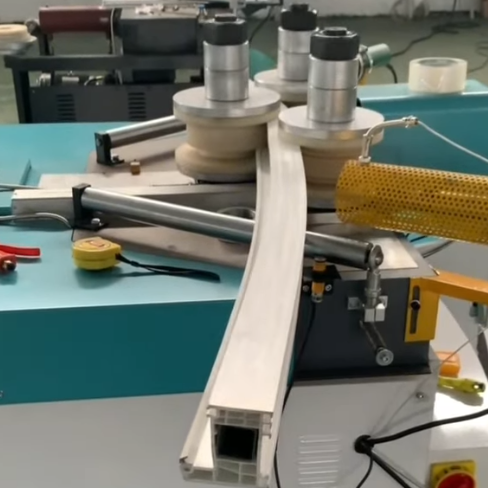
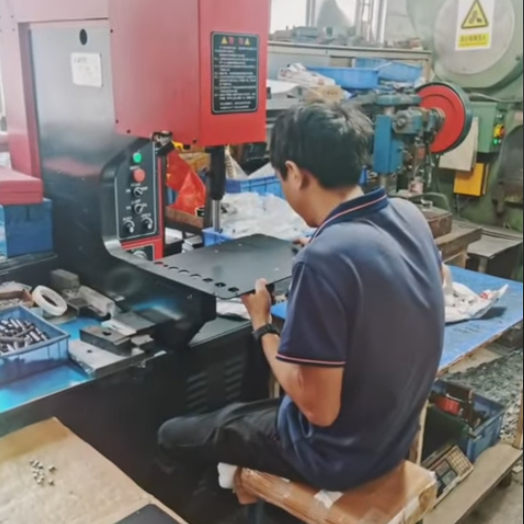
At Vanway Tech, we believe a strong CNC design starts with a realistic understanding of the machine, the cutting tool, and the operator. A small change on the drawing can save minutes on every part. Across hundreds or thousands of parts, those minutes become real savings.
That is why our DFM review focuses on one clear goal: make the part easier to produce without sacrificing its function or quality.
Frequently Asked Questions (FAQs)
Q1: What is the standard machining tolerance for custom CNC machine aluminum parts?
Standard machining tolerances for aluminum typically follow ISO 2768-m, which is around ±0.125 mm (±0.005 in). This tolerance level is cost-effective and suitable for most industrial enclosures, brackets, and structural frames.
Q2: How tight of a tolerance can your CNC machine shop achieve for aluminum?
As a precision custom CNC machine aluminum manufacturer, our advanced multi-axis equipment can achieve fine tolerances down to ±0.010 mm (±0.0004 in) for milling/turning and up to ±0.005 mm (±0.0002 in) for high-precision grinding processes.
Q3: Which aluminum alloy is best for tight-tolerance CNC machining?
Aluminum 6061-T6 is the most widely used grade due to its excellent machinability, structural stability, and cost-efficiency. However, for applications requiring higher strength and extreme stability under tight tolerances, 7075-T6 aluminum is recommended.
Q4: How does surface finish or anodizing affect final component dimensions?
Anodizing, plating, and powder coating add micro-layers of thickness to the metal surface. A reliable custom CNC machine aluminum supplier always pre-calculates surface coating buildup during the cutting stage to ensure final dimensions remain within target specifications.
Q5: How can I reduce manufacturing costs when ordering custom CNC aluminum components?
To lower production costs, apply tight tolerances selectively only to critical features (like bearing fits), design parts using standard tooling sizes, and consult our engineering team early in the design phase for manufacturability optimization.
Related Posts You May Interested In:


Contact With Vanway Tech Team for Premium Aluminium Extrusion Products!
Enquire with UsConnect with Vanway Tech Team for Premium Aluminium Extrusion Products.
Contact InfoWe are looking forward to hearing from you!
-
Email: info@vanway-tech.com
-
Address: No. 588, Wuyi South Road, CSJ Moldware Town, Wujin, Changzhou, Jiangsu, China
Scan Below Codes to Contact Us Immediately.