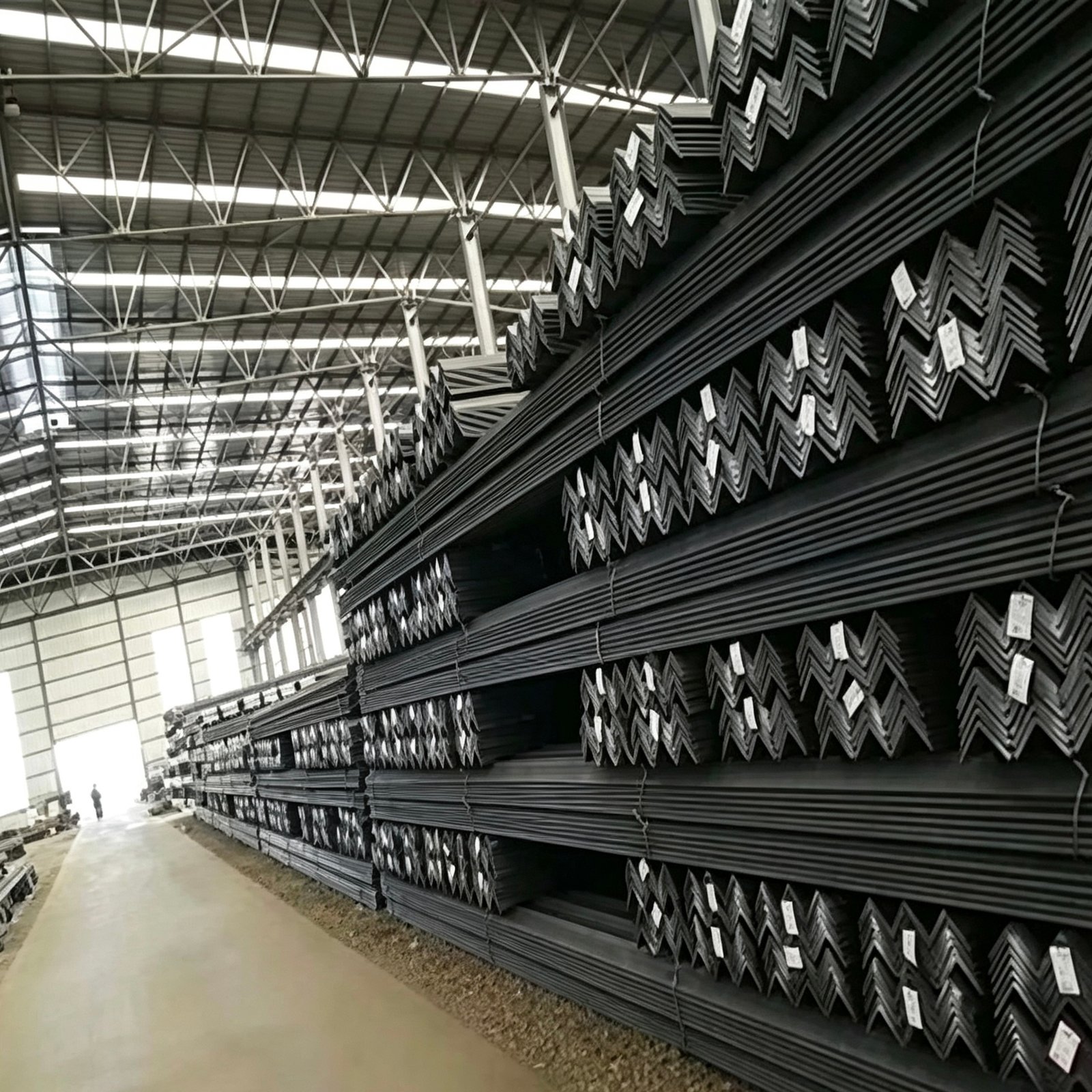
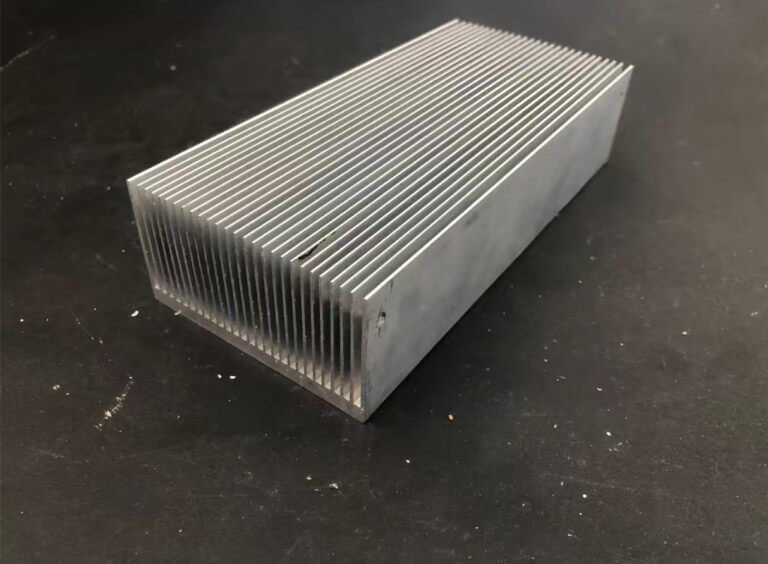
Vanway Precision Materials Tech Co.,Ltd


2026 Evaluation Guide for Aluminum Enclosure Manufacturer
How to Select a Reliable Extruded Aluminum Enclosure Manufacturer in 2026?
Table of Contents
Choosing an aluminum enclosure supplier is easy when all you need is a price. The real challenge begins when the enclosure must fit a tight installation space, dissipate heat, protect sensitive electronics, and arrive with every mounting hole in the right place.
A supplier may offer an attractive quotation and still lack the engineering support needed to turn your drawing into a reliable product. Tooling problems, inconsistent extrusion dimensions, poor surface finishing, or unclear inspection procedures can quickly turn a low-cost order into an expensive project.
In 2026, you need to look beyond product catalogs and equipment lists. A reliable aluminum enclosure manufacturer should demonstrate how it handles profile design, material selection, CNC machining, quality control, and repeat production.
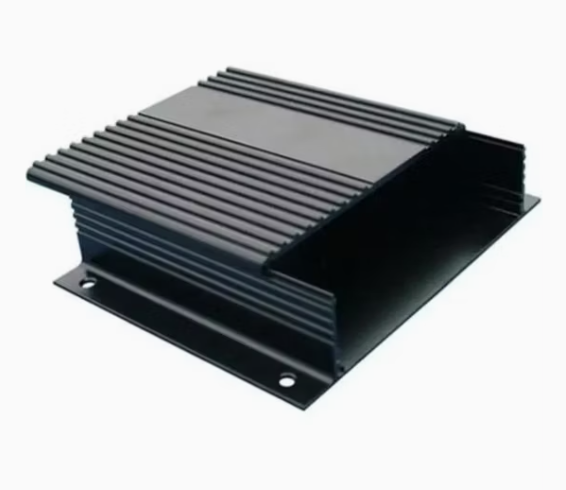
Extruded Aluminum Case Manufacturing
This guide explains what to check before choosing a supplier for Aluminum Extrusion Enclosure Producing , which technical parameters deserve attention, and how to compare quotations more accurately. It also includes practical inspection tables and an RFQ checklist to help procurement teams make better decisions.
How to Verify an Aluminum Enclosure Manufacturer’s Manufacturing Capabilities?
A manufacturer’s real capabilities are best judged by the processes it can control, not simply by the equipment it claims to own.
For custom aluminum enclosures, the manufacturing process may include extrusion, cutting, CNC machining, surface finishing, assembly, and final inspection. Each step can affect dimensional accuracy, appearance, delivery time, and product performance.
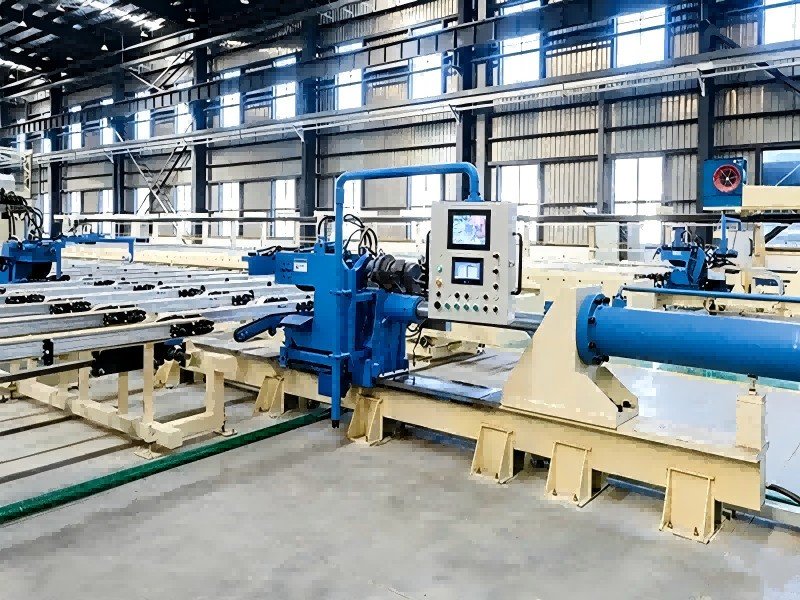
Aluminum Extrusion Production Line at Vanway Tech – Aluminum Enclosure Manufacturer
Check the Complete Manufacturing Process
Before requesting a quotation, confirm whether the supplier can manage the processes your project requires.
| Manufacturing Process | What Buyers Should Verify | Why It Matters |
|---|---|---|
| Aluminum extrusion | Press capacity, profile size, hollow-profile capability | Determines whether the cross-section can be produced |
| Profile cutting | Maximum length and cutting accuracy | Affects enclosure length and assembly |
| CNC machining | Machine working range, drilling, tapping, milling | Determines feature accuracy and processing flexibility |
| Surface finishing | Anodizing, powder coating, or qualified subcontracting | Affects corrosion resistance and appearance |
| Assembly | Gaskets, fasteners, inserts, end caps | Reduces coordination between suppliers |
| Quality inspection | Measuring equipment and inspection procedures | Helps maintain consistency between batches |
An aluminum enclosure manufacturer does not necessarily need to perform every process in-house. However, outsourced processes should be clearly identified, controlled, and included in the production schedule.

Cheap Aluminum Extrusions from China?China vs. Local Aluminum Extrusion Suppliers
Ask for Evidence, Not Just Equipment Lists of an aluminum enclosure manufacturer
A useful supplier evaluation should include:
- Photos or videos of relevant production equipment.
- Samples of similar enclosure profiles.
- CNC-machined components with comparable features.
- Inspection reports from previous production.
- Surface-finish samples.
- A clear explanation of which processes are outsourced.
For example, an aluminum enclosure manufacturer may have a large extrusion press but limited experience with thin-wall extruded aluminum electronic housings. Another supplier may have excellent CNC capabilities but no suitable extrusion process for a complex hollow profile.
The important question is whether the manufacturer’s equipment and experience match your specific enclosure design.
What to Evaluate in Extruded Aluminum Case Manufacturing?
Good Extruded Aluminum Case Manufacturing begins with a profile that is practical to extrude, machine, assemble, and use.
A complex cross-section may look impressive in CAD, but unnecessary cavities, uneven wall thicknesses, and difficult machining features can increase tooling costs and production risks for Extruded Aluminum Case Manufacturing.
Custom Extrusion or Standard Profile?
Before developing a new extrusion die, compare two approaches.
| Design Approach | Advantages | Limitations | Suitable Applications |
|---|---|---|---|
| Standard profile with CNC machining | Avoids new extrusion tooling; suitable for prototypes and smaller orders | May require more machining or compromise the design | Simple housings, low-volume projects |
| Custom extrusion profile | Integrates mounting slots, screw channels, and functional geometry | Requires tooling investment and profile validation | Repeat production, specialized enclosures |
| Custom extrusion with secondary machining | Combines profile efficiency with precise features | Requires coordinated extrusion and machining processes | OEM electronic housings |
A custom profile becomes more attractive when its geometry reduces repeated machining, simplifies assembly, or improves thermal performance.
However, tooling should not be developed simply because a design can be extruded. Buyers should first confirm that the expected production volume and functional benefits justify the investment.
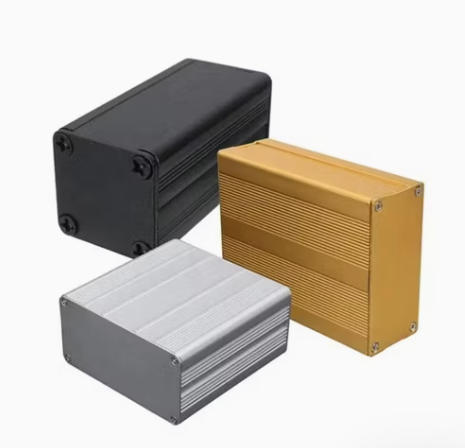
Top 5 Surface Finishing Options for Extruded Aluminum Enclosures
Select the Right Aluminum Alloy and Temper
The alloy affects strength, extrudability, machinability, and surface appearance.
| Alloy / Temper | Typical Characteristics | Common Enclosure Applications |
|---|---|---|
| 6063-T5 | Good extrudability and surface finish | Electronic housings, decorative profiles |
| 6063-T6 | Higher strength than typical T5 condition | Structural enclosure profiles |
| 6061-T6 | Higher strength in many product forms; good machining performance | Heavy-duty housings and mounting structures |
| 6005-T5 / T6 | Structural profile applications, depending on specification | Larger equipment housings and supports |
The final choice should be based on the required mechanical properties, profile geometry, finishing process, and operating conditions.
Buyers should request material documentation confirming the specified alloy and temper rather than relying on a general statement such as “industrial-grade aluminum.”
Choose Wall Thickness Based on Function
Wall thickness affects material cost, weight, stiffness, machining stability, and fastener support.
| Nominal Wall Thickness | Potential Benefits | Possible Limitations | Design Checks |
|---|---|---|---|
| 1.5 mm | Lower material use and weight | Greater sensitivity to local loads and machining | Deflection, screw channels |
| 2.0 mm | Practical starting point for many designs | May not provide enough support at mounting points | Stiffness, fastening loads |
| 2.5 mm | More material around fasteners and interfaces | Higher weight and material cost | Whether added thickness is necessary |
These values are preliminary design references, not universal requirements. Actual wall thickness depends on enclosure dimensions, alloy, profile geometry, loading, and manufacturing capability.
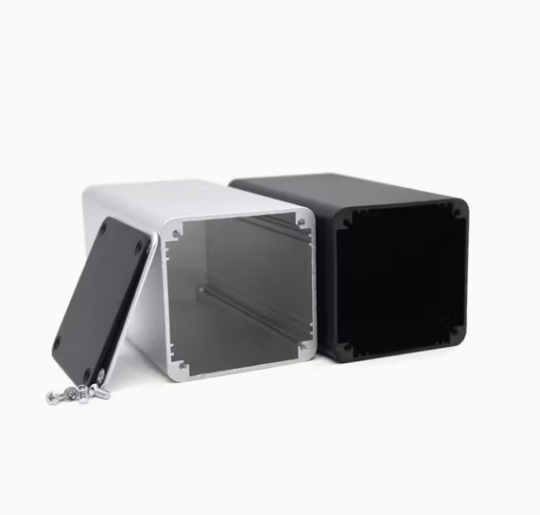
Affordable Custom Extruded Aluminum Enclosure: 5 Design Tips
Use DFM to Reduce Unnecessary Complexity
A design-for-manufacturing review should take place before extrusion tooling is finalized.
Common improvements include:
- Keeping wall thickness reasonably uniform.
- Avoiding unnecessarily deep or narrow cavities.
- Simplifying screw channels and mounting slots.
- Reducing machining operations where extrusion can form the feature.
- Allowing sufficient tool access for CNC machining.
- Reviewing corner radii and transitions for extrusion feasibility.

Custom Aluminum Enclosure Fabrication: 5 Smart Ways to Lower Tooling Expenses
A useful DFM report should identify the original design issue, recommend a specific change, and explain its effect on tooling, machining, assembly, or cost.
How to Evaluate Aluminum Extrusion Enclosure Producing Quality?
A good prototype is only the beginning. The real test is whether the supplier can reproduce the same dimensions and appearance across the production batch.
Aluminum Extrusion Enclosure Producing involves several quality factors that buyers should check before approving mass production.
Inspect Extrusion Dimensions and Surface Quality for Aluminum Extrusion Enclosure Producing
Important extrusion characteristics include:
- Profile width, height, and wall thickness.
- Straightness and twist.
- Flatness of mating surfaces.
- Surface scratches, dents, and die lines.
- Dimensional changes after cutting.
- Consistency between production batches.
Not every dimension requires the same tolerance. Buyers should identify the features that affect assembly, sealing, or structural performance and specify them clearly on the drawing.

Aluminum Extrusion Enclosure Quality Inspection: 5 Flaws to Check Before Shipment
Set CNC Tolerances According to Function
Applying very tight tolerances to every feature can increase machining costs without improving product performance.
| Feature | Typical Drawing Consideration | Inspection Method |
|---|---|---|
| General profile dimensions | Applicable extrusion tolerance standard | Caliper, micrometer |
| Critical mating surfaces | Tolerance based on assembly requirements | CMM, calibrated gauges |
| CNC mounting holes | Diameter and position tolerance | CMM, pin gauges |
| Gasket grooves | Width, depth, and location | CMM, profile gauge |
| Cut length | Explicit cut-length tolerance | Length measuring tool |
| Sealing face | Flatness requirement where necessary | Surface plate, CMM |
For example, a mounting hole that aligns with a PCB or connector may need tighter positional control than a non-critical exterior dimension.
A drawing should distinguish critical dimensions from general dimensions rather than applying one tolerance indiscriminately.
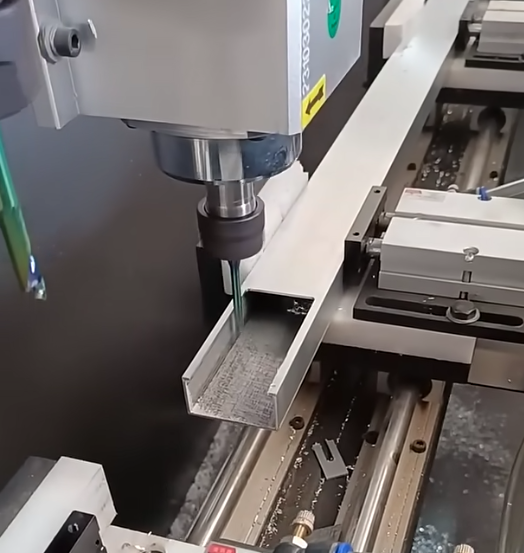
Custom CNC Machine Aluminum Machining: B2B Manufacturer Guide
Require First Article Inspection Before Mass Production for Aluminum Extrusion Enclosure Producing
First Article Inspection (FAI) verifies whether the initial production sample matches the approved drawing and requirements.
A useful FAI report should include:
- Drawing number and revision.
- Critical dimensions and specified tolerances.
- Actual measured values.
- Inspection equipment used.
- Pass/fail results.
- Any deviations and approved corrective actions.
Buyers should also confirm how the supplier controls drawing revisions and prevents unapproved changes during repeat orders.
How to Choose an Extruded Aluminum Heatsink Manufacturer?
When an enclosure also functions as a heat sink, profile design becomes a thermal engineering decision.
A capable extruded aluminum heatsink manufacturer should evaluate more than fin count. The complete thermal path includes the heat source, interface material, base, fins, airflow, and surrounding environment.
Evaluate Heat Sink Geometry
Important design parameters include:
| Parameter | Why It Matters |
|---|---|
| Fin height | Affects available heat-transfer area and airflow resistance |
| Fin thickness | Influences extrusion feasibility and structural stability |
| Fin spacing | Affects airflow and fin efficiency |
| Base thickness | Influences heat spreading and structural support |
| Alloy and temper | Affect thermal conductivity and mechanical properties |
| Mounting surface | Influences thermal contact with the heat source |
| Overall profile length | Affects airflow distribution and temperature uniformity |
A higher fin count does not automatically mean better cooling. Closely spaced fins may restrict airflow, particularly in natural-convection applications.

The Ultimate B2B Buyer’s Guide to Sourcing Extruded Aluminum Heat Sinks in [2026]
Compare Thermal Performance Under the Same Conditions
Buyers should request thermal data based on clearly defined test conditions.
| Test Parameter | Information to Specify |
|---|---|
| Heat load | Actual power dissipated, such as 50 W or 100 W |
| Ambient temperature | Temperature surrounding the enclosure |
| Cooling method | Natural convection or forced air |
| Air velocity | Measured airflow where applicable |
| Installation orientation | Mounting direction during testing |
| Thermal interface | Material and contact arrangement |
| Measurement points | Heat source, base, fins, and ambient |
| Test result | Temperature rise or thermal resistance |
Thermal resistance can be expressed as:
Thermal Resistance = Temperature Rise / Heat Dissipated
For example, if a heat sink experiences a 30°C temperature rise under a 60 W heat load, its measured thermal resistance under that test setup is:
30°C ÷ 60 W = 0.5°C/W
This result should not be treated as universal. Thermal resistance changes with airflow, orientation, contact conditions, and test setup.
Ask for Thermal Validation
A supplier may use simulation during design, but buyers should distinguish between predicted and measured results.
For critical applications, request:
- Simulation assumptions and boundary conditions.
- Prototype thermal test results.
- Temperature measurement locations.
- Heat load and ambient conditions.
- Any design changes made after testing.
This helps determine whether the proposed enclosure can meet the actual operating requirements.
What to Check in Extruded Aluminum Electronics Enclosure Manufacturing?
Electronic enclosures often need to provide more than mechanical protection. They may also require sealing, electrical grounding, EMI shielding, and controlled interfaces for connectors and cables.
Reliable extruded aluminum electronics enclosure manufacturing should consider these requirements during profile design rather than treating them as finishing details.
Design for IP Protection
Ingress protection depends on the complete enclosure assembly, not just the aluminum profile.
Important design elements include:
- Gasket material and cross-section.
- Groove width and depth.
- Gasket compression.
- Cover flatness.
- Screw spacing and tightening sequence.
- Connector and cable-entry sealing.
- Joint design at end caps and interfaces.
| Design Element | Buyer Requirement |
|---|---|
| Gasket | Specify material and environmental suitability |
| Groove | Define dimensions and tolerances |
| Cover | Control flatness and mating surfaces |
| Fasteners | Specify type, spacing, and tightening requirements |
| Cable entries | Identify required sealing components |
| IP rating | Confirm through the applicable test method |
An aluminum enclosure should not be described as IP65 or IP67 simply because it includes a gasket. The complete assembly must be tested under the relevant requirements.
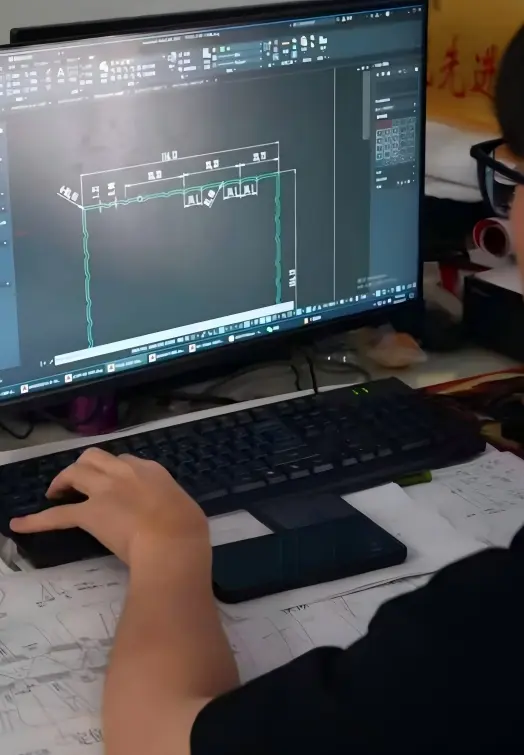
Custom Aluminum Enclosure Fabrication: 5 Smart Ways to Lower Tooling Expenses
Consider EMI Shielding and Grounding
Aluminum provides a conductive enclosure structure, but shielding performance depends on joints, openings, surface treatments, and electrical contact.
Buyers should review:
- Conductive contact areas.
- Gasket selection.
- Grounding points.
- Connector openings.
- Surface finish at electrical interfaces.
- Required shielding frequency range.
For projects with specific EMI requirements, request shielding effectiveness test results that identify the frequency range, test method, and measured performance.

How to Remotely Evaluate Custom Aluminum Extrusion Supplier: Mold Tolerance & MOQ
Verify Environmental and Functional Requirements
| Requirement | Verification Method | Documentation |
|---|---|---|
| IP protection | Applicable ingress protection test | Test report |
| EMI shielding | Shielding effectiveness test | Frequency range and results |
| Corrosion resistance | Specified corrosion test | Method and exposure duration |
| Thermal performance | Test under defined operating conditions | Temperature data |
| Assembly fit | Prototype fit-check | FAI or assembly report |
Testing should reflect the actual product configuration, including covers, gaskets, connectors, and fasteners.
How to Compare Aluminum Enclosure Manufacturers by Cost, MOQ, and Lead Time
The lowest unit price does not always represent the lowest project cost.
A complete comparison should include tooling, material, machining, finishing, inspection, packaging, logistics, and the cost of potential production delays.
Understand the Full Cost Structure
| Cost Component | What Buyers Should Confirm |
|---|---|
| Extrusion tooling | Die cost, complexity, ownership, maintenance |
| Aluminum material | Alloy, temper, profile weight |
| Extrusion production | Setup, production yield, batch requirements |
| CNC machining | Number of setups and machining time |
| Surface finishing | Anodizing, coating, masking |
| Assembly | Gaskets, fasteners, inserts |
| Inspection | FAI, testing, documentation |
| Logistics | Packaging, freight, duties, delivery terms |
A practical comparison formula is:
Total Project Cost = Tooling Cost + (Unit Cost × Order Quantity) + Secondary Processing + Inspection + Logistics
Example: Compare Two Supplier Quotations
The following example is illustrative and does not represent a market quotation.
| Cost Item | Supplier A | Supplier B |
|---|---|---|
| Tooling | $1,200 | $800 |
| Unit price | $9.00 | $10.20 |
| Quantity | 500 pcs | 500 pcs |
| Tooling + unit cost | $5,700 | $5,900 |
| Additional finishing / inspection | $600 | Included |
| Estimated project total | $6,300 | $5,900 |
Supplier A has a lower unit price, but Supplier B has a lower estimated project total in this example.
Before comparing offers, make sure both suppliers are quoting the same alloy, dimensions, finish, tolerances, inspection requirements, packaging, and delivery terms.
Check MOQ and Production Lead Time
Ask suppliers to separate the expected lead time into:
- Drawing review and DFM.
- Extrusion die production.
- Sample extrusion.
- CNC machining and finishing.
- First article inspection.
- Mass production.
- Packaging and shipment.
Also confirm whether the MOQ is driven by extrusion batch size, material purchasing, finishing requirements, or supplier policy.
For repeat orders, ask whether the manufacturer can maintain the approved profile, finish, and inspection requirements without unnecessary requalification.
How to Verify an Aluminum Enclosure Manufacturer’s Quality System?
A quality certificate is useful, but it does not replace evidence that the supplier can control your specific product.
Buyers should review the quality system alongside material traceability, inspection procedures, and production records.
Verify ISO 9001 and Material Documentation
Check:
- Certificate validity.
- Certification body.
- Certified site and scope.
- Whether the scope covers the relevant manufacturing processes.
- Material certificates for the specified alloy and temper.
- Traceability between material batches and production orders.
For aluminum enclosure projects, material documentation should identify the alloy, temper, applicable specification, and relevant batch information.
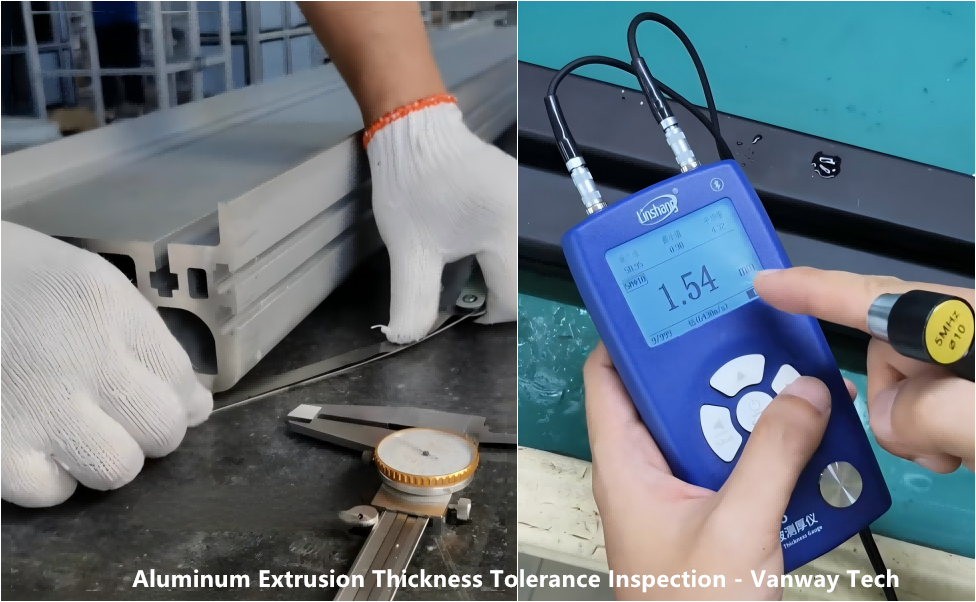
Aluminum Extrusion Enclosure Quality Inspection: 5 Flaws to Check Before Shipment
Review Inspection Equipment and Records
A supplier’s inspection capability should match the dimensions and requirements on your drawing.
| Quality Control Item | What to Request |
|---|---|
| Dimensional inspection | FAI report with actual measurements |
| Material verification | Material certificate and batch identification |
| Surface finish | Finish specification and inspection record |
| Functional testing | Relevant IP, thermal, or EMI reports |
| Nonconformance control | Corrective action records |
| Change management | Drawing and process revision records |
| Repeat production | Batch inspection history |
A reliable supplier should be able to explain what happens when a dimension falls outside tolerance, how the cause is investigated, and how the issue is prevented from recurring.
What to Include in an RFQ for Custom Extruded Aluminum Enclosures
A complete RFQ helps suppliers quote accurately and reduces delays caused by missing technical information.
Provide the Essential Technical Details
Before requesting a quotation, prepare:
- 2D engineering drawings and 3D CAD files.
- Aluminum alloy and temper.
- Profile cross-section and wall thickness.
- Critical dimensions and tolerances.
- Surface finish and color requirements.
- Application and operating environment.
- Thermal, sealing, EMI, or structural requirements.
- Prototype quantity, initial order quantity, and annual forecast.
- Packaging and delivery destination.
- Required inspection and documentation.
RFQ Checklist for Buyers Selecting an
| RFQ Information | Example / Buyer Input |
|---|---|
| Application | Industrial controller, power supply, sensor |
| CAD files | STEP file and 2D drawing |
| Alloy / temper | 6063-T5, 6061-T6, or specified alternative |
| Surface finish | Anodizing, powder coating, mill finish |
| Critical features | Mounting holes, grooves, sealing faces |
| Quantity | Prototype, first order, annual forecast |
| Testing | IP, thermal, EMI, corrosion, if required |
| Documentation | FAI, material certificate, inspection report |
| Delivery | Required date and shipping destination |
Questions to Ask Before Approving a Supplier
- Can you manufacture the extrusion and perform CNC machining for this design?
- Which features may require tighter tolerances or special tooling?
- Can you provide a DFM review before die production?
- How will you verify the enclosure’s sealing or thermal requirements?
- What inspection documents will be provided with the first batch?
- How will repeat orders be controlled against the approved sample?
- Who owns the extrusion die, and what are the maintenance terms?
- What is included and excluded in the quotation?
A supplier that answers these questions clearly is easier to evaluate and less likely to create unexpected costs later.
Why Vanway Tech Is a Practical Partner for Custom Aluminum Enclosure Projects?
Vanway Tech supports custom aluminum profile and enclosure projects from extrusion design through secondary machining and finishing.
For buyers evaluating an aluminum enclosure manufacturer, the key is whether the supplier can connect profile design with the practical requirements of the finished product.
Vanway-Tech丨 Premium Quality Aluminum Enclosure Manufacturer From China Since 2015

Extrusion and CNC Manufacturing Support
Vanway Tech offers aluminum extrusion capabilities supported by CNC machining and secondary processing.
Project evaluation can include:
- Custom extrusion profile and die assessment.
- Alloy and temper recommendations.
- Profile geometry and wall-thickness review.
- CNC drilling, tapping, milling, and cutting.
- Anodizing and powder coating options.
- Drawing-based dimensional inspection.
The objective is to identify manufacturing issues early, before tooling and production costs become difficult to change.

Support for Thermal and Electronic Enclosure Designs
For enclosure projects involving heat dissipation, mounting interfaces, or environmental protection, the design review should consider the complete assembly.
This may include profile geometry, heat sink features, machining requirements, gasket interfaces, connector openings, and finishing specifications.
Testing requirements should be defined according to the application and verified using the appropriate methods.

From Drawing Review to Production
A practical project workflow includes:
- Review the 2D drawing and 3D CAD files.
- Confirm alloy, temper, profile geometry, and finish.
- Evaluate extrusion tooling and machining requirements.
- Review critical tolerances and functional requirements.
- Produce and inspect the first article.
- Confirm sample approval before mass production.
- Maintain production and inspection records for repeat orders.

Have a custom enclosure drawing ready? Send your CAD files, application requirements, target quantity, and critical specifications to Vanway Tech for a manufacturability review, alloy recommendation, and quotation.
Frequently Asked Questions About Selecting an Aluminum Enclosure Manufacturer – FAQs
Q1. How can I verify whether an aluminum enclosure manufacturer is a real factory?
A: Request evidence of relevant production equipment, manufacturing processes, quality documentation, and samples of similar products. Confirm which processes are performed in-house and which are subcontracted.
Q2. What is the best aluminum alloy for an extruded electronics enclosure?
A: 6063-T5 is commonly selected for complex extruded profiles and good surface finish. 6061-T6 may be preferred when higher strength or specific machining requirements are important. The final choice depends on the design and application.
Q3. Can an aluminum enclosure manufacturer provide extrusion and CNC machining together?
A: Yes. Some manufacturers provide integrated extrusion, CNC machining, finishing, and assembly. Buyers should verify the actual process scope and confirm that outsourced operations are properly controlled.
Q4. How can I reduce custom aluminum enclosure tooling costs?
A: Consider whether an existing profile can meet the design requirements, simplify the cross-section, reduce unnecessary machining features, and compare tooling investment with expected production volume.
Custom Extruded Aluminum Enclosures: 7 Ultimate Fast Tips
Q5. What documents should I request before mass production?
A: Common documents include approved drawings, material certificates, first article inspection reports, surface finish specifications, and relevant functional test reports.
Q6. What tolerances can Vanway Tech achieve for CNC-machined aluminum enclosure components?
A: Vanway Tech reviews CNC tolerances according to the feature, material condition, machining process, and inspection requirements. Critical mounting holes, sealing grooves, and mating surfaces may require tighter tolerances than non-critical dimensions. Buyers should identify key dimensions on the drawing so we can evaluate the appropriate machining and inspection approach.
Q7. Does Vanway Tech provide anodizing and powder coating for aluminum enclosures?
A: Yes. Vanway Tech supports surface finishing options such as anodizing and powder coating, depending on project requirements. You can specify finish type, color, appearance, and any functional requirements. For precision features, we recommend reviewing coating thickness and masking requirements because surface treatment can affect dimensions and assembly fit.
Top 5 Surface Finishing Options for Extruded Aluminum Enclosures
Q8. What information does Vanway Tech need to quote a custom aluminum extrusion enclosure?
A: To prepare an accurate quotation, Vanway Tech recommends providing:
1) 2D engineering drawings and 3D CAD files.
2)Aluminum alloy and temper requirements.
3)Profile dimensions and critical tolerances.
4)Surface finish and color specifications.
5)Application and functional requirements.
6)Initial order quantity and annual forecast.
7)Required inspection documents and testing.
8)Delivery destination and packaging requirements.
Complete technical information helps reduce quotation delays and avoid unnecessary design changes for extruded aluminum electronics enclosure manufacturing.
Q9. Does Vanway Tech support prototype development before mass production?
A: Vanway Tech can review prototype and sample requirements before mass production. The project may include extrusion profile validation, CNC machining, surface finishing, and first article inspection. Buyers should confirm the sampling plan, tooling arrangement, and approval requirements before proceeding to production.
Q10. Can Vanway Tech manufacture long aluminum enclosure profiles for industrial equipment?
A: Vanway Tech supports long-length aluminum extrusion and CNC machining applications, subject to profile geometry, equipment capability, and project requirements. Buyers should specify the required overall length, cut-length tolerance, machining features, and packaging method so the production process can be evaluated before quotation for aluminum extrusion enclosure producing.
Final Checklist: Choose a Supplier That Can Prove Its Capabilities
Manufacturer Qualification Checklist
Before placing an order, confirm that your selected manufacturer can:
A reliable aluminum enclosure manufacturer should do more than quote a drawing. It should help identify manufacturing risks, explain technical trade-offs, and provide evidence that the finished enclosure will meet the agreed requirements.
For OEM buyers, that is the difference between simply purchasing an aluminum housing and building a dependable long-term manufacturing partnership.
Related Articles You May Interested In
Ultimate Guide to Source Custom Aluminum Extrusions From China
How to Verify Primary vs. Recycled Aluminum Extrusions
Aluminum Extrusion Sourcing: How Mastering MOQ Unlocks 15%+ Procurement Savings
Contact With Vanway Tech Team for Premium Aluminium Extrusion Products!
Enquire with UsConnect with Vanway Tech Team for Premium Aluminium Extrusion Products.
Contact InfoWe are looking forward to hearing from you!
-
Email: info@vanway-tech.com
-
Address: No. 588, Wuyi South Road, CSJ Moldware Town, Wujin, Changzhou, Jiangsu, China
Scan Below Codes to Contact Us Immediately.