Vanway Precision Materials Tech Co.,Ltd


Aluminum Edge Trims Suppliers: 6 Smart Overseas Sourcing Tips
How to evaluate overseas aluminum edge trims supplier? 6 Smart Overseas Sourcing Tips for B2B Buyers.
Table of Contents
Introduction: How to Choose a Reliable Overseas Aluminum Edge Trim Supplier?
Choosing an overseas supplier for aluminum edge profiles is not simply a matter of finding the lowest price per meter. A low quotation can become an expensive mistake if the profile arrives with inconsistent dimensions, poor surface quality, weak packaging, or machining errors.
Before placing an order, buyers should verify six things: manufacturing capability, alloy and dimensional control, surface treatment, total purchasing cost, quality inspection, and supplier reliability.
This guide explains how to evaluate an aluminum edge trim manufacturer, compare quotations for wholesale aluminum edge trim, and check whether an extruded aluminum edge trim meets your drawing and application requirements. It also covers the practical differences between Aluminum Edge Trims and other aluminum trims and moldings, so purchasing teams can make a decision based on production evidence rather than sales promises.
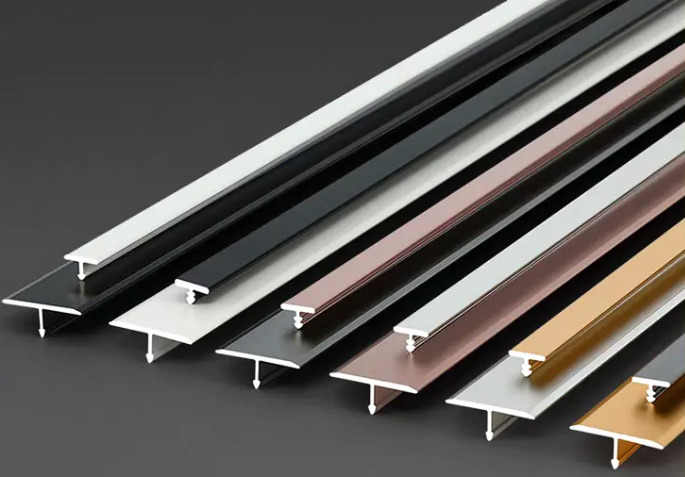
Aluminum Trims Edge vs. PVC: 5 Proven Sourcing Rules
1. Verify the Manufacturing Capabilities of an Aluminum Edge Trim Manufacturer
A supplier’s website may show extrusion presses, CNC machines, and anodizing lines. That does not prove the supplier controls every production stage. Ask for evidence of the actual equipment, inspection process, and production work completed for similar profiles.
An experienced aluminum edge trim manufacturer should be able to explain how it handles extrusion, cutting, machining, finishing, inspection, and packaging.
Check These Eight Manufacturing Processes
| Production stage | What to verify | Evidence to request |
|---|---|---|
| Aluminum billet preparation | Alloy grade and material traceability | Material certificate or batch record |
| Extrusion | Press capacity and profile dimensions | Equipment list and sample profile |
| Extrusion die | Die design and correction capability | Die drawing or tooling record |
| Cutting | Length control and cutting accuracy | Cutting inspection report |
| CNC machining | Hole, slot, and notch accuracy | Machining sample and dimensional report |
| Anodizing | Film thickness and color consistency | Coating thickness report |
| Powder coating | Coating thickness and surface appearance | Coating inspection record |
| Final inspection | Dimensional and visual checks | Inspection report and approved sample |
A supplier that only purchases finished profiles and resells them may not control the extrusion process. This is not automatically a reason to reject the company, but buyers should know which processes are performed in-house and which are outsourced.
Aluminum Extrusion Processing Capability – Vanway Tech
Questions to Ask Before You Approve a Supplier
- Do you operate your own aluminum extrusion presses?
- Can you manufacture profiles from our 2D drawing or 3D CAD file?
- Which alloy grades and tempers can you supply?
- Can you provide CNC machining and surface treatment in the same production workflow?
- Can you provide material certificates and dimensional inspection reports?
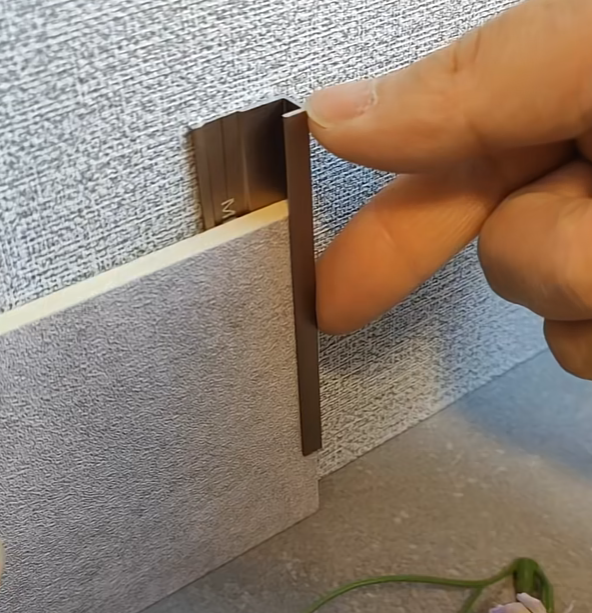
How to Remotely Evaluate Custom Aluminum Extrusion Supplier: Mold Tolerance & MOQ
How to Confirm an Extruded Aluminum Edge Trim Is Made to Your Drawing?
Request a production sample made with the proposed extrusion die. Compare the sample against the approved drawing, paying particular attention to the visible edge, mounting groove, wall thickness, and mating dimensions.
Do not approve a supplier based only on a catalog profile that looks similar. A small difference in the retaining lip or installation slot can prevent the profile from fitting your product.
2. Select the Right Alloy and Check Aluminum Edge Trims Dimensions
The alloy affects strength, extrusion performance, machining behavior, and surface finish. Buyers should specify the alloy and temper in the purchase order instead of accepting a general description such as “high-quality aluminum.”
For many decorative and architectural applications, 6063 is a practical starting point. For components requiring higher strength, 6061-T6 may be more suitable.
Compare Common Aluminum Alloys for Extruded Aluminum Edge Trim
| Alloy and temper | Typical application | General purchasing consideration |
|---|---|---|
| 6063-T5 | Decorative trims, architectural edges, interior profiles | Good extrusion and surface-finishing characteristics |
| 6063-T6 | Profiles requiring higher strength than common T5 applications | Confirm the specified mechanical properties |
| 6061-T6 | Industrial profiles and components with higher strength requirements | Higher strength, but extrusion and finishing requirements should be reviewed |
Mechanical properties vary with product dimensions, applicable standards, and testing conditions. Do not treat general reference values as guaranteed properties for every profile. Specify the required standard, temper, and minimum mechanical properties in the RFQ.

6063-T5 vs 6061-T6 Aluminum Extrusions: Which Alloy Fits Your Project?
Define the Critical Dimensions Before Ordering
For Aluminum Edge Trims, the drawing should identify dimensions that affect installation and appearance. A supplier cannot reliably control a dimension that is missing or unclear.
| Drawing item | Example project specification | What the buyer should check |
|---|---|---|
| Wall thickness | 1.5–2.0 mm | Structural strength and fit |
| Profile width | 25–50 mm | Coverage and installation space |
| Profile height | 10–30 mm | Edge protection and clearance |
| Cut length | 1,000–3,000 mm | Length consistency |
| Critical CNC dimensions | ±0.05 mm | Hole and slot positioning |
| Non-critical machined dimensions | ±0.10–0.20 mm | Functional clearance |
| Cut-length tolerance | ±0.5 mm | Assembly requirements |
These are suggested project specifications, not universal extrusion tolerances. Extrusion tolerances, CNC machining tolerances, and cut-length tolerances are different controls. The drawing should identify which dimensions are critical and which standard governs the extrusion profile.
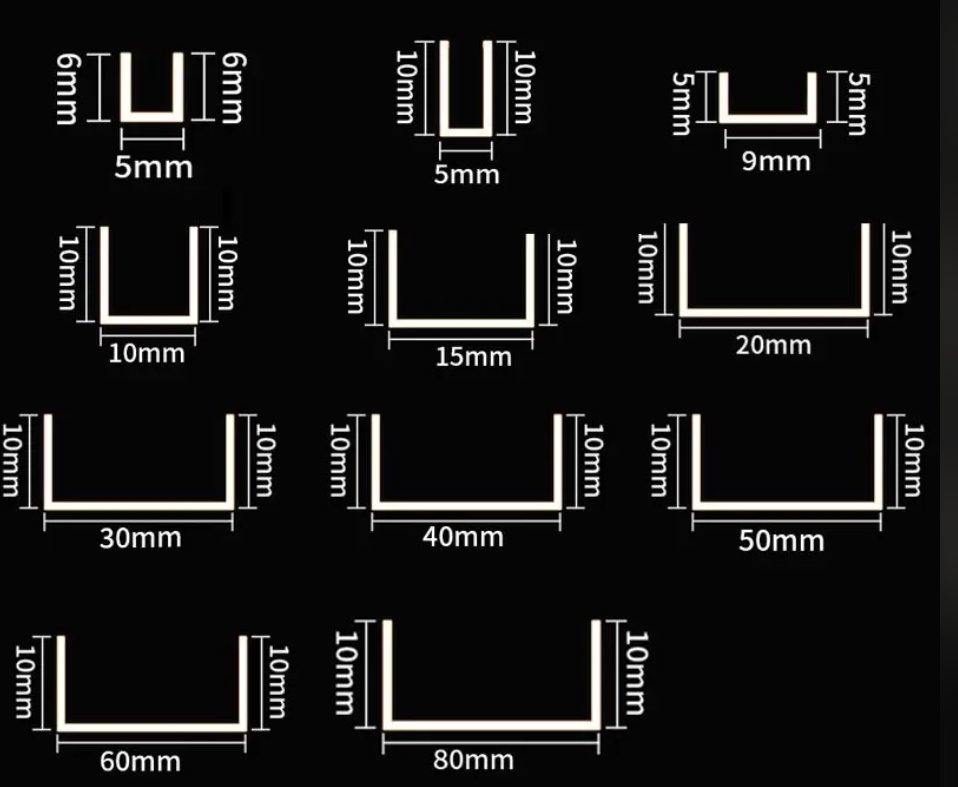
Standard vs Custom Aluminum Edge Trim: 6 Superior Buying Rules
Require a First Article Inspection Report
Before mass production, ask the supplier to inspect the first production sample against the approved drawing.
The report should include:
- Actual measured dimensions.
- Required dimensions and tolerances.
- Measurement equipment used.
- Pass or fail status for each critical feature.
- Photos of the inspected sample.
- Any approved deviation from the drawing.
This process helps prevent a batch of extruded aluminum edge trim from being produced with an incorrect groove, wall thickness, or mounting dimension.
3. Compare Surface Finishes for Aluminum Trims and Moldings
Surface treatment affects appearance, corrosion resistance, cleaning, and service life. The right finish depends on where the profile will be installed and how it will be used.
When comparing aluminum trims and moldings, buyers should request the finish type, coating thickness, color reference, and inspection method in writing.
Common Surface Treatments and Their Typical Specifications
| Finish | Typical reference specification | Common use |
|---|---|---|
| Mill finish | No additional decorative coating | Hidden or internal components |
| Clear anodizing | Around 15 µm | Interior architectural and decorative profiles |
| Colored anodizing | Around 15–20 µm | Decorative profiles requiring color |
| Outdoor anodizing | Around 20–25 µm | Exterior profiles |
| Powder coating | Around 60–80 µm | Decorative and architectural applications |
These thicknesses are practical reference targets, not automatic requirements for every project. The final specification should follow the applicable standard and the exposure conditions.
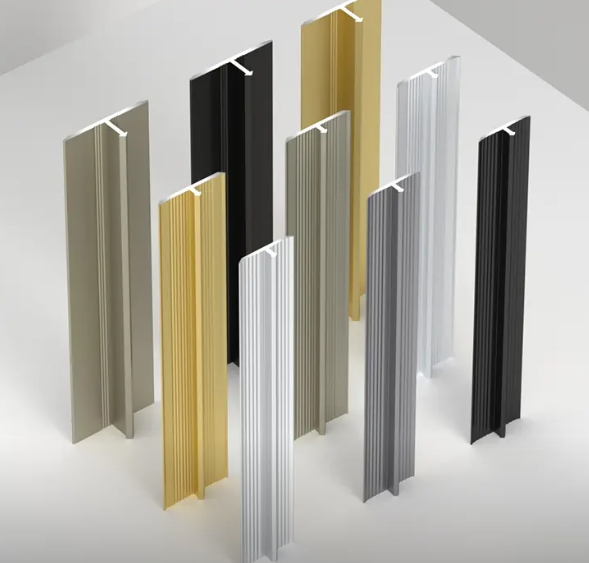
Anodized vs Powder-Coated Aluminum Trims Edge: Best B2B Selection Guide
Check Finish Quality Before Mass Production
A color sample is useful, but it is not enough. Ask for a sample produced using the intended alloy, extrusion die, pretreatment, and finishing process.
Check the following:
- Color consistency across different profile lengths.
- Visible scratches, dents, stains, and coating defects.
- Coating thickness using an appropriate thickness gauge.
- Adhesion where required by the project specification.
- Surface appearance under the lighting conditions used for final installation.
For adhesion testing, buyers may specify ISO 2409 where applicable. For corrosion testing, ISO 9227 provides a salt spray test method. However, a salt spray test result cannot be converted directly into a guaranteed number of outdoor service years.

Mill Finish Aluminum vs Clear Anodized Aluminum: How to Choose the Right Finish
What to Include in a Finish Approval Record
The approved record should identify the alloy, finish type, color reference, coating thickness, sample date, and acceptance criteria. Keep the approved physical sample or a clearly documented reference sample for production comparison.
For wholesale aluminum edge trim, finish consistency matters because multiple production batches may be installed side by side. A supplier should explain how it controls color and appearance between batches rather than relying on verbal assurances.
4. Calculate the Total Cost of Wholesale Aluminum Edge Trim
A low unit price does not always mean a low total purchasing cost. Tooling, machining, surface treatment, packaging, freight, and order quantity can change the final cost significantly.
When comparing quotations from an aluminum edge trim manufacturer, request a separate price for each cost item. This makes it easier to identify whether a supplier has omitted an important production or delivery charge.
Break Down the Quotation Before Comparing Suppliers
| Cost item | Supplier A | Supplier B |
|---|---|---|
| Extrusion die | $1,200 | $600 |
| Profile unit cost | $7.00 | $8.00 |
| Machining and finishing | $1.50 | $1.00 |
| Packaging | $0.50 | $0.50 |
| Total unit cost before tooling | $9.00 | $9.50 |
| Quantity | 1,000 pcs | 1,000 pcs |
| Total tooling cost | $1,200 | $600 |
| Total order cost | $10,200 | $10,100 |
Supplier B has the lower total cost in this example, even though its profile unit price is higher. The difference comes from its lower tooling charge and secondary-processing cost.
Use this formula to compare quotations:
Total Order Cost = Tooling Cost + (Unit Cost × Order Quantity)
The example excludes freight, duties, taxes, and other destination-specific charges. Add those items before making a final landed-cost decision.

How to Calculate Aluminum Profile Cost: Estimate Aluminum Extrusion Price
Check the Break-Even Effect of Tooling
Assume a custom profile requires a $1,200 extrusion die and has a combined unit cost of $9.00. The following table shows how tooling affects the average cost at different order quantities.
| Order quantity | Tooling cost | Production cost | Total cost | Average cost per piece |
|---|---|---|---|---|
| 100 | $1,200 | $900 | $2,100 | $21.00 |
| 500 | $1,200 | $4,500 | $5,700 | $11.40 |
| 1,000 | $1,200 | $9,000 | $10,200 | $10.20 |
| 5,000 | $1,200 | $45,000 | $46,200 | $9.24 |
| 10,000 | $1,200 | $90,000 | $91,200 | $9.12 |
The tooling charge has a much larger effect on small orders. For repeat orders, confirm whether the supplier stores, maintains, and reuses the extrusion die, and whether any future maintenance charge applies.
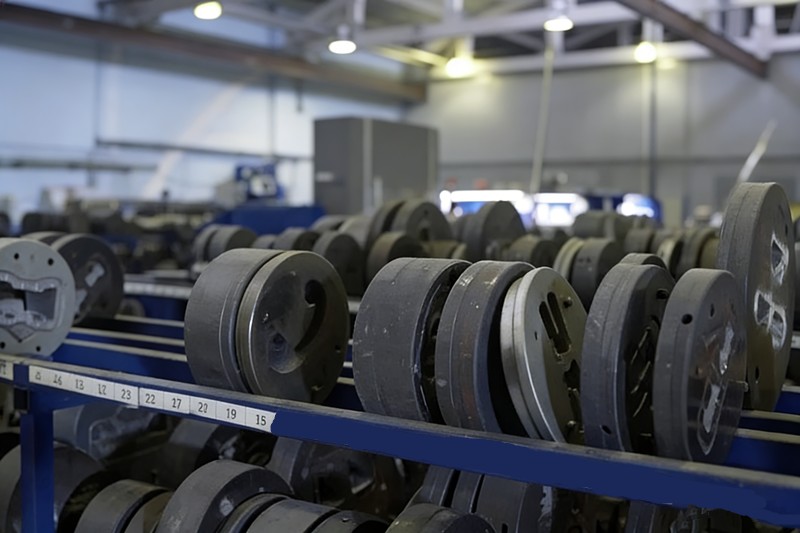
Aluminum Extrusion Die Cost Breakdown:What Affecting Pricing
Compare MOQ and Shipping Terms in the Same Format
There is no universal minimum order quantity for every profile. MOQ can be affected by billet use, extrusion setup, finishing batch size, and packaging requirements.
Instead of asking only for the supplier’s lowest MOQ, request quotations at three consistent quantities:
- 100 pieces.
- 500 pieces.
- 1,000 pieces.
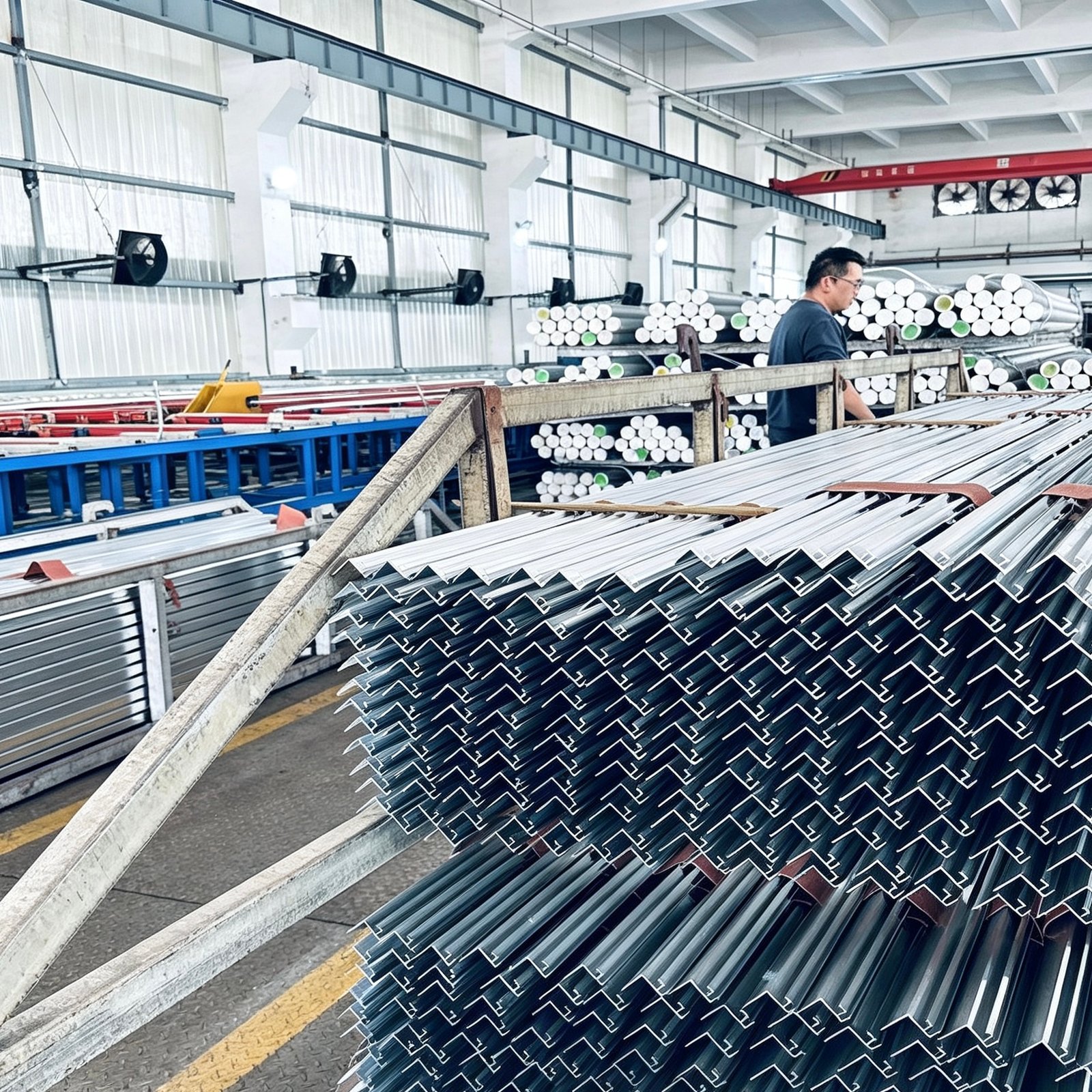
Aluminum Extrusion Sourcing: How Mastering MOQ Unlocks 15%+ Procurement Savings
Ask each supplier to list tooling, unit price, machining, finishing, packaging, and minimum production quantity separately.
For international shipments, compare the same Incoterm and destination. FOB can provide a useful quotation comparison when the named port is identical. For a complete landed-cost comparison, also include freight, insurance, customs duties, and local delivery.
5. Inspect Quality Before Approving Bulk Aluminum Edge Trims
A reliable inspection process should begin before mass production, not after the goods arrive at the destination. Buyers should agree on inspection stages and acceptance criteria before issuing the purchase order.
For Aluminum Edge Trims, the inspection plan should cover material identity, dimensions, surface finish, quantity, and packaging.
Use a Four-Stage Inspection Process
| Stage | Inspection focus | Required record |
|---|---|---|
| Material inspection | Alloy, temper, and batch identification | Material certificate and batch record |
| First article inspection | Profile dimensions and machining features | FAI report |
| In-process inspection | Cutting, machining, and finish consistency | Production inspection record |
| Final inspection | Appearance, dimensions, quantity, and packaging | Final inspection report |
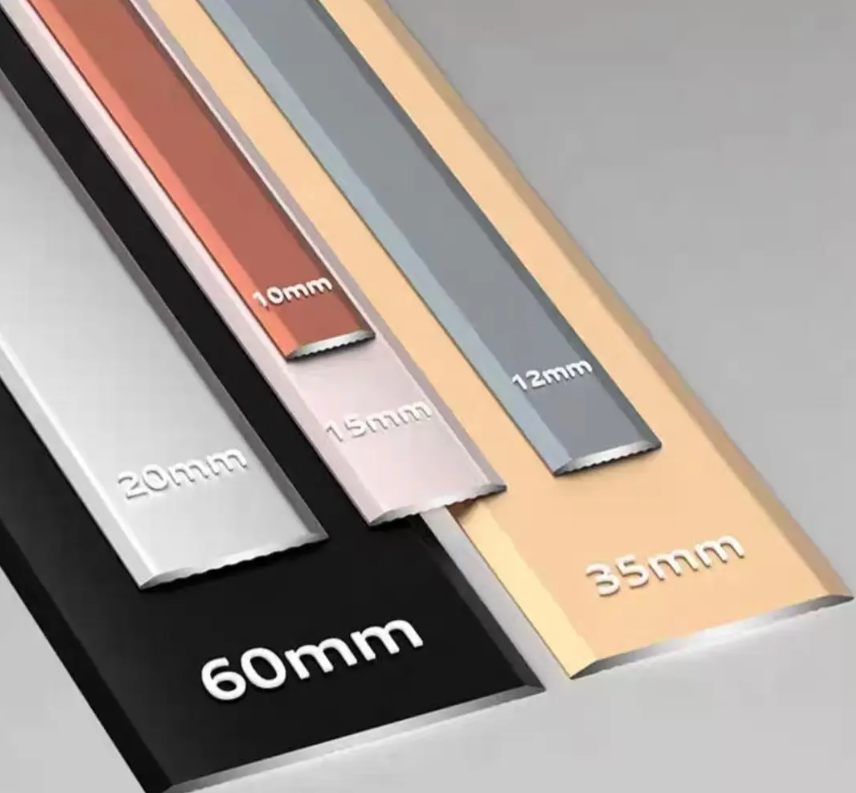
How to Select Architectural Aluminum Divider Reveal Trim: Specs & Finish Guide
Set Acceptance Criteria Before Production
A buyer may propose the following AQL targets as a starting point:
| Defect classification | Suggested acceptance target |
|---|---|
| Critical defects | 0 acceptance |
| Major defects | AQL 1.0 |
| Minor defects | AQL 2.5 |
These are proposed purchasing targets, not automatic requirements imposed by ISO 2859-1. The sampling plan, inspection level, sample size, and acceptance numbers must be selected from the applicable standard tables and agreed before inspection.
Examples of defects to define include:
- Critical: A profile feature that creates a safety risk or makes installation impossible.
- Major: Incorrect dimensions, serious deformation, or coating failure that affects function.
- Minor: Small cosmetic marks that do not affect installation or the agreed appearance standard.
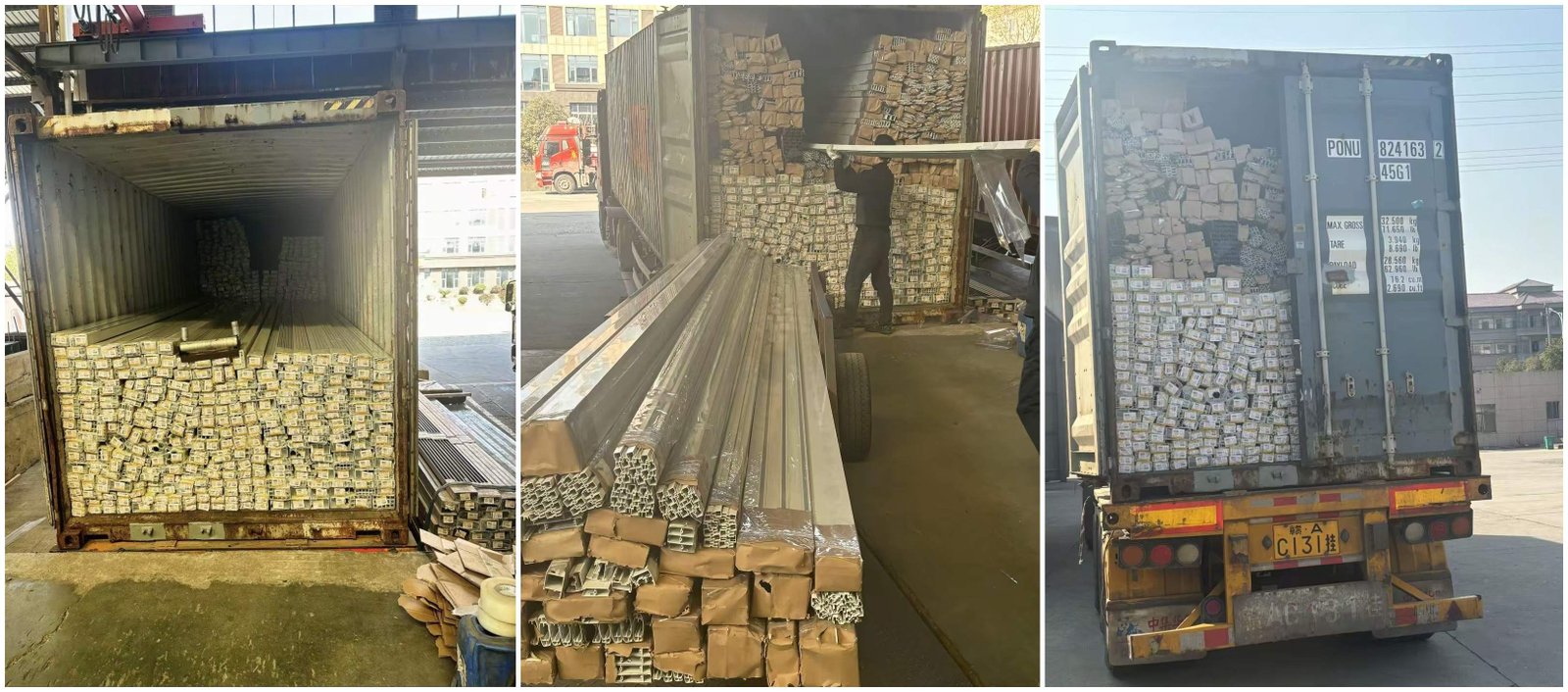
Global Shipping: 4 Key Practices for Aluminum Extrusion Profiles Export Packaging
Check Packaging and Shipment Protection
Long profiles can be damaged during loading, transport, and unloading. A supplier should describe its packaging method and provide photos before shipment.
A practical packaging specification may include:
- Protective film on finished surfaces.
- Foam or soft separators between profiles.
- Reinforced cartons or suitable wooden crates.
- Moisture protection for sea freight.
- Labels showing profile code, length, quantity, and batch number.
For repeat orders of wholesale aluminum edge trim, keep the approved packaging specification on file. This reduces the risk of receiving different packaging quality from one shipment to another.
6. Score an Aluminum Edge Trim Manufacturer Before Placing an Order
A structured supplier scorecard helps purchasing teams compare factories using the same criteria. It also prevents a low quotation from outweighing poor technical capability or weak quality control.
Use the following scorecard to evaluate an aluminum edge trim manufacturer before approving a new supplier.
Apply a Weighted Supplier Evaluation Scorecard
| Evaluation category | Weight |
|---|---|
| Manufacturing capability | 20% |
| Material control | 15% |
| Dimensional accuracy | 15% |
| Surface treatment | 15% |
| Pricing and MOQ | 15% |
| Quality inspection | 10% |
| Communication and delivery | 10% |
| Total | 100% |
Use a consistent rating scale from 1 to 5 for each category. Multiply each category’s rating by its assigned weight to calculate the weighted score.
| Final score | Suggested purchasing decision |
|---|---|
| 90–100 | Qualify the supplier for production consideration |
| 80–89 | Request samples and verify outstanding points |
| 70–79 | Require corrective actions before approval |
| Below 70 | Reject or suspend supplier evaluation |

Ultimate Guide to Source Custom Aluminum Extrusions From China
Identify Warning Signs During Supplier Verification
Be cautious if a supplier:
- Cannot identify the alloy and temper used for the quoted profile.
- Refuses to provide a dimensional inspection report.
- Quotes a finish without specifying its type or thickness.
- Cannot explain which processes are performed in-house.
- Changes tooling, machining, or finishing charges without a clear cost breakdown.
- Avoids confirming the approved drawing and sample.
A professional supplier should be able to connect its quotation to a drawing, material specification, production process, and inspection plan.
Conclusion: Choose an Aluminum Edge Trim Supplier Based on Verifiable Production Quality
The right supplier should do more than offer a competitive unit price. It should demonstrate control over extrusion, material traceability, dimensional accuracy, surface treatment, inspection, and packaging.
Before approving an order, compare suppliers using the same drawing, alloy specification, finish requirements, order quantities, and shipping terms. Request a first article sample and approve the inspection criteria before mass production.
A documented evaluation process helps buyers reduce sourcing risks, compare the real cost of wholesale aluminum edge trim, and build a more reliable supply chain for future orders.
Frequently Asked Questions About Aluminum Edge Trims and Suppliers – FAQs
Q1. Which aluminum alloy is best for Aluminum Edge Trims?
A: 6063-T5 is a common starting point for decorative Aluminum Edge Trims because it offers good extrusion and surface-finishing characteristics. Use 6063-T6 when the design requires higher strength than the selected T5 specification provides. Consider 6061-T6 for applications with higher strength requirements. Always specify the required temper and mechanical properties in the purchase order.
Q2. How can I verify whether an aluminum edge trim manufacturer is a real factory?
A: Ask the aluminum edge trim manufacturer for its extrusion equipment list, production photos, material certificates, sample profiles, and inspection reports. Confirm which processes are performed in-house and which are outsourced. A factory should be able to explain how it controls extrusion, machining, finishing, and final inspection.
Q3. What information should I provide when requesting a quotation for wholesale aluminum edge trim?
A: For an accurate wholesale aluminum edge trim quotation, provide:
– 2D engineering drawings or 3D CAD files.
– Required alloy and temper.
– Profile dimensions and critical tolerances.
– Required length and cutting tolerance.
– Surface treatment and color reference.
– CNC machining or drilling requirements.
– Order quantity and annual forecast.
– Packaging requirements.
– Destination and preferred shipping terms.
These details allow suppliers to quote the same scope of work.
Q4. How much does an extrusion die cost for a custom extruded aluminum edge trim?
A: As an illustrative budgeting reference, a simple solid-profile die may cost around $300–$800. A semi-hollow or simple hollow die may cost around $800–$2,000, while a large or complex hollow die may cost $2,000–$5,000 or more. These are general budget ranges, not a fixed quotation from Vanway Tech. The actual price depends on profile geometry, die size, complexity, and tooling requirements.
Q5. Which surface finish should I choose for aluminum trims and moldings used outdoors?
A: For outdoor aluminum trims and moldings, anodizing around 20–25 µm or powder coating around 60–80 µm can be used as initial specification references. Coastal and highly corrosive environments require additional consideration of pretreatment, coating system, exposure conditions, and corrosion testing. Do not use salt spray hours alone to claim a guaranteed outdoor service life.
Q6. What tolerances should I specify for an extruded aluminum edge trim?
A: Separate extrusion tolerances from CNC machining and cutting tolerances. For example, a project may specify ±0.05 mm for critical CNC features, ±0.10–0.20 mm for non-critical machined features, and ±0.5 mm for cut length. These are project examples, not universal extrusion tolerances. The applicable extrusion standard and drawing requirements should govern the final specification.
Q7. How do I prevent damage during international shipping of Aluminum Edge Trims?
A: Specify protective film, foam separators, reinforced cartons or wooden crates, moisture protection where required, and clear batch labels. Ask the supplier to provide packaging photos before shipment. For long profiles, also confirm the package dimensions, loading method, and unloading requirements with the freight provider.
Q8. Can Vanway Tech manufacture custom aluminum trims and moldings from customer drawings?
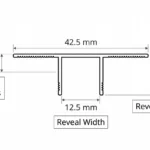
A: Yes. Vanway Tech supports custom aluminum extrusion projects using customer drawings and CAD files. Its capabilities include multiple aluminum alloy series, extrusion, CNC machining, cutting, drilling, punching, bending, and several surface-treatment options. Buyers can send their drawings, target quantities, and finish requirements for an initial manufacturing review.
Vanway-Tech丨 Premium Aluminum Edge Trims Profiles Manufacturer From China Since 2015

Vanway Tech can review profile drawings before tooling to identify potential extrusion, finishing, machining, and installation issues.
We manufacture custom aluminum extrusion profiles for architectural, interior, furniture, lighting and industrial applications, from profile design and extrusion tooling to surface finishing and secondary fabrication.
| Manufacturing Capability | Vanway Tech |
|---|---|
| Established | 2015 |
| Aluminum Alloys | 6063 / 6061 / 6005A* |
| Temper | T5 / T6* |
| Surface Finishes | Anodizing / Powder Coating / Brushing* |
| Secondary Processing | Cutting / CNC / Drilling / Punching* |
| Custom Tooling | Available + Effective |
Have a Custom Aluminum Profile Drawing?
Send us your CAD drawing, PDF or sample. Our engineers can review the profile geometry, wall thickness, alloy, finish and secondary operations before quotation.
How Vanway Tech Supports Custom Aluminum Edge Trims Projects?
At Vanway Tech, custom aluminum extrusion projects can be developed around the customer’s drawings, application requirements, and production quantities.
Our manufacturing capabilities include:
- 500T–5500T extrusion lines.
- Aluminum alloys from the 1000 to 7000 series, including 6063 and 6061.
- Custom extrusion die development.
- CNC machining, drilling, milling, and cutting.
- Anodizing, powder coating, and other finishing options.
- Cutting capabilities up to 12 m.
- Quality inspection throughout production.
For buyers developing custom aluminum edge trims, the most useful starting point is a 2D drawing or 3D CAD file. Include the panel thickness, required flange dimensions, installation method, alloy, finish, and estimated order quantity.
This allows the engineering and quotation teams to evaluate whether an existing profile can be adapted or whether a new extrusion die is justified.
Final purchasing recommendation: Do not approve a custom die until the supplier has reviewed the cross-section, confirmed the critical dimensions, estimated the complete manufacturing cost, and agreed on a sample inspection plan.
A good extrusion design should not simply look right on a CAD drawing. It should be practical to manufacture, easy to install, consistent in appearance, and economical to purchase over the life of the project.
Need a custom aluminum edge trims solution? Send Vanway Tech your drawing, required alloy, surface finish, and estimated order quantity. Our team can help evaluate the extrusion design and recommend a suitable manufacturing approach.

CHOOSE THE BEFITTING ALUMINUM EXTRUSIONS
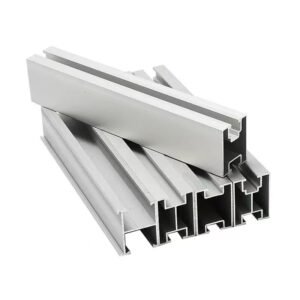
Custom Aluminum Extrusions
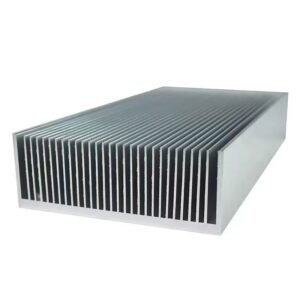
Aluminum Heat Sinks
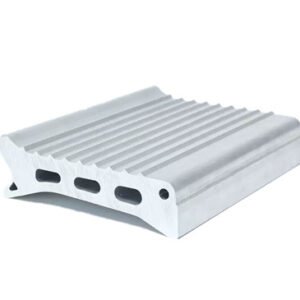
Industrial Aluminum Extrusions
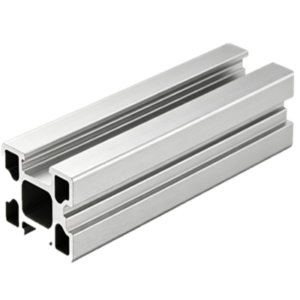
T-Slot Aluminum Extrusions
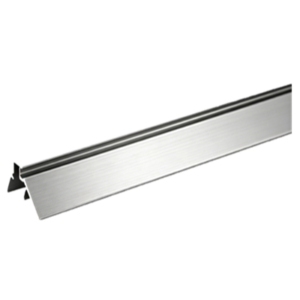
Decorative Aluminum Trim & Led Aluminum Channel Profiles
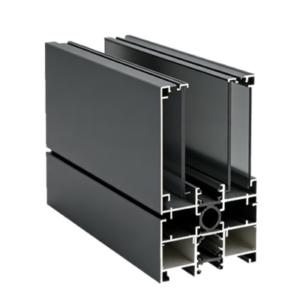
Window & Door Aluminum Profiles
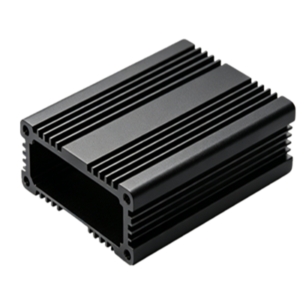
Aluminum Extrusion Enclosures
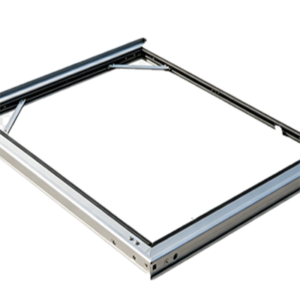
Structural Aluminum Extrusion Framing
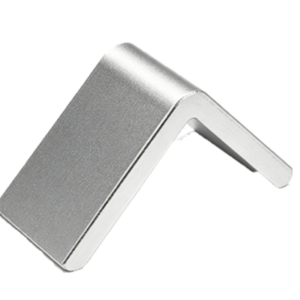
Aluminum Angle Extrusions
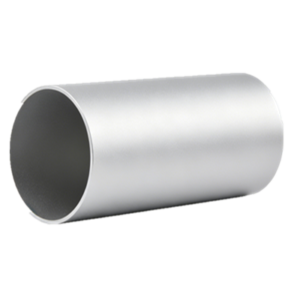
Extruded Aluminum Tubes
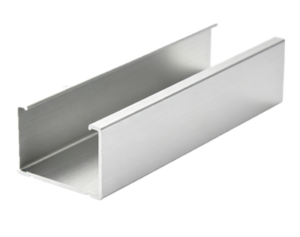
Aluminum U Channel Profiles
CNC Machined Aluminum Parts
Related Posts Regarding of Aluminium Edge Trim You May Interested In:


Contact With Vanway Tech Team for Premium Aluminium Extrusion Products!
Enquire with UsConnect with Vanway Tech Team for Premium Aluminium Extrusion Products.
Contact InfoWe are looking forward to hearing from you!
-
Email: info@vanway-tech.com
-
Address: No. 588, Wuyi South Road, CSJ Moldware Town, Wujin, Changzhou, Jiangsu, China
Scan Below Codes to Contact Us Immediately.