Vanway Precision Materials Tech Co.,Ltd


Solar Aluminum Rails: Choosing Wind & Corrosion Resistance
Solar Aluminum Rails Select Guide in 2026 丨Vanway Tech
Table of Contents
Vanway-Tech 丨 Premium Quality Aluminum Solar Rails Manufacturer For PV Mounting System
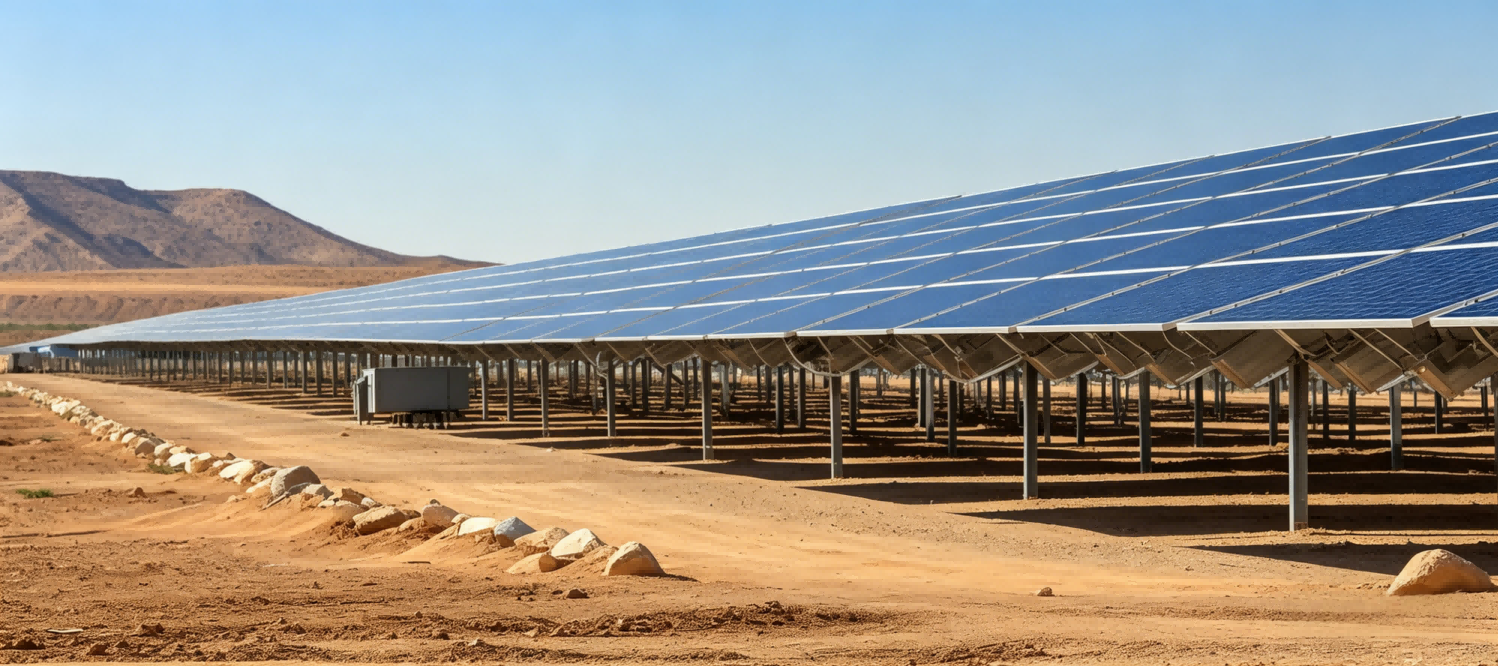
Solar Panel Aluminum Extrusion
Writen by: Mr. Chen, Principal Solar Frame & Structural Engineer
Experience: 6+ years in aluminum extrusions
Review scope: Material selection, structural integrity, corrosion resistance standards, and solar frame manufacturing specs
Technical focus: 6000-series alloy optimization, structural load performance, anti-corrosion anodizing for harsh environments, and thermal degradation prevention
Last reviewed: August 2026
Contact Vanway Tech today for tailored one-stop aluminium solar mounting rail solutions for your project.
Aluminum Solar Mounting Rail vs. Steel Bracket: Which One is Better Suitable For PV Mounting System
When planning a commercial, industrial, or utility-scale solar project, engineers must balance structural requirements, installation efficiency, corrosion exposure, and long-term maintenance. The choice between aluminum rails and steel brackets can therefore affect more than the initial material cost.
Steel remains widely used for heavy-duty structural applications, while aluminum offers advantages in weight, corrosion resistance, and on-site handling. However, the right choice depends on factors such as span, wind load, roof or ground conditions, and project design requirements.
In this guide, we compare aluminum solar rails and steel brackets across key engineering and project considerations, including weight, structural performance, corrosion resistance, installation, lifecycle costs, and application suitability. We also share practical considerations from Vanway-Tech’s experience in supplying aluminum extrusion solutions for PV mounting systems.
| Performance Metric | Solar Aluminum Rails (6005-T5 / 6063-T6) | Galvanized Steel Brackets | Engineering Impact |
| Material Density & Weight | ~2.7 g/cm³ (Lightweight) | ~7.85 g/cm³ (Heavy) | Solar aluminum rails reduce roof dead loads by up to 60%, eliminating structural reinforcement on older industrial buildings. |
| Corrosion Resistance | Natural oxide layer + 15µm–25µm anodization | Hot-dip galvanizing (HDG) coating | Aluminum handles salt-spray, high humidity, and ammonia environments without edge rust or self-healing coating failure. |
| Installation Efficiency | High (Custom extrusions, click-in clamps) | Moderate (Heavy lifting, field drilling/welding) | Lightweight solar aluminum rails allow single-worker handling, speeding up module racking by 25%–35%. |
| Structural Strength & Spans | High strength-to-weight ratio; flexible profile engineering | High absolute yield strength | Steel handles longer single spans on flat ground; engineered solar aluminum rails match wind/snow loads through profile geometry. |
| Scratches & Field Edits | Anodized aluminum re-passivates automatically | Cutting HDG steel exposes bare metal to rapid rust | Field modifications on solar aluminum rails require zero anti-corrosion touch-up paints on site. |
| 25-Year Lifecycle Cost | Low O&M; stable scrap value at decommissioning | Higher maintenance (rust inspections, coating repairs) | Lower freight costs and faster labor make solar aluminum rails lower in total cost of ownership (TCO). |
- Weight: Aluminum solar rails are about 1/3 the weight of steel brackets.
- Strength: Steel has higher rigidity; aluminum provides sufficient strength for most PV mounting.
- Corrosion Resistance: Aluminum is naturally anti-rust; steel can rust once the coating is damaged.
- Installation: Aluminum solar rails are faster and safer to install.
- Lifespan: Aluminum solar rails last 25–30 years; steel brackets typically last 15–25 years.
1. Material Performance: Aluminum Solar Rails vs. Steel Brackets
Aluminum Solar Rails
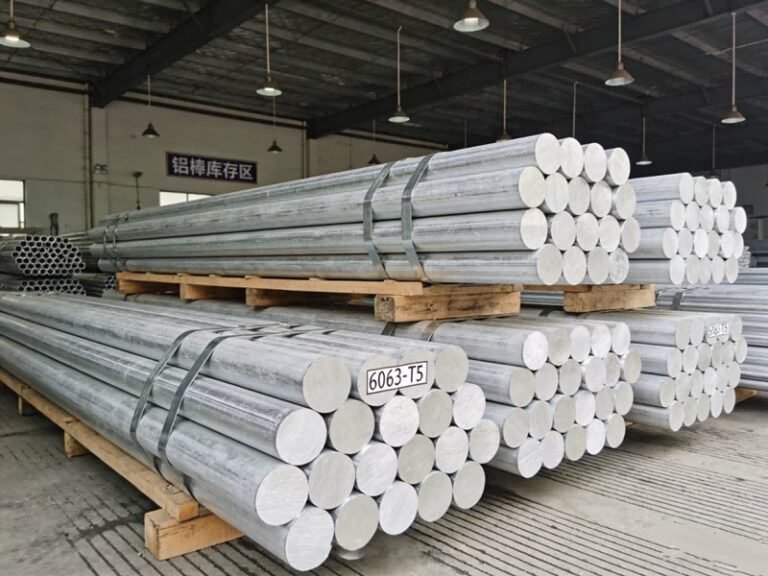
Most high-quality aluminum solar rails are made from 6063-T5 or 6063-T6 extruded aluminum alloy, which offers an excellent strength-to-weight ratio, stable performance and natural corrosion resistance.
Vanway-Tech produces aluminum solar rails using premium 6063-T5 aluminum billet with strict extrusion control, ensuring consistent wall thickness, smooth surface and high structural stability.
Steel Brackets
Steel brackets used in PV farms are usually hot-dip galvanized steel Q235 or Q355, which provides high rigidity and strong load-bearing capacity. However, steel is much heavier and depends entirely on surface coating for anti-corrosion protection.
Key Performance Comparison
| Property | 6005A-T6 | 6005-T5 | Q235B Steel |
|---|---|---|---|
| Elastic Modulus | ~69 GPa | ~69 GPa | ~200 GPa |
| Yield Strength | ~250 MPa | ~240 MPa | ≥235 MPa* |
| Density | 2.70 g/cm³ | 2.70 g/cm³ | 7.85 g/cm³ |
| Weight vs. Q235B | ~65.6% lighter | ~65.6% lighter | — |
Data Sources
- 6005A-T6: The Aluminum Association – 6005A Mechanical Properties
- 6005-T5: MatWeb – 6005-T5 Material Data
- Q235B: GB/T 700 Q235B Reference Data
Note:
The mechanical and physical properties presented in this comparison are representative reference values compiled from published aluminum alloy data, GB/T 700-based Q235B requirements, and technical literature. Actual properties may vary according to alloy temper, product form, cross-sectional dimensions, and applicable material standard. For structural design, the certified mill test report and the governing design standard should be used.
2. Corrosion Resistance: Aluminum Solar Rails Perform Better in Harsh Environments
Corrosion is the biggest enemy of PV mounting systems, especially in coastal areas, high-humidity regions, islands and salt-lake environments.

How to make your Aluminum Solar Panel Frame more cost-effective in 2026?
| Corrosion & Durability Factor | Aluminum Solar Rails | Hot-Dip Galvanized Steel Brackets | Engineering Note / Data Source |
|---|---|---|---|
| Primary corrosion protection | Natural aluminum oxide film; anodizing can further increase surface protection | Zinc coating provides barrier + sacrificial cathodic protection | Aluminum forms a protective oxide layer; HDG relies on zinc protection. (American Galvanizers Association) |
| Coating thickness | Anodized layer typically specified by the anodizing system; project-specific | HDG coating thickness varies with steel thickness and applicable ASTM specification | Do not specify a universal thickness without the applicable anodizing/galvanizing standard. (American Galvanizers Association) |
| Scratch resistance / damage | Corrosion resistance comes from the aluminum surface itself; anodized areas may be locally damaged by severe abrasion | Zinc can continue protecting exposed steel through sacrificial action after scratches | AGA states zinc can protect exposed steel around small damaged areas until surrounding zinc is consumed. (American Galvanizers Association) |
| Salt-spray testing | 500+ h can be specified as a project/product test requirement, if verified by an independent test report | Salt-spray performance depends on coating type, thickness and test criteria | ASTM B117 defines the test method but does not prescribe a universal 500-hour acceptance level. (ASTM Store) |
| Coastal / marine exposure | Well suited when the alloy, anodizing system and design are properly specified | HDG can also provide long-term corrosion protection, but performance depends on zinc coating and exposure conditions | Material selection should consider chloride concentration, wet/dry cycles and required service life. |
| Maintenance consideration | No routine recoating of the aluminum substrate is normally required; surface condition should still be inspected | HDG is designed for long-term, low-maintenance corrosion protection | AGA describes HDG as providing maintenance-free longevity for decades under appropriate conditions. (American Galvanizers Association) |
| Best-fit applications | Coastal PV, floating PV, rooftop PV and lightweight mounting structures | Ground-mounted PV and applications requiring robust steel structural components | Final selection should be based on structural loads, environment, connection design and project specifications. |
Key takeaway: Solar Panel Mounting Aluminum Rail can offer strong long-term corrosion resistance with lower maintenance requirements, particularly where weight and coastal exposure are important considerations. However, galvanized steel should not be treated as inherently unsuitable for harsh environments; properly specified hot-dip galvanizing also provides both barrier and sacrificial corrosion protection.
Official references:
Contact Vanway Tech today for tailored one-stop aluminium extrusion solutions for your project.
3. Weight & Installation Cost: Aluminum Solar Rails Save Time & Labor
ENGINEERING INSIGHT
Why Rail Weight Matters in PV Installation
In PV mounting projects, rail weight affects both transportation and on-site installation efficiency.
ALUMINUM DENSITY
2,700 kg/m³
STEEL DENSITY
7,850 kg/m³
01
6 m Aluminum Rail Weight Calculation
6 m
×
1.33 kg/m
=
7.98 kg
≈ 8.0 kg
Approximate weight of one 6 m aluminum rail
01
Easier Handling
A rail weighing around 8.0 kg can often be carried and positioned by one installer, depending on the profile design and site conditions.
02
Lower Handling Load
Lower rail weight can reduce manual handling and lifting requirements, particularly on commercial and rooftop PV projects.
03
More Efficient Installation
The objective is not simply to reduce weight, but to achieve the required structural performance with a profile that is easier to install.
✓
Engineering Takeaway
A well-designed aluminum solar support profile can provide the required structural performance while reducing material handling and installation effort.
4. Lifetime Cost Analysis: Aluminum Solar Rails Have Higher ROI
Many PV buyers focus on the initial price of the mounting material, but installation and transportation can also have a measurable impact on project cost. In an IBIS Associates study of PV mounting systems, aluminum showed 19%–60% lower installation labor costs per watt than comparable steel designs, depending on the system type.
The same study compared shipping costs over a 1,000-mile delivery distance. For commercial flat-roof systems, estimated shipping was $0.030/W for aluminum versus $0.039/W for steel. For large utility-scale ground systems, the difference was $0.004/W versus $0.012/W—about 67% lower shipping cost for aluminum in that scenario.
Maintenance should also be considered over the system’s operating period. Aluminum does not rely on a zinc coating for corrosion protection, so there is no zinc coating to periodically recoat. However, actual maintenance requirements still depend on alloy, surface treatment, fasteners, connections, and the installation environment.
At the end of the project, aluminum also has established recycling value. The U.S. Department of Energy states that steel, aluminum, and copper from PV systems can be sold into scrap-metal markets. DOE also notes that current PV systems are increasingly being evaluated across the full lifecycle, from material selection and operation to decommissioning and recycling.
The practical takeaway is simple: when evaluating aluminum vs. steel, compare the complete lifecycle cost—not just the material price per kilogram.
For many PV projects, the combination of lower handling weight, installation labor, shipping costs, and recycling potential can make a well-designed aluminum rail system economically attractive.
IBIS Associates / Aluminum Extruders Council – PV Mounting Cost Study


How to Choose Aluminum Profiles for Coastal & High-Salt Environments:Anodized,PVDF or Powder Coating
5. Which Is Better For Your PV Farm? Quick judgment
| PV Project Scenario | Aluminum Solar Rails | Steel Brackets | Preferred Choice |
|---|---|---|---|
| Commercial / Industrial Rooftop | ✓ | — | Aluminum |
| Coastal / Island PV | ✓ | △ | Aluminum |
| Floating PV | ✓ | △ | Aluminum |
| Fast Installation | ✓ | — | Aluminum |
| Low-Maintenance Projects | ✓ | △ | Aluminum |
| Large Inland Ground Mount | △ | ✓ | Steel |
| Extreme Wind / Snow Loads | △ | ✓ | Steel* |
| Lowest Initial Material Cost | — | ✓ | Steel |
Legend: ✓ Suitable △ Project-dependent — Less advantageous
* Material selection should ultimately be verified by structural calculations based on span, wind load, snow load, connections, and site conditions.
Why Global Developers Partner with Vanway-Tech for Solar Aluminum Rails

As an established solar aluminum rails manufacturer and direct factory supplier, Vanway-Tech supports EPCs, project developers, and racking distributors with precision-extruded profiles built for high-wind and heavy-snow environments.
- In-House Extrusion & Anodizing: Every batch of our solar aluminum rails uses prime 6005-T5 or 6063-T6 billet, finished with uniform anodization (up to 25µm) to guarantee 25+ years of zero-maintenance field operation.
- 1,000-Hour Salt Spray Tested: Our anodic oxidation coatings ($15\mu\text{m} – 25\mu\text{m}$) are certified under ISO 9227 / ASTM B117 standards, guaranteeing 25+ years of structural integrity in C4/C5 highly corrosive marine environments.

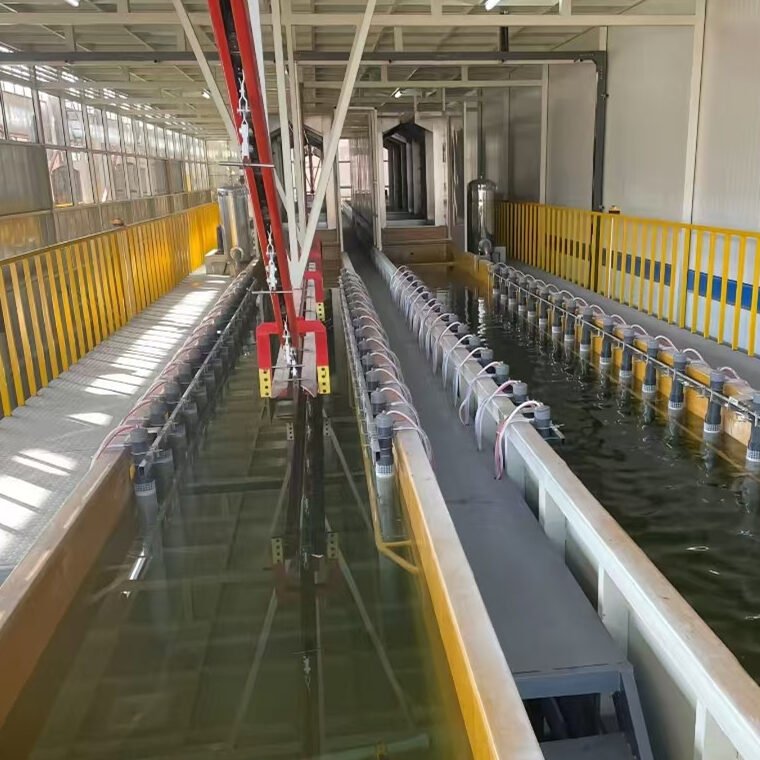
Anodized,PVDF or Powder Coating: Which Aluminum Finish Lasts Longest Near the Sea?
- Structural Engineering Support: Vanway-Tech’s engineering team assists with profile selection, wind tunnel load calculations, and custom cross-section design to optimize material usage without compromising structural integrity.
- Third-Party Certified: ISO 9001:2015 Quality Management System certified, with raw material compliance backed by SGS and TÜV Rheinland test reports.

- Global Logistics & Supply Chain: Operating direct-factory production lines allows us to supply certified solar aluminum rails to utility and commercial sites worldwide with fast turnarounds and strict quality control.


Frequently Asked Questions (FAQs)
Q1: What aluminum alloys are available for solar rails?
We commonly supply 6063-T5/T6 and 6005A-T5/T6 aluminum alloys. The suitable grade depends on the required span, wind load, structural strength, and profile design.
Q2: Can you provide aluminum solar rails based on our drawings?
Yes. Vanway-Tech supports custom extrusion, cutting, drilling, punching, and surface finishing based on customer drawings or project specifications.
Q3: What surface treatments are available for aluminum solar rails?
Common options include mill finish and anodizing. For coastal or high-humidity projects, the alloy and surface treatment can be selected according to the site corrosion conditions.
Q4: Can you provide samples before bulk production?
Yes. We can provide custom profile samples for dimensional inspection and assembly testing before mass production, helping buyers verify the design before placing a large order.
Q5: How do you ensure the rails meet project load requirements?
We evaluate the profile section, wall thickness, internal ribs, span, wind load, snow load, and connection points together rather than relying on wall thickness alone. Engineering calculations and sample testing can be provided according to project requirements.
Vanway-Tech 丨 Premium Quality 6063-T5 Aluminum Solar Rails Manufacturer From China Since 2015
CHOOSE THE BEFITTING ALUMINUM EXTRUSIONS
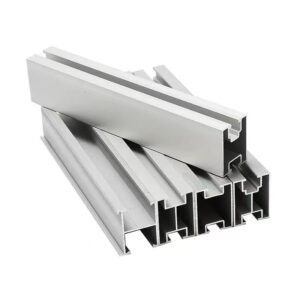
Custom Aluminum Extrusions
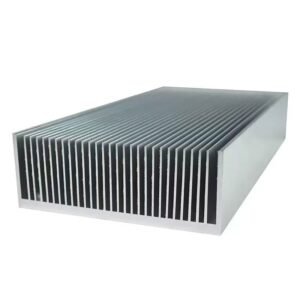
Aluminum Heat Sinks
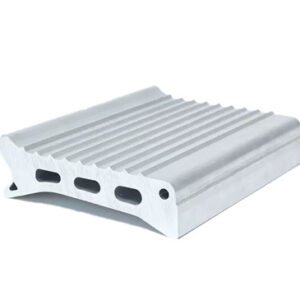
Industrial Aluminum Extrusions
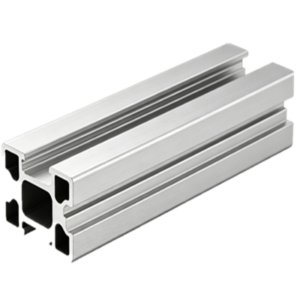
T-Slot Aluminum Extrusions
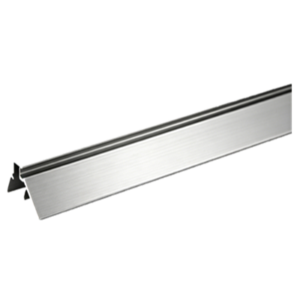
Decorative Aluminum Trim & Led Aluminum Channel Profiles
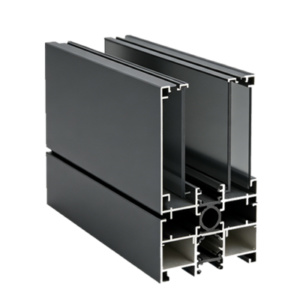
Window & Door Aluminum Profiles
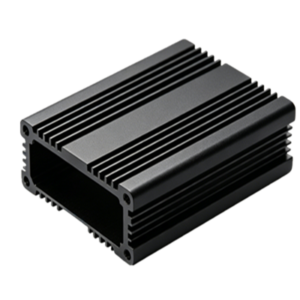
Aluminum Extrusion Enclosures
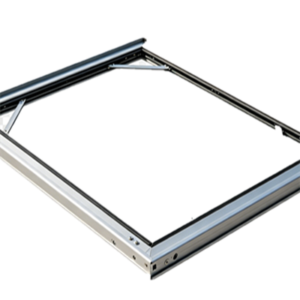
Structural Aluminum Extrusion Framing
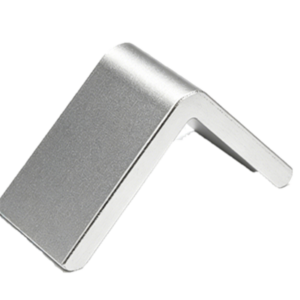
Aluminum Angle Extrusions
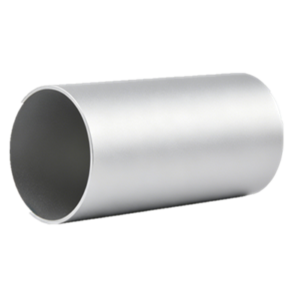
Extruded Aluminum Tubes
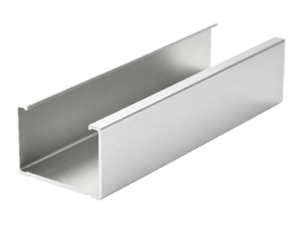
Aluminum U Channel Profiles
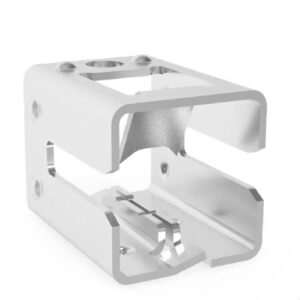
CNC Machined Aluminum Parts
Contact Vanway Tech today for tailored one-stop aluminium extrusion solutions for your project.
Between aluminum solar rails vs steel brackets, aluminum rails are better for most modern PV farms — especially rooftop, coastal, floating, commercial and long-life solar projects. They offer lighter weight, better corrosion resistance, faster installation and lower lifetime cost.
If you are looking for a reliable aluminum solar rails manufacturer & factory with competitive factory price, stable quality and full custom service, Vanway-Tech is your best partner for global PV farm projects.
Ready to Power Up Your Solar Project with Maximum Efficiency?
Don’t let rigid options or slow lead times delay your PV installation. Send your project specs to Vanway Tech today—get your custom solar aluminum rail solution and a rapid, factory-direct quote within 24 hours!
Related Posts You May Interested In:
Custom Solar Extrusion Profile丨Solar Panel Aluminum Frames
4040 vs 4080 T-Slot Aluminum Extrusion: How to Stop Over-Engineering & Cut Frame Costs
Aluminum Extrusion Die Cost Breakdown: What Affecting Pricing
How to Identify Primary A00 vs Recycled Aluminum Extrusions in 3 Steps?
Cheap Aluminum Extrusions from China?China vs. Local Aluminum Extrusion Suppliers
Contact With Vanway Tech Team for Premium Aluminium Extrusion Products!
Enquire with UsConnect with Vanway Tech Team for Premium Aluminium Extrusion Products.
Contact InfoWe are looking forward to hearing from you!
-
Email: info@vanway-tech.com
-
Address: No. 588, Wuyi South Road, CSJ Moldware Town, Wujin, Changzhou, Jiangsu, China
Scan Below Codes to Contact Us Immediately.