Vanway Precision Materials Tech Co.,Ltd


How to Choose Extruded Aluminum Heat Sink Suppliers: 5 Must-Check Factors
How to Choose an Extruded Aluminum Heat Sink Supplier: 5 Key Factors

Written by Chloe Xue
Manufacturing & CNC Machining Specialist | DFM & Aluminum Components Expert
Chloe specializes in custom aluminum component manufacturing, high-precision CNC machining, and DFM (Design for Manufacturability) optimization. She helps global B2B engineering teams refine technical drawings, reduce production costs, and accelerate lead times.
Connect on LinkedInReviewed by: Zhang , Chief Surface Treatment Engineer
Experience: 15+ years in aluminum anodizing and extrusion
Technical focus: Type II/Type III anodizing, pretreatment, sealing, coating-thickness control and aluminum surface quality
Review scope: Technical accuracy, process parameters, anodizing standards and performance data
Last reviewed: August 2026
Table of Contents
Extruded aluminum heat sinks are used in power supplies, industrial controls, solar inverters, LED systems, and energy storage equipment. However, a low unit price does not always mean a low total cost. Poor thermal design, incorrect alloy or temper, out-of-tolerance dimensions, and weak process control can lead to extra testing, assembly problems, or product redesign.
When choosing an extruded aluminum heat sink supplier, you should check five areas: material and alloy records, thermal design, extrusion accuracy, surface finish, and production quality control. You should also confirm sample lead time, minimum order quantity (MOQ), and the supplier’s ability to handle CNC machining and repeat orders.
This guide explains what to ask suppliers, which technical data to request, and how to compare samples before approving mass production. Vanway Tech’s recommendations should be checked against each project’s drawing, operating conditions, and agreed inspection requirements.

Customized High Precision Anodized Aluminum Fin Extruded Heat Sink for PCB
1. Check Alloy Quality and Material Traceability
How to Verify Aluminum Alloy for Heat Sinks
The alloy affects thermal conductivity, strength, extrusion quality, and the type of profile a supplier can produce. For many extruded heat sinks, 6063 aluminum is a common choice because it offers a useful balance of thermal performance, surface finish, and extrusion flexibility.
However, alloy selection should depend on the actual design. A heat sink that needs complex, thin fins may have different requirements from a thick base used to support heavy power components.
Do not judge material quality by price or by a claim such as “100% virgin aluminum” alone. Ask the supplier to confirm the alloy and temper, provide material records, and explain how production batches are identified.
Before approving a supplier, request:
- The specified alloy and temper, such as 6063-T5 or 6063-T6.
- A material test certificate or certificate of analysis, where applicable.
- Chemical composition records linked to the production batch.
- Mechanical property data required by the agreed material specification.
- A clear process for handling material that fails inspection.
For extruded aluminum profiles, ASTM B221 is a useful reference for alloy, temper, and mechanical property requirements. The purchase order should identify the applicable specification and required properties.
Can Recycled Aluminum Be Used for Heat Sinks?
Recycled aluminum is not automatically unsuitable for a heat sink.
The key question is whether the finished alloy meets the required chemical composition and performance requirements.
For a buyer, the practical checks are the same: confirm the alloy designation, request traceable material records, and verify that the finished profile meets the drawing and agreed material specification.
Vanway Tech states its own billet sourcing policy separately from these general technical requirements. If a project requires primary aluminum only, make that condition explicit in the purchase order and ask for supporting supply records.
| Material check | What to specify or request | Why it matters |
|---|---|---|
| Alloy | 6063, 6061 or another agreed alloy | Affects thermal, strength and extrusion requirements |
| Temper | T5, T6 or another specified temper | Defines the required material condition |
| Chemical composition | Applicable alloy specification | Confirms alloy compliance |
| Mechanical properties | Tensile strength, yield strength and elongation where required | Confirms structural requirements |
| Batch identification | Heat, billet lot or production batch ID | Supports traceability |
| Thermal conductivity | Reference value or agreed test requirement | Supports thermal design verification |

How to Verify Primary vs. Recycled Aluminum Extrusions
2. Check Extrusion Accuracy and CNC Machining
Which Dimensions Matter Most on an Extruded Heat Sink?
A heat sink must fit the product assembly and provide the required thermal contact. The supplier should therefore check more than the overall profile size.
For each drawing, identify the dimensions that affect assembly and cooling. These may include the base thickness, fin spacing, fin height, mounting holes, contact surfaces, and cut length.
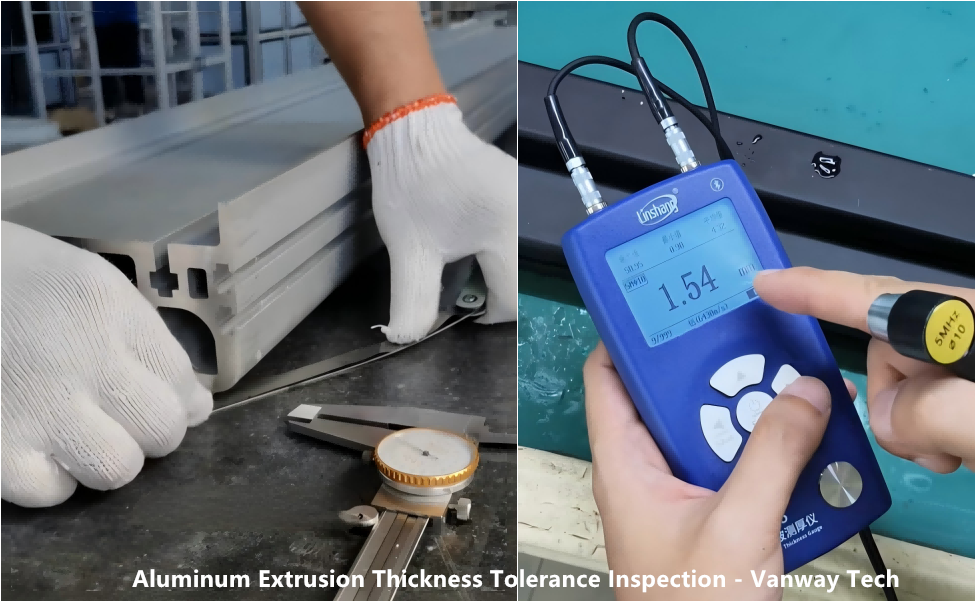
Do not apply one tight tolerance to every feature without checking whether it is needed. Extrusion tolerances depend on the profile shape, size, wall thickness, alloy, and applicable standard. CNC-machined features should be checked against their own drawing requirements.
Before placing an order, ask the supplier to confirm:
- Which dimensions are controlled by extrusion.
- Which features require CNC machining.
- How straightness and twist are checked.
- Which measuring tools are used for critical dimensions.
- Whether a first-article inspection report is available.
- How nonconforming parts are identified and corrected.
For aluminum extrusions, you can refer to the applicable dimensional tolerance tables in ANSI H35.2. The drawing and purchase order should state the agreed tolerance requirements rather than relying on a general claim such as “high precision.”
Dimensions and Accuracy of CNC Machining of Custom Aluminum Heat Sink
| Feature | Example RFQ requirement | Verification method |
|---|---|---|
| Overall profile width | 80.00 ± 0.20 mm | Caliper or suitable gauge |
| Base thickness | 6.00 ± 0.10 mm | Micrometer |
| Fin spacing | 2.00 ± 0.15 mm | Caliper or optical measurement |
| Cut length | 150.0 ± 0.5 mm | Length gauge |
| Mounting hole | Ø5.00 ± 0.05 mm after CNC | Pin gauge or CMM |
| Contact surface flatness | 0.10 mm over 100 mm, if required by design | Surface plate and suitable measuring method |
How to Remotely Evaluate Custom Aluminum Extrusion Supplier: Mold Tolerance & MOQ
3. Evaluate Thermal Design and Cooling Performance
How to Check Whether a Heat Sink Can Handle the Required Heat Load
A good heat sink supplier should understand the heat load, available space, airflow, and operating temperature of the final product. A high thermal conductivity value alone does not prove that a heat sink will keep a device within its temperature limit.
Before selecting a profile, provide the supplier with the heat load in watts, the maximum allowed component temperature, the ambient temperature, the available installation space, and the cooling method.
A useful first check is the required total thermal resistance:
Required total thermal resistance = (Maximum component temperature − Ambient temperature) ÷ Heat load
For example, if a component produces 100 W of heat, the maximum allowed component temperature is 85°C, and the ambient temperature is 35°C, the total thermal resistance budget is:
(85 − 35) ÷ 100 = 0.50°C/W
This 0.50°C/W budget includes all thermal paths between the component and ambient air. It is not automatically the required heat sink rating alone. The component-to-case, interface, and other thermal resistances must also be considered.
Ask the supplier how the proposed fin height, fin spacing, base thickness, mounting method, and airflow affect the thermal result. For critical products, request a thermal simulation or a test report that describes the test conditions.
Natural Convection vs. Forced Air Cooling
Natural convection relies on air movement caused by temperature differences. Forced-air cooling uses a fan or another device to move air across the fins.
The same profile can perform differently under these two conditions. Fin spacing that works well with a fan may not be ideal for natural convection, and a fan’s airflow rating alone does not prove that the assembled heat sink will achieve the target temperature.
A thermal test should record the heat load, ambient temperature, airflow or fan setup, mounting method, and temperature measurement points. These details allow the buyer to compare results more fairly.
Thermal Design Parameter Table of Custom Aluminum Heat Sink
| Parameter | Example | What the buyer should confirm |
|---|---|---|
| Heat load | 100 W | Actual device power converted to heat |
| Ambient temperature | 35°C | Maximum or typical operating condition |
| Maximum component temperature | 85°C | Device requirement |
| Total thermal resistance budget | 0.50°C/W | Calculated from the example conditions |
| Cooling method | Natural or forced air | Must match the actual product |
| Fan airflow | Project-specific | Include fan position and operating condition |
| Thermal interface | Project-specific | Specify pad, grease or direct contact |
| Validation | Simulation or thermal test | Record test conditions and measured temperatures |

Next-Gen Data Center Cooling: Why Custom Extruded Aluminum Heat Sinks Win
4. Compare Surface Finish and Corrosion Protection
Which Surface Finish Should You Choose for an Aluminum Heat Sink?
The right finish depends on the operating environment, appearance requirements, electrical needs, and thermal design. Buyers should confirm the finish type and acceptance criteria before production.
- Mill finish: Suitable when the natural extruded surface is acceptable and no additional finish is required.
- Clear anodizing: Adds a protective oxide layer and changes the surface appearance.
- Black anodizing: Often selected for appearance and may affect radiation heat transfer. Its actual thermal effect depends on the surface and operating conditions.
- Powder coating: Provides color and surface protection, but the coating can affect heat transfer if it covers important contact surfaces or changes the surface geometry.
- CNC-machined contact surfaces: May be needed where the heat sink must make controlled contact with a component or thermal interface material.
For each order, specify the finish type, color, coating thickness where applicable, visible surface requirements, and any areas that must remain uncoated.
What Documents Should Buyers Request?
ISO 9001 relates to a quality management system. It does not prove that every heat sink meets the drawing or thermal requirements.
RoHS and REACH also serve different purposes. Buyers should identify which requirements apply to the final product and its intended market, then request the relevant supplier declarations or supporting documents.
Ask for:
- A valid quality management certificate, if required.
- Material and alloy records.
- Surface finish specifications.
- Coating thickness records where applicable.
- Relevant environmental compliance declarations.
- Inspection reports linked to the order or batch.
Do not treat a general certificate as a substitute for product-specific inspection and performance checks.
Surface treatment options list of Custom Aluminum Heat Sink
| Finish | What to specify | What to inspect |
|---|---|---|
| Mill finish | Appearance and surface defects allowed | Scratches, die lines, dents |
| Clear anodizing | Type, color, thickness and applicable standard | Thickness, color consistency, visible defects |
| Black anodizing | Type, thickness, color and critical uncoated areas | Color, coverage, contact surfaces |
| Powder coating | Coating system, color, thickness and adhesion requirements | Thickness, coverage, adhesion |
| CNC contact surface | Dimensions, flatness and surface finish as required | Measurement report and surface condition |

Mill Finish Aluminum vs Clear Anodized Aluminum: How to Choose the Right Finish
5. Verify Quality Control, MOQ and Lead Time
Can the Supplier Support Custom Orders and Repeat Production?
A suitable supplier should be able to explain the steps from drawing review to first sample and mass production. Buyers should not compare sample lead times without checking what each supplier includes.
For a custom extruded heat sink, the quotation should separate drawing review, extrusion die preparation, trial extrusion, CNC machining, surface treatment, inspection, and shipping.
The supplier should also confirm the minimum order quantity (MOQ), sample cost, tooling cost, production lead time, and repeat-order terms.
Vanway Tech can review custom drawings for extrusion feasibility and secondary processing requirements. The actual MOQ and lead time should be confirmed for each project because they depend on the profile, tooling, finish, order quantity, and production schedule.
What Should You Confirm Before Ordering aluminum extrusion heat sinks?
Ask the supplier to state:
- Whether a new extrusion die is required.
- The tooling cost and ownership terms.
- The minimum order quantity for samples and production.
- The estimated time from drawing approval to sample shipment.
- The inspection steps before sample approval.
- Whether CNC machining and surface treatment are included.
- How repeat orders will use the approved drawing and inspection criteria.
A clear quotation makes it easier to compare suppliers on total project cost and delivery risk, rather than unit price alone.
Lead Time and Procurement Cost Analysis of Custom Aluminum Heat Sink
| Quotation item | Ask the supplier to confirm |
|---|---|
| Drawing review | Included or charged separately |
| Extrusion die | New die or existing tooling |
| Sample quantity | Number of pieces included |
| Sample lead time | Start date and end point |
| CNC machining | Included operations and tolerances |
| Surface finish | Finish type, color and thickness |
| Inspection | First-article report and other tests |
| MOQ | Minimum order for the quoted price |
| Repeat orders | Price basis and lead-time estimate |
| Shipping | Whether freight and packaging are included |

The Ultimate B2B Buyer’s Guide to Sourcing Extruded Aluminum Heat Sinks in [2026]
How to Evaluate a Heat Sink Supplier’s Technical Support
A supplier’s technical support should help buyers identify problems before mass production. It should not be limited to answering messages or sending a price quotation.
For a custom aluminum heat sink, useful engineering support may include:
- Drawing review: Check profile dimensions, wall thickness, fin spacing, mounting points, and machining needs.
- Thermal requirement review: Confirm heat load, ambient temperature, cooling method, and maximum component temperature.
- Manufacturing review: Identify features that may need special tooling or CNC machining.
- Sample inspection: Compare critical dimensions with the approved drawing and provide a report where agreed.
- Corrective action: Record the defect, likely cause, correction, and verification result when a quality issue occurs.
- Repeat-order control: Keep the approved drawing, finish requirements, and inspection criteria linked to the order.
Before selecting a supplier, ask for a sample inspection report or a redacted example of its corrective-action process. Confirm which services are included in the quotation and which require additional charges.
Vanway-Tech丨 Premium Quality Extrueded Aluminum Heat Sink Manufacturer From China Since 2015
Vanway Tech can review custom extrusion drawings and discuss CNC machining and surface finish requirements with buyers. The project quotation should define the actual scope of engineering support and inspection.

Different from large factories that only focus on bulk orders, Vanway Tech specializes in serving small and medium global buyers. We support low MOQ customization, fast sampling, and flexible production scheduling, which perfectly matches project trial production, prototype testing, and small-batch batch stocking needs.
Reach out to the Vanway Tech engineering team to discuss flexible batch options or get a straightforward quote on your next run.

How to Calculate Aluminum Profile Cost: Estimate Aluminum Extrusion Price
How to Compare Extruded Aluminum Heat Sink Samples
When comparing samples from different suppliers, use the same drawing, heat load, mounting method, and inspection requirements. Otherwise, the results may not be comparable.
Start with a drawing check. Measure the overall profile dimensions, base thickness, fin spacing, cut length, mounting holes, and other critical features. Record each result against the approved drawing.
Next, inspect the surface. Look for scratches, dents, cracks, burrs, uneven finish, and damage caused by handling or packing.
Finally, verify the thermal performance under the agreed test conditions. Record the heat load, ambient temperature, fan setup or natural-convection condition, mounting method, thermal interface material, and measured temperatures.
Do not approve a sample based only on its appearance or a supplier’s statement about thermal conductivity. Approve it against the actual dimensional, material, finish, and thermal requirements of the project.
Sample Acceptance Rating Form of Aluminum Extrusion Heat Sinks
| Evaluation item | Suggested weight | Evidence |
|---|---|---|
| Thermal test results | 30% | Test report with clear test conditions |
| Critical dimensions | 25% | Measurement report |
| Alloy and material records | 15% | Material certificate and batch ID |
| Surface finish | 10% | Finish inspection |
| CNC and assembly fit | 10% | Fit check or dimensional report |
| Delivery and communication | 10% | Quotation, lead-time record and response history |
| Total | 100% |
RFQ Checklist for Custom Aluminum Heat Sink
Before requesting a quotation, prepare the following information:
- Drawing: Final 2D or 3D file.
- Alloy and temper: For example, 6063-T5 or 6061-T6, subject to project needs.
- Heat load: Required heat dissipation in watts.
- Operating conditions: Ambient temperature, airflow, and installation space.
- Thermal limit: Maximum allowed component or case temperature.
- Critical dimensions: Clearly marked dimensions and tolerances.
- Surface finish: Mill finish, clear anodizing, black anodizing, or powder coating.
- Secondary processing: CNC milling, drilling, tapping, or cutting.
- Sample quantity: Number of pieces needed for evaluation.
- Inspection: Required material, dimensional, finish, and thermal reports.
- Order quantity: Prototype quantity and expected production volume.
- Delivery: Required sample date and shipping destination.
A complete RFQ helps the supplier review manufacturability, estimate the full project cost, and identify missing requirements before tooling starts.
Aluminum Extrusion Heat Sinks丨Custom Thermal Management Solutions
FAQs About Custom Extruded Aluminum Heat Sink Manufacturer
Q1. What is the best aluminum alloy for an custom aluminum heat sink?
A: 6063 is a common choice for aluminum extrusion heat sinks because it offers a useful balance of thermal conductivity, extrusion performance, and surface finish. However, the best alloy depends on the required strength, profile shape, operating conditions, and finish.
6063 aluminum heat sink is quite common in the filed of manufacturing for PCB industries.
Q2. How do I check the quality of an aluminum heat sink manufacturer?
A: Check the supplier’s material records, alloy and temper control, dimensional inspection, surface finish process, thermal test capability, and batch traceability. Ask for evidence linked to the product or production batch rather than relying only on general quality claims.
Q3. Is recycled aluminum suitable for extruded heat sinks?
A: It can be suitable if the finished alloy meets the specified chemical composition and performance requirements. You should confirm the alloy, temper, material records, and applicable inspection criteria. If primary aluminum is a project requirement, state it clearly in the purchase order.
Q4. What tolerance should I specify for an extruded aluminum heat sink?
A: There is no single tolerance that fits every heat sink. Specify critical extrusion dimensions, CNC-machined features, cut length, and contact surfaces separately. Use the applicable extrusion tolerance standard and confirm manufacturability with the supplier.
Q5. Does black anodizing improve heat sink cooling?
A: Black anodizing can change surface radiation properties, but it does not guarantee a specific temperature reduction. The actual result depends on surface properties, geometry, airflow, heat load, and the full thermal design. Use a thermal test when the result is important to the project.
Q6. What information should I provide when requesting a custom aluminum heat sink quotation?
A: Provide the drawing, alloy and temper, heat load, operating temperature, airflow conditions, critical dimensions, surface finish, machining requirements, sample quantity, and expected order volume. These details help the supplier assess both manufacturing and thermal requirements for custom aluminum heat sink manufacturing.
Q7. How long does it take to make a custom aluminum heat sink sample?
A: The schedule depends on whether an existing die can be used, whether a new extrusion die is needed, and whether CNC machining and surface treatment are required. Ask the supplier to separate tooling, extrusion, finishing, inspection, and shipping time in the quotation.
Q8. What documents should I request before approving mass production for custom aluminum heat sink?
A: Depending on the project, request material certificates, alloy and temper records, first-article dimensional inspection, finish inspection, thermal test results, and applicable compliance documents. The required documents should be agreed before production begins.
CHOOSE THE BEFITTING ALUMINUM EXTRUSIONS
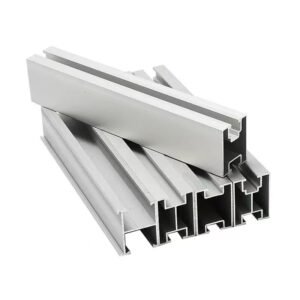
Custom Aluminum Extrusions
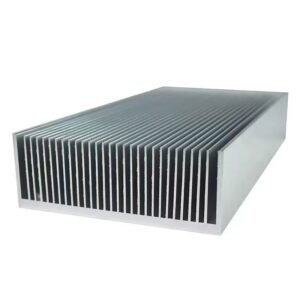
Aluminum Heat Sinks
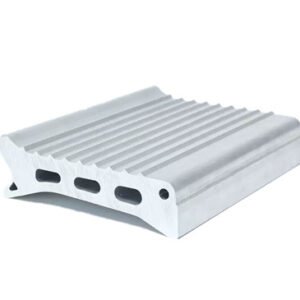
Industrial Aluminum Extrusions
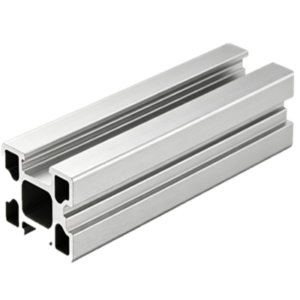
T-Slot Aluminum Extrusions
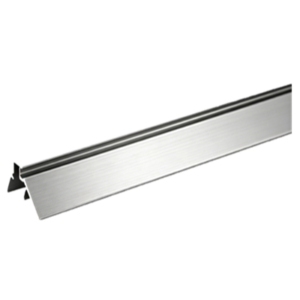
Decorative Aluminum Trim & Led Aluminum Channel Profiles
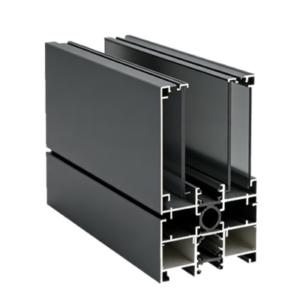
Window & Door Aluminum Profiles
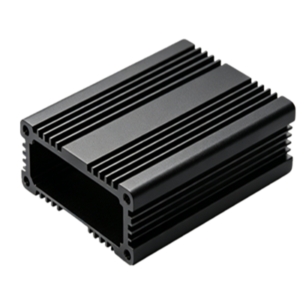
Aluminum Extrusion Enclosures
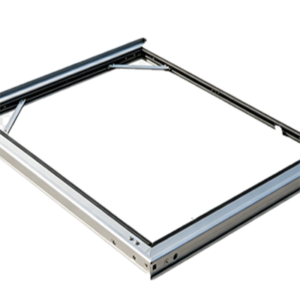
Structural Aluminum Extrusion Framing
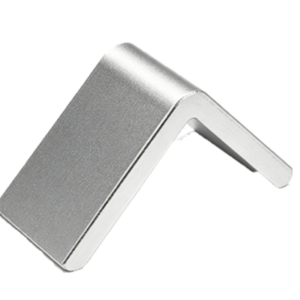
Aluminum Angle Extrusions
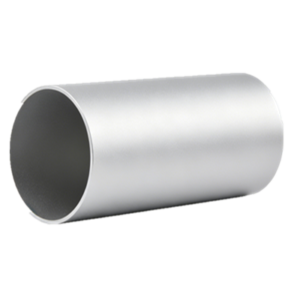
Extruded Aluminum Tubes
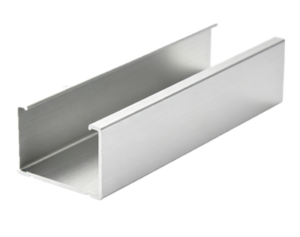
Aluminum U Channel Profiles
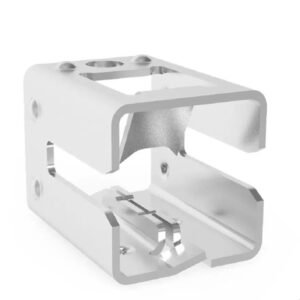
CNC Machined Aluminum Parts
Related Articles You May Interested In:


Contact With Vanway Tech Team for Premium Aluminium Extrusion Products!
Enquire with UsConnect with Vanway Tech Team for Premium Aluminium Extrusion Products.
Contact InfoWe are looking forward to hearing from you!
-
Email: info@vanway-tech.com
-
Address: No. 588, Wuyi South Road, CSJ Moldware Town, Wujin, Changzhou, Jiangsu, China
Scan Below Codes to Contact Us Immediately.