Vanway Precision Materials Tech Co.,Ltd


Affordable Custom Extruded Aluminum Enclosure: 5 Design Tips
How to make Custom Extruded Aluminum Enclosure more cost-effective in 2026?
Table of Contents
A cheap extrusion can turn into an expensive enclosure. A complex profile, a few unnecessary CNC operations, or the wrong surface finish can quietly drive up costs long after the initial quote looks attractive.
At Vanway Tech, we believe cost savings start on the drawing board—not at the bargaining table. The key is to design a Custom Extruded Aluminum Enclosure around what the application actually needs, from wall thickness and alloy selection to machining, finishing, and order volume.
In this guide, we’ll break down five practical design strategies to help you reduce total cost in 2026 without sacrificing strength, fit, or thermal performance.
- Optimize the Profile Design to Reduce Custom Extruded Aluminum Enclosure Costs
- Choose the Right Alloy and Temper for a Cost-Effective Extruded Aluminum Enclosure
- Reduce CNC Machining and Assembly Costs in a Custom Extruded Aluminum Housing
- Balance Thermal Performance and Surface Finishing in an Extruded Aluminum Heatsink Enclosure
- Reduce the Total Cost of a Customized Aluminum Profile Shell Through Smarter Production Planning

Custom Extruded Aluminum Enclosures丨Durable Electronic Housing
I. Optimize the Profile Design to Reduce Custom Extruded Aluminum Enclosure Costs
A lower material cost does not always mean a lower final price. The shape of a Custom Extruded Aluminum Enclosure affects extrusion die cost, extrusion quality, CNC machining, and assembly. At Vanway Tech, we recommend reviewing the profile design before production to remove features that add cost but bring little value.
Keep Wall Thickness as Uniform as Practical
Wall thickness affects how metal flows through the extrusion die. Large changes in thickness can lead to uneven cooling, bending, or twisting. They may also make the extrusion die harder to design and adjust.
Where possible, keep the walls close to a uniform thickness. Do not make every wall thicker than needed, either. Extra material adds weight and cost. The right thickness should meet the enclosure’s strength, load, and heat requirements.
Simplify Hollow Sections, Internal Corners, and Deep Grooves
Complex hollow sections, sharp internal corners, and deep, narrow grooves can make an extrusion die more difficult and costly to produce. They may also increase the risk of poor metal flow and profile defects.
Review each feature and ask whether it serves a clear purpose. A groove that does not help with mounting, sealing, or assembly may be removed or made simpler. Adding small corner radii can also make the profile easier to produce. The final shape should always be checked with your extrusion supplier before the extrusion die is made.

Integrate Mounting Slots and Screw Channels into the Extrusion
A well-designed profile can reduce the need for separate brackets and extra machining.
For example, Design A may use a plain enclosure body with separate brackets and drilled mounting holes. Design B may include built-in screw channels and mounting slots. If these features can be formed during extrusion, Design B may need fewer parts and less machining, making assembly simpler.
However, adding more features to the profile is not always cheaper. Complex channels or hollow shapes may increase extrusion die costs, and some holes or openings will still need CNC machining.
Cost Comparison: Simple Profile vs. Integrated Profile
| Cost Factor | Design A: Separate Components | Design B: Integrated Features |
|---|---|---|
| Extrusion die cost | Usually lower for a simpler profile | May be higher due to a more complex profile |
| Material cost | May require extra brackets and fasteners | May reduce the need for extra parts |
| CNC machining | More drilling or slot machining may be needed | Some features may be formed during extrusion |
| Assembly labor | More parts and installation steps | Potentially fewer parts and faster assembly |
| Design risk | Simpler die, but more secondary operations | Complex features may increase extrusion and die-design risks |
| Best fit | Low volumes or simple enclosure designs | Repeat orders where integrated features reduce total production cost |
Note: This is a qualitative comparison, not a fixed cost result. Actual costs depend on profile geometry, order volume, extrusion die design, machining needs, and assembly requirements.
At Vanway Tech, we recommend comparing the full cost—not just the extrusion price—including the extrusion die, machining, extra parts, and assembly. A simpler profile that meets all functional needs is often a better choice than one with too many built-in features.

How to Choose the Ultimate Extruded Aluminum Enclosure – 2026 Guide
Design Review Checklist of Custom Extruded Aluminum Housing
Note: The following parameters are design review starting points or examples, not mandatory standards applicable to all enclosures. Final parameters should be determined jointly by cross-sectional size, extrusion equipment, mold structure, load requirements, and processing capabilities.
| Design Item | Recommended Review Method | Impact on Cost & Manufacturing |
| Wall Thickness | Prioritize uniform wall thickness; recommended starting baseline: 1.5–3.0 mm. | Affects component weight, extrusion stability, and structural rigidity. |
| Internal Radii / Fillets | Avoid sharp internal corners wherever possible; confirm manufacturable radii with the extruder. | Impacts die strength, metal flow uniformness, and surface finish quality. |
| Deep & Narrow Channels | Inspect channel depth, opening width, and the structural integrity of the die tongue. | Overly narrow channels increase tooling complexity and risk of die breakage. |
| Number of Cavities | Retain only essential structural, assembly, and functional hollow cavities. | Complex multi-cavity designs significantly increase tooling and die costs. |
| CNC Machining Surfaces | Clearly define machining datums and identify critical areas requiring precision finishing. | Reduces unnecessary machining area, cycle time, and clamping/fixturing requirements. |
| Length Tolerance | Specify according to actual assembly needs (e.g., ±0.5 mm as an example baseline). | Directly affects cutting, inspection, sorting, and downstream assembly costs. |
| Critical Hole Tolerances | Determined by mating parts, sealing, and connector requirements. | Prevents overly tight tolerances across non-critical dimensions to control costs. |
Reference Guidelines (AEC)
- Source: Aluminum Extruders Council (AEC) – Extrusion Design Tips & Key Design Considerations.
- Key Principles: AEC emphasizes the importance of maintaining balanced wall thickness, symmetric cross-sections, smooth radius transitions, and controlling cross-sectional dimensions and shape complexity. If you need this checklist formatted into a downloadable document (such as PDF, Excel spreadsheet, or Word document) or need further adjustments, please let me know!
II. Choose the Right Alloy and Temper for a Cost-Effective Extruded Aluminum Enclosure
The strongest aluminum alloy is not always the best choice for an Extruded Aluminum Enclosure. A higher-strength alloy may add cost without improving performance if your design does not need it. At Vanway Tech, we recommend choosing the alloy and temper based on the enclosure’s load, profile shape, thermal needs, and surface finish.
Compare 6063-T5 and 6061-T6 for Strength and Extrudability
6063-T5 is often a good choice for electronic enclosures, complex profiles, and heat sink housings. It offers good extrudability and surface finish, making it suitable for many custom designs. 6061-T6 is often considered when the enclosure needs higher strength, such as in load-bearing parts or heavy-duty equipment.
However, the best choice depends on the actual design. Check the required mechanical properties against the applicable material standard before making a decision.
| Factor | 6063-T5 | 6061-T6 |
|---|---|---|
| Typical use | Complex profiles, electronic housings, heat sinks | Stronger structural parts and machined components |
| Extrusion complexity | Often better for complex shapes | Depends on profile design and production capability |
| Strength | Suitable for many enclosure applications | Generally higher strength |
| Surface finish | Well suited to anodizing | Also suitable for anodizing |
| Cost factors | Profile complexity, weight, finishing, and machining | Alloy cost, extrusion difficulty, machining, and finishing |
Match Alloy Selection to Load, Thermal, and Surface Requirements
Before choosing an alloy, define what the enclosure must do. Does it support heavy components? Does it need to transfer heat away from electronics? Will it have a clear or black anodized finish?
For heat sink enclosures, both alloy properties and profile design affect thermal performance. Do not choose an alloy based on strength alone. Check the required heat transfer, wall thickness, and fin design together.

6063-T5 vs 6061-T6 Aluminum Extrusions: Which Alloy Fits Your Project?
Calculate Material Cost per Finished Part, Not per Kilogram Alone
A lower material price does not always lead to a lower finished-part cost. The final price also depends on extrusion yield, machining time, surface treatment, and scrap rates.
Use the table below as a starting point when comparing supplier quotes.
| Quote Item | What to Check |
|---|---|
| Alloy and temper | Confirm 6063-T5, 6061-T6, or the specified alternative |
| Finished-part weight | Compare designs with the same required function |
| Machining | Check drilling, tapping, milling, and finishing needs |
| Surface treatment | Confirm finish type, color, and coating requirements |
| Quality records | Request material certificates and batch traceability |
At Vanway Tech, we recommend comparing the total cost per finished part rather than choosing the alloy with the lowest price per kilogram. This helps you control costs without paying for strength or features your enclosure does not need.
III. Reduce CNC Machining and Assembly Costs in a Custom Extruded Aluminum Housing
The extrusion price is only part of the cost of a Custom extruded aluminum housing. Drilling, tapping, milling, and assembly can add up quickly, especially for complex designs. At Vanway Tech, we recommend reviewing the drawing before production to remove unnecessary machining and make assembly easier.

Custom CNC Machine Aluminum Machining: B2B Manufacturer Guide
Specify Tight Tolerances Only on Critical Features
Not every dimension needs a tight tolerance. Extrusion tolerances control the size and shape of the profile, while CNC machining tolerances apply to features such as holes, slots, and machined surfaces.
Focus tighter tolerances on features that affect PCB mounting, connector alignment, sealing, and part fit. For other dimensions, use practical tolerances agreed upon with your supplier. This can reduce machining time, inspection work, and rejected parts.
Combine Drilling, Milling, and Tapping Operations Where Practical
Review whether several features can be machined in one setup. Combining operations may reduce handling time and the need to reposition the part.
Where possible, use common hole sizes and thread types across the design. Some mounting slots and screw channels can be formed during extrusion, while holes, threads, and connector openings often still need CNC machining.
Design for Easier Fixturing and Repeatable Assembly
A part that is difficult to hold in place can take longer to machine and may be harder to inspect. Clear reference surfaces and consistent hole positions help the supplier locate the part accurately.
Simplifying fasteners and reducing separate brackets can also make assembly faster. However, any design change must still meet strength, sealing, and fit requirements.
CNC Cost Comparison: Before and After Design Review
| Design Factor | Original Design | Cost-Saving Approach |
|---|---|---|
| Tolerances | Tight tolerances on many dimensions | Tight tolerances only on critical features |
| Hole patterns | Different hole sizes and thread types | Standardize sizes where practical |
| Machining setup | Repeated clamping and repositioning | Combine operations into fewer setups |
| Mounting features | Separate brackets and extra parts | Integrate suitable slots into the profile |
| Quality checks | Inspection of many non-critical dimensions | Focus on key dimensions and fit |
Note: These are design suggestions, not measured savings. Actual results depend on the drawing, equipment, and production process.
When comparing suppliers, ask for the planned machining steps, setup count, estimated machining time, and first-piece inspection results. At Vanway Tech, we believe the best cost savings come from simpler manufacturing—not from cutting corners on quality.
IV.Balance Thermal Performance and Surface Finishing in an Extruded Aluminum Heatsink Enclosure
The cheapest profile is not always the best choice for an extruded aluminum heatsink enclosure. Removing material or choosing a low-cost finish may reduce the initial price but affect cooling performance. At Vanway Tech, we recommend balancing profile design, surface finish, and heat dissipation before finalizing the design.
Optimize Fin Height, Thickness, and Spacing
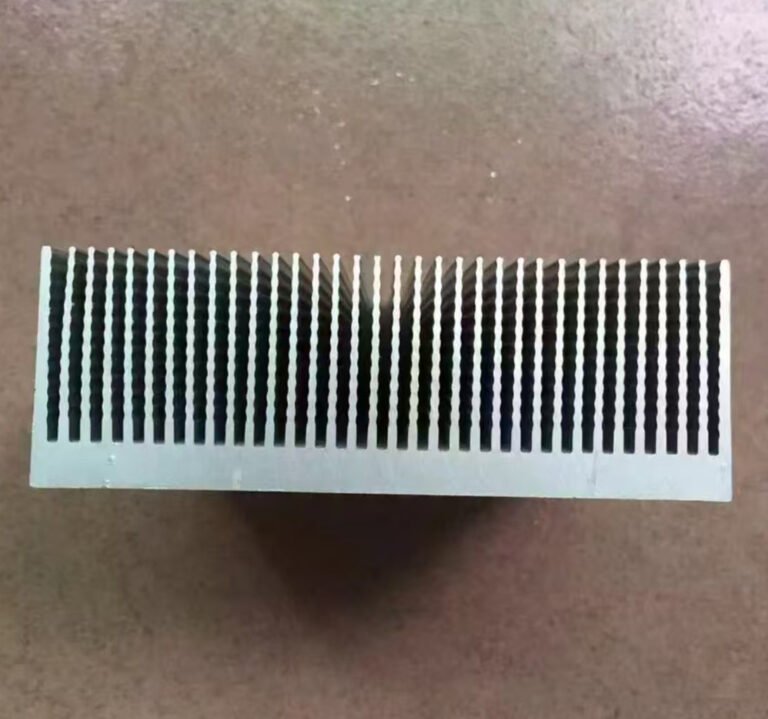
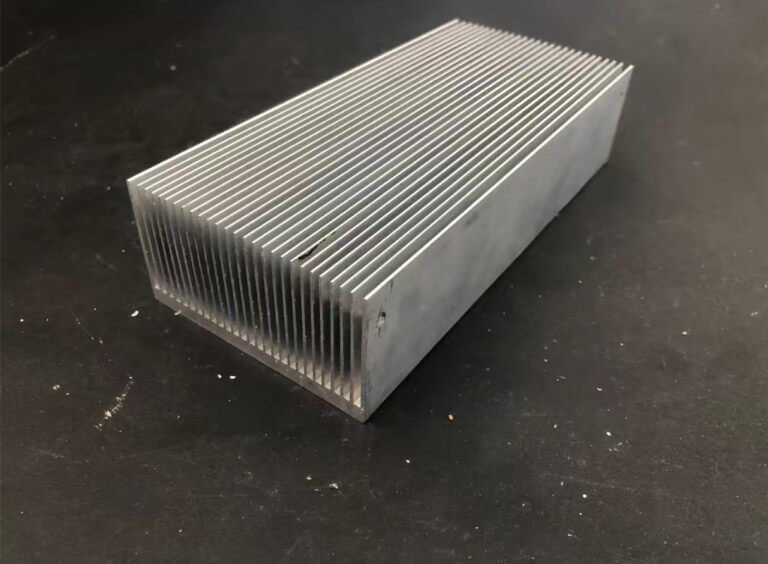
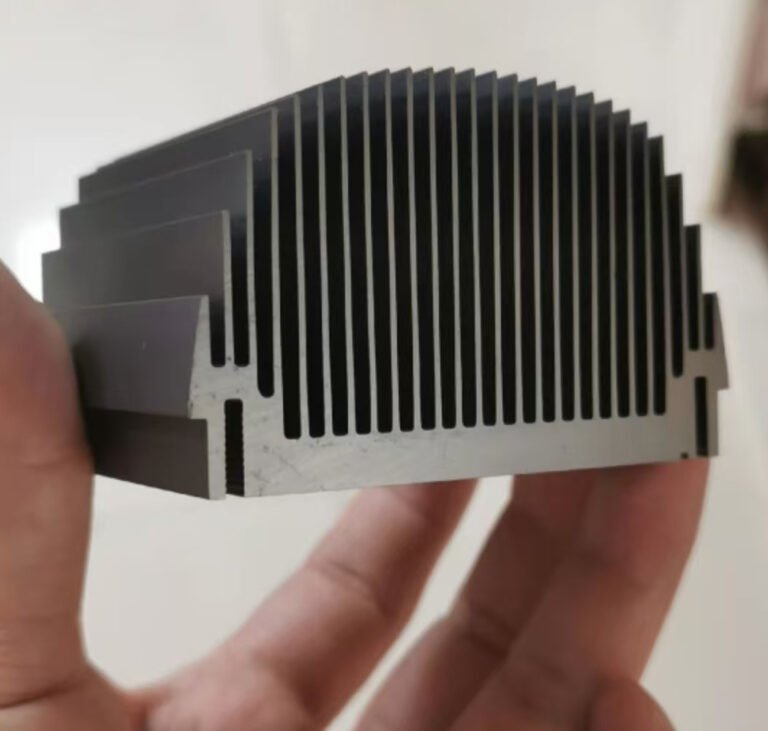
Heat dissipation depends on aluminum conductivity, fin surface area, airflow, mounting contact, and heat load. More fins do not always mean better cooling. If the gaps are too narrow, natural airflow may be restricted. Fin height and thickness must also suit the profile design and extrusion process.
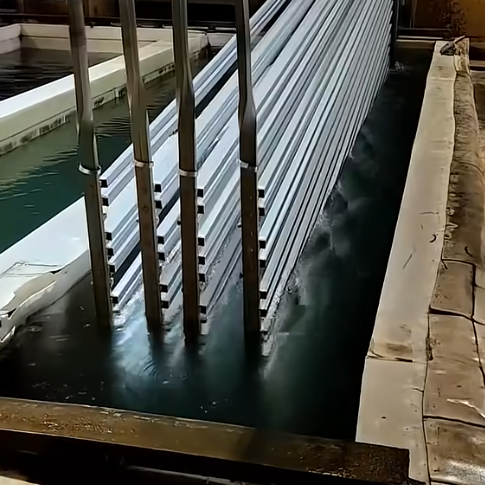
Select Anodizing or Powder Coating Based on the Application
Choose the finish based on appearance, corrosion protection, and thermal needs. Coating thickness can also affect tight-fitting parts and contact surfaces.

Anodized,PVDF or Powder Coating: Which Aluminum Finish Lasts Longest Near the Sea?
| Finish | Main Benefits | Design Considerations |
|---|---|---|
| Clear anodizing | Keeps a natural aluminum look and improves surface protection | Confirm the required film thickness and color consistency |
| Black anodizing | Provides a dark finish and surface protection | Check fit, contact areas, and thermal needs |
| Powder coating | Offers a wide range of colors and a protective coating | The thicker coating may affect tight fits and heat transfer at contact surfaces |

Mill Finish Aluminum vs Clear Anodized Aluminum: How to Choose the Right Finish
Verify Thermal Performance Before Removing Material
Before reducing fin height or wall thickness, compare the original and revised designs through thermal simulation or sample testing. Test both profiles under the same heat load and conditions.
| Test Item | Original Profile | Revised Profile |
|---|---|---|
| Heat load (W) | Record value | Same load |
| Ambient temperature (°C) | Record value | Same conditions |
| Maximum temperature (°C) | Measure | Measure |
| Thermal resistance (°C/W) | Calculate | Calculate |
| Part weight (g) | Weigh | Weigh |
| Unit cost | Quote | Quote |
At Vanway Tech, we recommend choosing the design that meets the required temperature limit at the lowest practical total cost—not simply the profile with the least aluminum.
V. Reduce the Total Cost of a Customized Aluminum Profile Shell Through Smarter Production Planning
The lowest unit price does not always mean the lowest total cost. For a Customized aluminum profile shell, the right choice depends on order volume, extrusion die cost, machining, finishing, and delivery. At Vanway Tech, we recommend comparing the full cost before choosing between a custom profile and an existing extrusion.
Compare Prototype, Small-Batch, and Repeat-Order Costs
Small orders often favor an existing profile because there is no need to pay for a new extrusion die. For larger repeat orders, a custom profile may become more cost-effective by reducing machining and extra parts.
The example below compares two options with the same basic function.
| Order Quantity | Custom Profile: $3,000 Die + $14.50/Unit | Existing Profile: $18/Unit | Lower Total Cost |
|---|---|---|---|
| 100 pcs | $4,450 | $1,800 | Existing profile |
| 500 pcs | $10,250 | $9,000 | Existing profile |
| 1,000 pcs | $17,500 | $18,000 | Custom profile |
Illustrative figures only. Costs exclude surface finishing, packaging, and freight. Actual prices depend on the design and supplier quote.
Under these assumptions, the custom profile reaches its cost break-even point at about 858 pieces. Use your own quoted die fee and unit costs to find the break-even quantity for your project.
Balance Custom Die Investment Against Existing Profile Adaptation
An existing profile may reduce upfront costs, but extra cutting or CNC machining can increase the price of each part. A custom extrusion die costs more at the start but may reduce machining and assembly work over time.
Ask your supplier to compare both options against the same drawing and performance needs.
Evaluate Yield, MOQ, Lead Time, and Inventory Risk
A larger order can spread die costs across more parts, but it may also tie up cash and increase storage needs. Before placing an order, confirm the minimum order quantity (MOQ), production lead time, expected material yield, and options for repeat orders.
For a fair comparison, request a written breakdown of the extrusion die, material, CNC machining, surface treatment, inspection, packaging, and freight. Also confirm the quote date, currency, delivery terms, and price validity period.
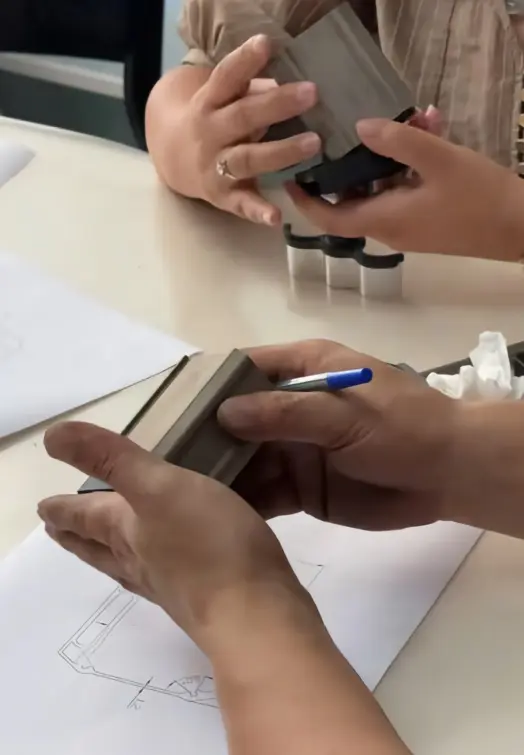
How to Remotely Evaluate Custom Aluminum Extrusion Supplier: Mold Tolerance & MOQ
At Vanway Tech, we recommend choosing the option with the best total cost over your expected order volume—not simply the lowest initial quote.
B2B Purchasing Checklist: How to Calculate the Total Cost of a Custom Extruded Aluminum Enclosure
When buying a custom extruded aluminum enclosure, the quoted unit price is only part of the total cost. Tooling, CNC machining, surface finishing, inspection, packaging, and shipping can all affect your final budget.
At Vanway Tech, we recommend asking suppliers for an itemized quote instead of comparing prices per kilogram or per piece alone. A clear cost breakdown helps you spot hidden costs, compare suppliers fairly, and decide whether a custom extrusion or an existing profile is the better choice.
Custom Extruded Aluminum Enclosure Cost Breakdown
Use the table below when requesting quotes from Vanway Tech or other aluminum extrusion suppliers. Ask each supplier to state the pricing basis and list any costs that are not included.
| Cost Item | Typical Quote Basis | What You Should Confirm |
|---|---|---|
| Custom extrusion die | One-time charge | Die ownership, trial runs, maintenance, repair, modification costs, and expected service life |
| Aluminum extrusion | Per kg or per piece | Alloy, temper, profile weight, material price, and how scrap or material loss is handled |
| Cutting to length | Per cut or per piece | Cut length, length tolerance, end-face quality, and whether cutting is included in the extrusion price |
| CNC machining | Per piece or per operation | Drilling, tapping, milling, setup time, machining tolerances, and inspection requirements |
| Surface finishing | Per piece or per surface area | Anodizing, powder coating, color, coating thickness, masking, and any extra finishing charges |
| Seals and accessories | Per set or per piece | Gaskets, screws, end caps, mounting parts, and whether these items are included in the quote |
| Quality inspection | Per batch or per piece | First-article inspection, dimensional reports, material certificates, and batch traceability |
| Packaging and shipping | Per shipment or per piece | Protective packaging, units per carton, freight, insurance, and applicable delivery terms |
Important: Ask suppliers to identify excluded costs separately. For example, a quote may cover extrusion and cutting but exclude CNC machining, surface treatment, special packaging, or shipping. Without this information, a lower quote may not represent a lower final cost.
How to Calculate the Total Cost per Finished Part
A standardized framework for fair supplier cost comparison
Fair Comparison Principle: For a fair cost comparison, always use the same order quantity, product requirements, currency, and delivery terms for every supplier.
1. Unit Cost Calculation
Calculates the foundational baseline cost allocated per good unit.
Unit Cost = (Allocated One-Time Costs ÷ Expected Number of Good Units) + Recurring Cost per Good Unit
Allocated One-Time Costs:
- Share of the extrusion die
- Tooling & setup charges
Recurring Costs Include:
- Material & Extrusion
- Cutting & CNC Machining
- Surface Finishing & Packaging
- Inspection
2. Order Cost Calculation
Determines the overall financial commitment for a specific production batch.
Order Cost = One-Time Charges + (Recurring Cost per Unit × Order Quantity) + Other Applicable Costs
3. Actual Cost per Accepted Part
Estimates the true cost accounting for quality yield and accepted parts.
Cost per Accepted Part = Total Order Cost ÷ Number of Accepted Parts
Important Checklist & Planning Guidelines:
- Single-Count Rule: Make sure each cost component is counted only once across the entire calculation.
- Landed Costs: Always include shipping, import duties, and other delivery costs when applicable.
- Long-Term Planning: Divide one-time costs by the number of good parts you realistically expect to purchase, not the theoretical maximum output of the extrusion die.
Example: How Order Volume Changes Unit Cost
Suppose a custom extrusion die costs $3,000 and the recurring production cost is $14.50 per piece. The following example shows how the cost changes when the die charge is spread across different order quantities.
| Item | 100 Pieces | 500 Pieces | 1,000 Pieces |
|---|---|---|---|
| Die cost | $3,000 | $3,000 | $3,000 |
| Production cost | $1,450 | $7,250 | $14,500 |
| Total cost | $4,450 | $10,250 | $17,500 |
| Average cost per piece | $44.50 | $20.50 | $17.50 |
Illustrative figures only. These costs exclude any additional charges not included in the assumed $14.50 unit production cost.
The example shows why order quantity matters. The die charge has a much greater effect on small orders. However, placing a larger order is not automatically the best choice if demand is uncertain or storage costs are high.
For long-term planning, confirm how many good parts are likely to be produced and purchased over the die’s useful life. Do not spread the die cost across a theoretical production quantity that you may never need.

How to Calculate Aluminum Profile Cost: Estimate Aluminum Extrusion Price
Questions to Ask Before Approving a Quote for Custom Extruded Aluminum Housing
Before placing an order, ask your supplier:
- Does the quote include the extrusion die, CNC machining, surface finishing, inspection, and packaging?
- Who owns the die, and who pays for future repairs or design changes?
- What are the minimum order quantity (MOQ), production lead time, and expected material yield?
- Are material certificates and batch traceability records available?
- What are the quote date, currency, price validity period, and delivery terms?
- Will the unit price change for repeat orders or different order quantities?
At Vanway Tech, we recommend comparing the total cost of accepted, finished parts delivered to your required location, not just the initial extrusion price. A detailed quote makes it easier to control costs, plan repeat orders, and choose a design that offers better value over time.
Ready to Make Your Custom Extruded Aluminum Enclosure More Cost-Effective?
At Vanway Tech, we believe cost savings start with the right design. Share your 2D drawing or 3D CAD file, along with the enclosure’s application, available installation space, load requirements, and thermal needs if cooling is required. Please also specify your required alloy, surface finish, critical dimensions, initial order quantity, and estimated annual demand.
Our team can review your requirements and help assess profile design, alloy selection, machining needs, and production options. When requesting a quote, ask for a clear breakdown of extrusion die costs, material, CNC machining, surface finishing, and inspection. This makes it easier to compare options and find a practical balance between upfront cost, product quality, and long-term production value.

Vanway-Tech丨 Premium Quality Extrueded Aluminum Enclosure Manufacturer From China Since 2015

How Vanway Tech Evaluates Custom Extruded Aluminum Enclosure Designs
Vanway Tech evaluates custom extruded aluminum enclosure requirements based on the profile drawing, internal component layout, mechanical interfaces, thermal requirements, surface finish, and production quantity.
For a new custom extruded aluminum enclosure project, the design review should identify critical dimensions, PCB mounting features, end-panel interfaces, machining operations, and sealing requirements before tooling is finalized. Where thermal management or environmental protection is important, the customer should also define the required operating conditions and validation criteria.

The final manufacturing route should be selected according to the enclosure geometry, functional requirements, tooling investment, and expected production volume. Project-specific tolerances, finishing options, and inspection requirements should be confirmed in the quotation and approved drawing.
Reach out to the Vanway Tech engineering team to discuss flexible batch options or get a straightforward quote on your next run.

Contact our technical engineering team today to review your project requirements, verify pretreatment specifications, and request sample test reports.
FAQs of Custom Extruded Aluminum Enclosure
Q1. How Can I Reduce the Cost of a Custom Extruded Aluminum Enclosure?
A: You can reduce costs by simplifying the profile design, keeping wall thickness as uniform as practical, and removing unnecessary CNC operations. Choosing the right alloy and surface finish can also help.
At Vanway Tech, we recommend reviewing the full design and production cost rather than focusing only on the price per kilogram.
Q2. Is a Custom Extrusion Die Worth the Cost for Small Orders of Csutomized Aluminum Profile Shell?
A: Not always. For small orders, an existing aluminum profile with additional machining may cost less because it avoids the upfront extrusion die fee. For larger repeat orders, a custom die may offer better value by reducing machining and assembly costs.
Vanway Tech recommends comparing both options based on your order quantity and expected long-term demand.
Q3. Which Aluminum Alloy Is More Cost-Effective for an Extruded Aluminum Enclosure: 6063-T5 or 6061-T6?
A: 6063-T5 is often suitable for complex enclosure profiles, electronic housings, and heat sinks because of its good extrudability and surface finish. 6061-T6 is often preferred when higher strength is required.
At Vanway Tech, we recommend selecting the alloy based on actual load, thermal, and machining requirements instead of choosing the lowest material price alone.
Q4. How Can I Lower CNC Machining Costs for a Custom Extruded Aluminum Housing?
A: Start by applying tight tolerances only to critical features, such as sealing grooves, connector openings, and mounting holes. Standardizing hole sizes and thread types can also simplify machining. Where practical, integrating mounting slots into the extrusion may reduce extra parts and machining steps. Always confirm that the revised design meets the required fit and performance.
Q5. How Can I Reduce Costs Without Sacrificing Heat Dissipation in an Extruded Aluminum Heatsink Enclosure?
A: Review fin height, thickness, spacing, and overall profile weight together. More fins do not always improve cooling, as narrow gaps may restrict natural airflow. Before changing the design, compare thermal simulation results or test samples under the same conditions. Vanway Tech recommends checking temperature limits and thermal resistance before approving material or fin reductions.
Related Articles You May Interested In
Ultimate Guide to Source Custom Aluminum Extrusions From China
How to Verify Primary vs. Recycled Aluminum Extrusions
Aluminum Extrusion Sourcing: How Mastering MOQ Unlocks 15%+ Procurement Savings
Contact With Vanway Tech Team for Premium Aluminium Extrusion Products!
Enquire with UsConnect with Vanway Tech Team for Premium Aluminium Extrusion Products.
Contact InfoWe are looking forward to hearing from you!
-
Email: info@vanway-tech.com
-
Address: No. 588, Wuyi South Road, CSJ Moldware Town, Wujin, Changzhou, Jiangsu, China
Scan Below Codes to Contact Us Immediately.