Vanway Precision Materials Tech Co.,Ltd


4040 vs 4080 T-Slot Aluminum Extrusion: How to Stop Over-Engineering & Cut Frame Costs
4040 Aluminum Extrusion vs.4080 T-slot: Structural Choice & Cost Guide
This guide is based on Vanway Tech’s aluminum extrusion design and manufacturing experience, supported by profile geometry, material specifications, and engineering calculations.
4040 vs 4080 T-Slot Aluminum Extrusion Slection Guide
Table of Contents
Are You Overpaying for T-Slot Extruded Aluminum Profile?
Choosing between 4040 and 4080 T-slot aluminum extrusion is not simply a matter of selecting the larger profile. The better choice depends on span length, load direction, allowable deflection, profile geometry, and the actual section properties of the extrusion.
A 4040 profile is often sufficient for machine guards, workstations, enclosures, and short structural spans. A 4080 profile can provide substantially greater bending stiffness when its 80 mm depth is oriented in the primary bending direction, making it more suitable for longer beams and higher structural loads.
However, 4080 is not automatically the better choice. Using a larger extrusion everywhere can increase weight, material consumption, handling requirements, and hardware costs. The correct approach is to select the smallest profile that satisfies the project’s strength and deflection requirements.
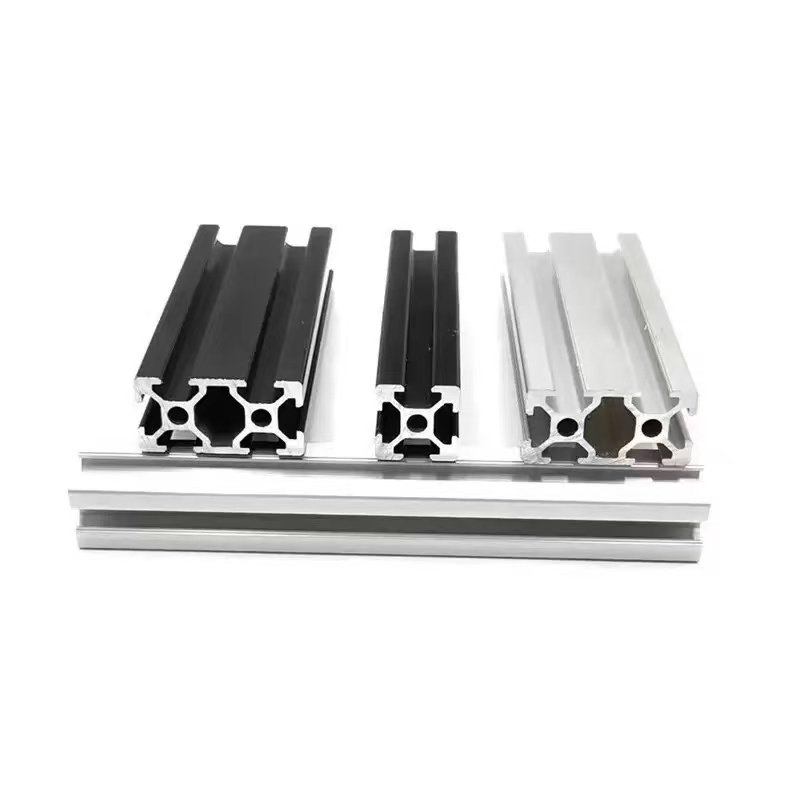
4040 Aluminum Extrusion & 4080 T-slot Extruded Aluminum Profiles – Vanway Tech
Over-engineering feels like cheap insurance, but it routinely drains your budget without adding meaningful safety margin. This decision guide breaks down the real structural differences between 4040 and 4080 T-slot aluminum profiles—helping you pick the right industrial modular framing, cut unnecessary weight, and maximize structural rigidity at the lowest overall cost.
4040 vs 4080 Aluminum Extrusion: What Is the Difference?
To choose the right modular aluminum framing, you first need to look at how these two profiles handle structural forces. The difference isn’t just about size—it comes down to geometry, material distribution, and directional strength.
A standard 4040 profile features a 40x40mm square cross-section with a symmetric design. Because its shape is identical on both axes, it resists bending equally in all directions. In contrast, the 4080 profile uses a 40x80mm rectangular footprint. By doubling the depth along one axis, you place more aluminum further away from the center of gravity. This geometric change dramatically increases resistance to bending along its deep axis without forcing you to change your overall mounting hardware.
However, that extra strength comes with a direct trade-off in mass and budget. Because a 4080 extrusion contains roughly double the metal of a standard 4040, it weighs nearly twice as much per meter—which translates directly into double the raw material cost.

Common Specification Mistakes of 2020 Industrial Aluminum Extrusion Profiles
4040 & 4080 T-slot Aluminum Extrusion Orientation Matters
A 4080 extrusion does not provide the same bending resistance in every orientation. Its 80 mm depth should normally be oriented in the direction where the highest bending stiffness is required.
For engineering design, buyers should therefore evaluate Ix and Iy rather than relying only on the nominal 40 × 80 mm dimensions.
| Technical Parameter | 4040 | 4080 |
| Nominal Size | 40 × 40 mm | 40 × 80 mm |
| Weight | 1.85 kg/m | 3.15 kg/m |
| Cross-Sectional Area | 685.00 mm² | 1166.00 mm² |
| Moment of Inertia Ix | 9.10 cm⁴ | 17.80 cm⁴ |
| Moment of Inertia Iy | 9.10 cm⁴ | 73.20 cm⁴ |
| Section Modulus Wx | 4.55 cm³ | 8.90 cm³ |
| Section Modulus Wy | 4.55 cm³ | 18.30 cm³ |
| Slot Size | 8.00 mm | 8.00 mm |
| Core Bore | Ø 6.80 mm | Ø 6.80 mm |
| Alloy | 6063-T5 | 6063-T5 |
| Temper | T5 | T5 |
Instructions for Selection:
Moment of Inertia (Iy): The moment of inertia of 4080 along the major axis is approximately 8 times that of 4040, which serves as the core engineering basis for its significantly improved load‑bearing capacity and bending resistance.
Core Bore: ϕ6.8 mm is the standard pilot hole size for metric M8 threads, enabling direct tapping for installation.
Weight Specification: Aluminum profiles are available in Light, Medium and Heavy grades. The values above adopt data for the most commonly used standard grade. If the light‑duty version is referenced in documents, the weight per meter of 4040 is generally 1.45–1.55 kg/m, while that of 4080 is approximately 2.60–2.80 kg/m.
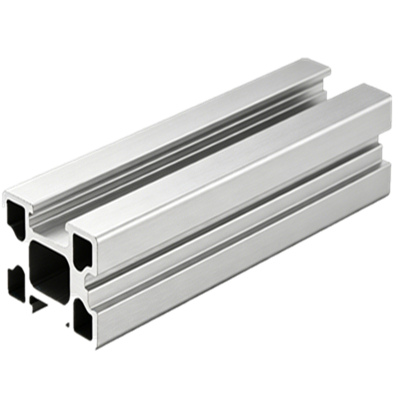
Modular Aluminum Frame Profiles
What is “Over-Engineering” in Modular Aluminum Frame Design?
In structural design, over-engineering occurs when a larger profile such as 4080 is selected without first checking whether a smaller profile, such as 4040 or 4040 Heavy, already satisfies the project’s strength and deflection requirements.
Choosing the larger extrusion can provide additional stiffness, but it is not automatically the most efficient solution. The appropriate profile should be selected based on the actual load, unsupported span, load direction, support conditions, allowable deflection, and the section properties of the extrusion.
Financial & Physical Overhead
The cost of using a larger T-slot extrusion throughout an entire frame can extend beyond the profile price itself:
- Higher Material Consumption: A 4080 profile generally uses more aluminum per meter than a 4040 profile. Using 4080 for every frame member can therefore increase total material consumption when smaller profiles would already meet the design requirements.
- Higher Shipping Weight: More aluminum means a heavier finished frame, which can increase transportation and handling requirements, particularly for large or high-volume orders.
- Additional Hardware Costs: Depending on the frame design, larger profiles may require larger brackets, gussets, fasteners, or joining components. This can increase the overall BOM cost.
- Increased Moving Mass: In automation systems, the mass of the structural members becomes part of the moving load when the extrusion is used in a gantry or other moving assembly. Excess structural weight can increase the load on linear guides, drives, motors, and acceleration systems.
The goal is not to use the largest extrusion available. A more efficient approach is to match each profile to the actual load path and structural requirement. For example, a frame may use 4080 for members that carry significant bending loads while using 4040 for lower-loaded supports and secondary members.
| Design Condition | Recommended Approach |
|---|---|
| Short span + light load | 4040 |
| Higher stiffness requirement | 4080 |
| Long horizontal beam | 4080 |
| Secondary frame members | 4040 |
| Intermediate requirement | 4040 Heavy |
| Mixed loading conditions | Hybrid 4040 + 4080 |
Note: This is a preliminary selection guide. Final profile selection should be verified using the actual section properties, load case, support conditions, and allowable deflection for the project.
This approach can reduce unnecessary material and component costs while maintaining the required structural stiffness and safety margin. and magnitude of the load, you protect both the structural integrity of your build and your project’s bottom line.
Vanway-Tech 6063 T5 4040 T-slot Aluminum Profile for Industrial Workstations
4080 T-Slot Aluminum Profile 1000mm for Retail Display Shelf Frame
How to Choose: 3-Step Selection Aluminum T-Slot Extrusion Framework for Engineers
A practical guide for structural engineers and machine designers to eliminate over-engineering and optimize frame costs.
Evaluate Load Direction and Span Length
Start by mapping out where force hits the structure and how far your aluminum extrusions need to stretch without support. If you are mounting vertical legs or light paneling, a square 4040 profile usually handles the load with zero issues.
The real turning point comes with horizontal span length. As a general rule of thumb, when an unsupported horizontal beam exceeds 1.5 meters (~5 feet), standard 4040 profiles begin to sag under their own weight and center loads. Because deflection scales exponentially with beam length, swapping to a 4080 profile orientation—oriented with its deeper 80mm side vertical—increases resistance to bending by roughly 400%. This keeps your machine frames rigid without forcing you to add awkward middle support legs.
Calculate Dynamic vs. Static Load Requirements
Not all loads impact T-slot aluminum framing the same way. You must separate pure static weight from moving dynamic forces:
-
Static LoadsEquipment resting permanently on a workbench or enclosure frame. Calculate total weight, check material yield strength, and choose a 4040 profile if the safety factor sits comfortably above 2.0.
-
Dynamic LoadsRobotic arms, linear gantries, or reciprocating automation parts. Motion creates sudden acceleration spikes and twisting forces. Use a 4080 profile along dynamic axes to absorb momentum and suppress chatter.
Implement Hybrid Frame Design Techniques
You rarely need to choose exclusively between 4040 or 4080 across an entire project. The smartest, most cost-effective structural aluminum framing relies on a hybrid profile layout:
-
Use 4080 for Main Load Paths:Place 4080 extrusions on primary vertical uprights, heavy bottom base rails, and long horizontal span beams where maximum structural rigidity is mandatory.
-
Use 4040 for Secondary Framing:Use standard 4040 profiles for internal cross-bracing, door frames, safety guard panels, and light mounting brackets.
This hybrid approach gives you maximum load capacity where stress builds up while stripping away unnecessary material weight and cost everywhere else.
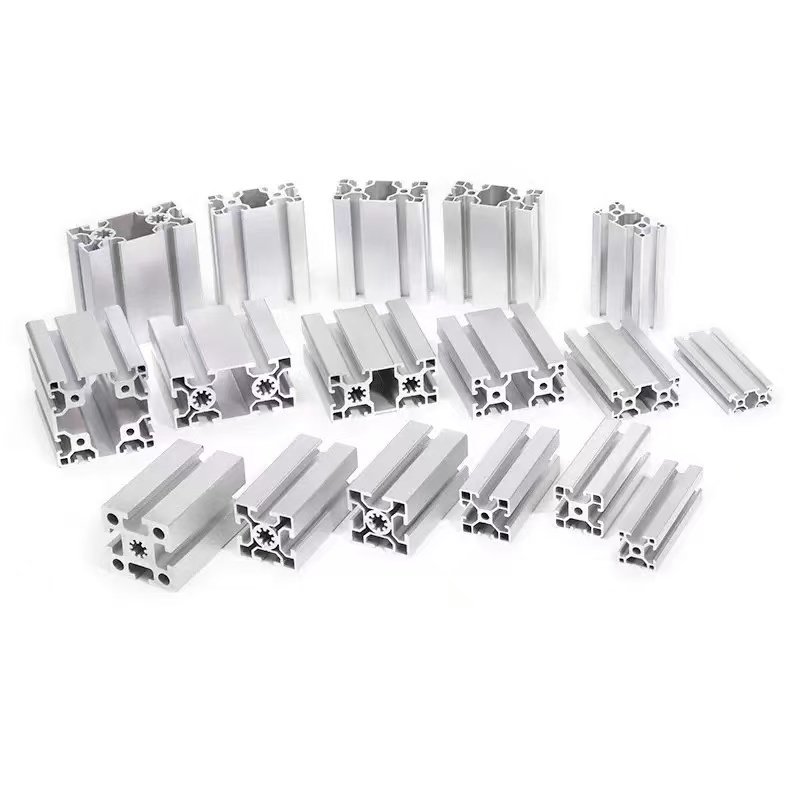
Aluminum Extrusion 4040 vs 4080 Aluminium Profile
When in doubt, remember the core golden rules of T-Slot Aluminum Extrusion Selction:
- Use 4040 for symmetric loads, vertical supports, safety guarding, and short-span enclosures.
- Upgrade to 4080 for horizontal spans over 1.5 meters, high dynamic forces, and heavy load-bearing bases.
- Combine both in a hybrid design to optimize strength where you need it and strip away unnecessary weight where you don’t.
Quick Decision Matrix
| Application / Criteria | Recommended Profile | Key Reasoning |
| Short Horizontal Spans (<1.5m) | 4040 Profile | Sufficient load capacity without excess weight or material cost. |
| Long Horizontal Spans (>1.5m) | 4080 Profile | Higher moment of inertia prevents sagging and center deflection. |
| Safety Guards & Machine Panels | 4040 Profile | Lightweight, cost-effective, and easy to assemble or modify. |
| Heavy Machinery Bases & Automation | 4080 Profile | Handles severe static weight and absorbs dynamic motion forces. |
| Cost-Optimized Industrial Frames | Hybrid (4040 + 4080) | Uses 4080 on primary load paths and 4040 for internal bracing. |
Optimize Your Aluminum T-Slot Extrusion Frame Design Today
Ready to start your next modular assembly or machine build? Don’t let guess-work inflate your project budget or compromise structural performance.
- Download CAD Models: Access complete 2D/3D CAD files for 4040 and 4080 T-slot extrusions to test fit and structural alignment in your software.
- Get a Fast Quote: Submit your bill of materials (BOM) or sketch to our engineering team for competitive pricing, precision custom cutting, and hardware recommendations.
Vanway Tech 丨Premium Quality 4080 Extrueded Aluminum Profiles Manufacturer and Exporter From China Since 2015

CHOOSE THE BEFITTING ALUMINUM EXTRUSIONS
Custom Aluminum Extrusions
Aluminum Heat Sinks
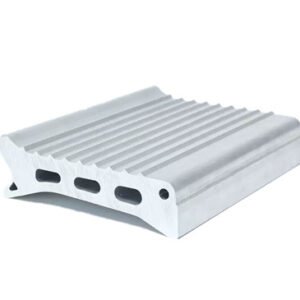
Industrial Aluminum Extrusions
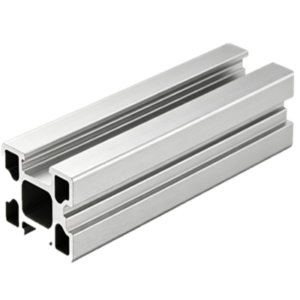
T-Slot Aluminum Extrusions
Decorative Aluminum Trim & Led Aluminum Channel Profiles
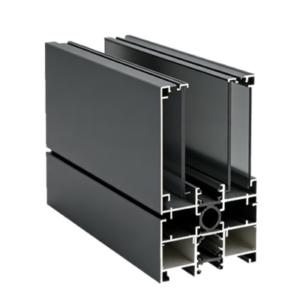
Window & Door Aluminum Profiles
Aluminum Extrusion Enclosures
Structural Aluminum Extrusion Framing
Aluminum Angle Extrusions
Extruded Aluminum Tubes
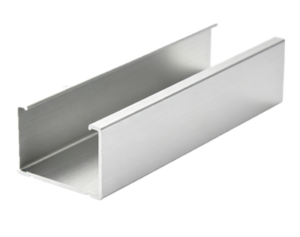
Aluminum U Channel Profiles
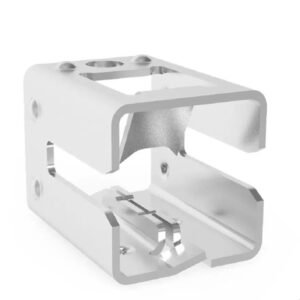
CNC Machined Aluminum Parts
T-Slot 4020 Aluminum Extrusion Modular Aluminum Frame Profiles
How We Guarantee True Temper at Vanway Tech:
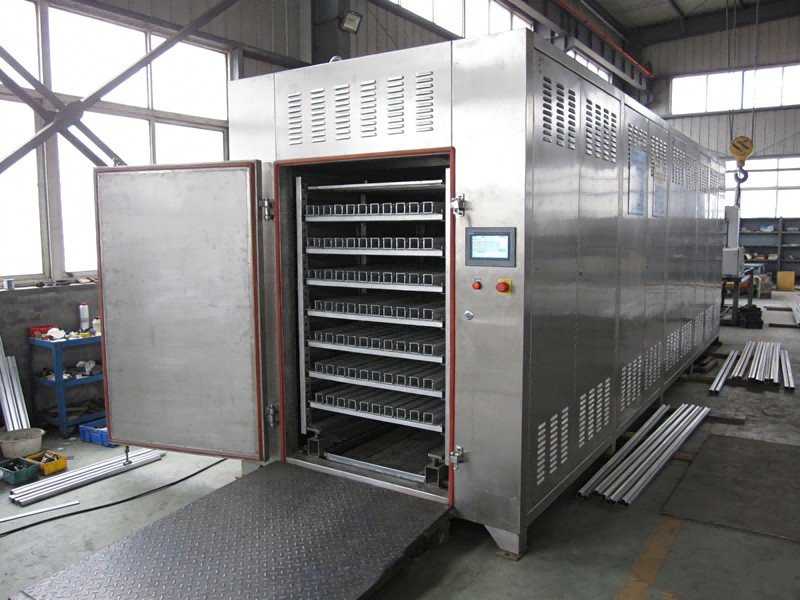
We don’t shortcut metallurgical physics. Vanway Tech runs fully automated, computer-controlled quenching lines—including forced air and water-dunk quenching—followed by precise artificial aging cycles. Every batch of T5 and T6 custom extrusions is verified with Webster and Vickers hardness testing, ensuring your structural aluminum parts hit exact tensile strength and yield strength specs with full batch traceability.
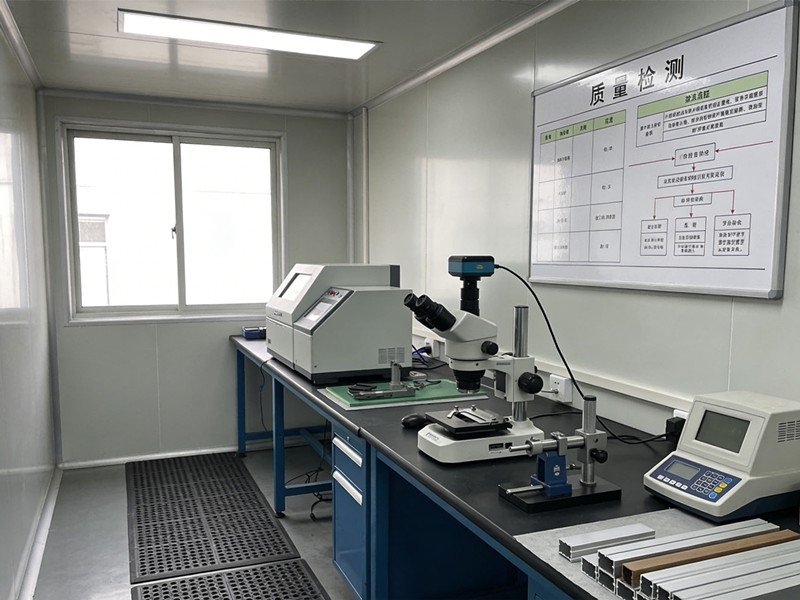
Strict international-certified quality Control management system – Vanway Tech
Why Leading Global OEMs Choose Vanway Tech ?
As an established, vertically integrated precision aluminum profile supplier – Vanway Tech bridges the gap between complex engineering requirements and reliable mass production.
- End-to-End Capabilities: In-house die casting, extrusion mold design, 5-axis CNC deep processing (drilling, tapping, milling), surface finishing, and assembly.
- Industry Expertise: Proven track record delivering structural profiles for Tier-1 automotive suppliers, global solar project EPCs, and premier architectural developers.
- Zero-Defect Commitment: Every shipment undergoes multi-stage inspection to ensure exact alignment with your project’s technical specifications.
Vanway Tech丨A Trusted Global Expert of Extruded Aluminum Profiles With ISO Certificated


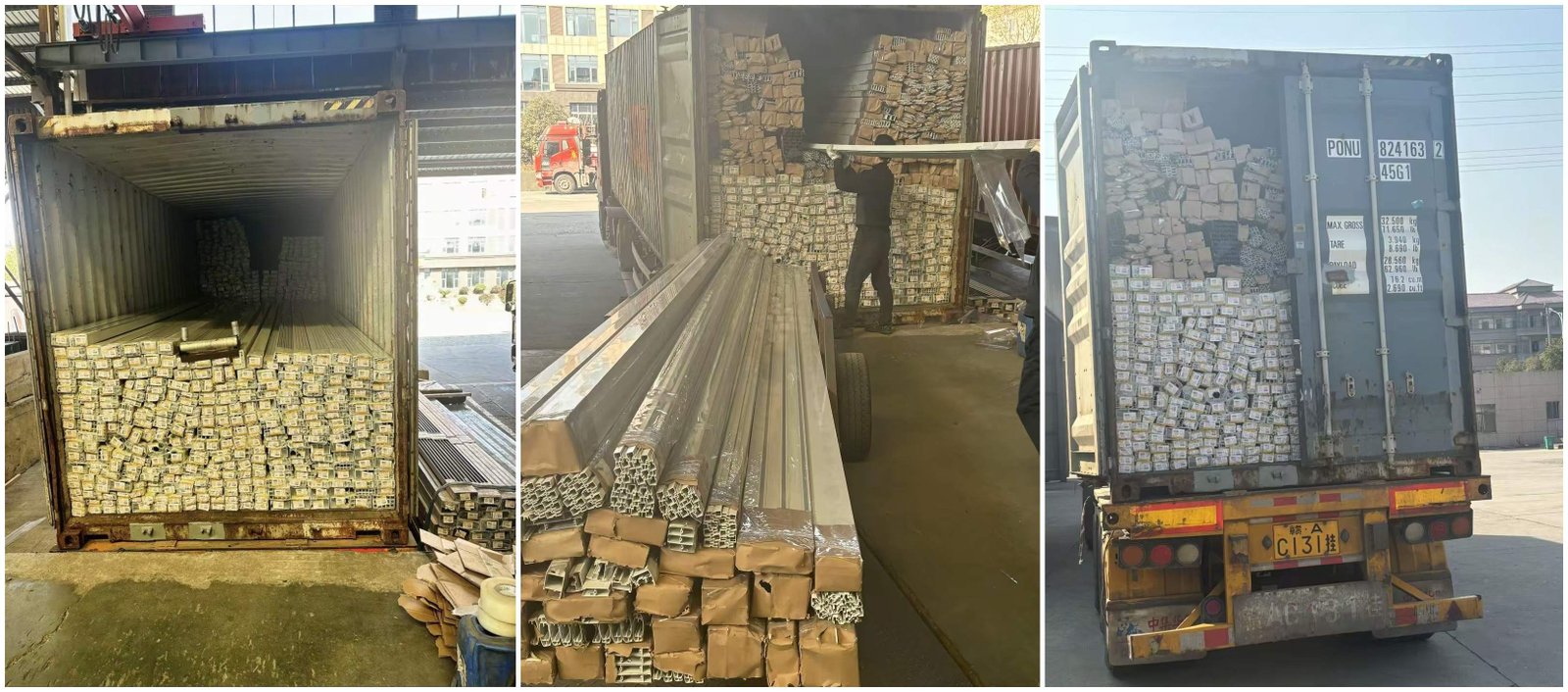
Optimize Your Custom Extruded Aluminum Profiles Design with Vanway Tech →
Got Custom Profile Drawings? Get Your Free DFM Analysis in 24 Hours
Eliminate production delays with instant technical validation. Share your 2D/3D CAD files with us now, and our engineering team will deliver a free, comprehensive feasibility review and precision quote within 24 hours—100% free, with zero commitment required.
Related Articals You May Like
How to make your Aluminum Solar Panel Frame more cost-effective in 2026?
Skived vs. Forged vs. Forged Aluminum Heat Sinks – Sourcing the Right Aluminum Heat Sink
Top-Rated Custom Extruded Aluminum Heat Sink Suppliers in USA & Canada in 2026
How to make your solar module frame aluminum extrusions more cost-effective?
Top 10 Custom PV Module Aluminum Frame Extruders in Gujarat & India (2026)
Aluminum Extrusion Die Cost Breakdown:What Affecting Pricing
Aluminum Extrusion Sourcing: How Mastering MOQ Unlocks 15%+ Procurement Savings
7 Costly Custom Aluminum Extrusion Sourcing Mistakes Suppliers Won’t Tell You


Contact With Vanway Tech Team for Premium Aluminium Extrusion Products!
Enquire with UsConnect with Vanway Tech Team for Premium Aluminium Extrusion Products.
Contact InfoWe are looking forward to hearing from you!
-
Email: info@vanway-tech.com
-
Address: No. 588, Wuyi South Road, CSJ Moldware Town, Wujin, Changzhou, Jiangsu, China
Scan Below Codes to Contact Us Immediately.