Vanway Precision Materials Tech Co.,Ltd


Anodized,PVDF or Powder Coating: Which Aluminum Finish Lasts Longest Near the Sea?
Anodized vs PVDF vs Powder Coating: How to Choose a Coastal Aluminum Finish | Vanway Tech

Written by Chloe Xue
Manufacturing & CNC Machining Specialist | DFM & Aluminum Components Expert
Chloe specializes in custom aluminum component manufacturing, high-precision CNC machining, and DFM (Design for Manufacturability) optimization. She helps global B2B engineering teams refine technical drawings, reduce production costs, and accelerate lead times.
Connect on LinkedInReviewed by: Zhang , Chief Surface Treatment Engineer
Experience: 15+ years in aluminum anodizing and extrusion
Technical focus: Type II/Type III anodizing, pretreatment, sealing, coating-thickness control and aluminum surface quality
Review scope: Technical accuracy, process parameters, anodizing standards and performance data
Last reviewed: August 2026
Table of Contents
What Technical Specifications Should Buyers Check for Coastal Aluminum Extrusions?
Coastal aluminum extrusions face more demanding conditions than many inland applications. Salt deposits, moisture, sunlight, and poor drainage can increase the risk of surface staining, coating damage, and localized corrosion.
However, coastal distance alone does not define the required finish. A profile 1 km from the sea may face different conditions from one 5 km inland because wind direction, salt deposits, building position, rainfall, cleaning, and exposure all affect the surface.
For this reason, you should not specify a finish only by saying “marine grade” or “coastal finish.” The purchase specification should identify the aluminum alloy, temper, surface finish, pretreatment, applicable standard, test method, and inspection requirements.
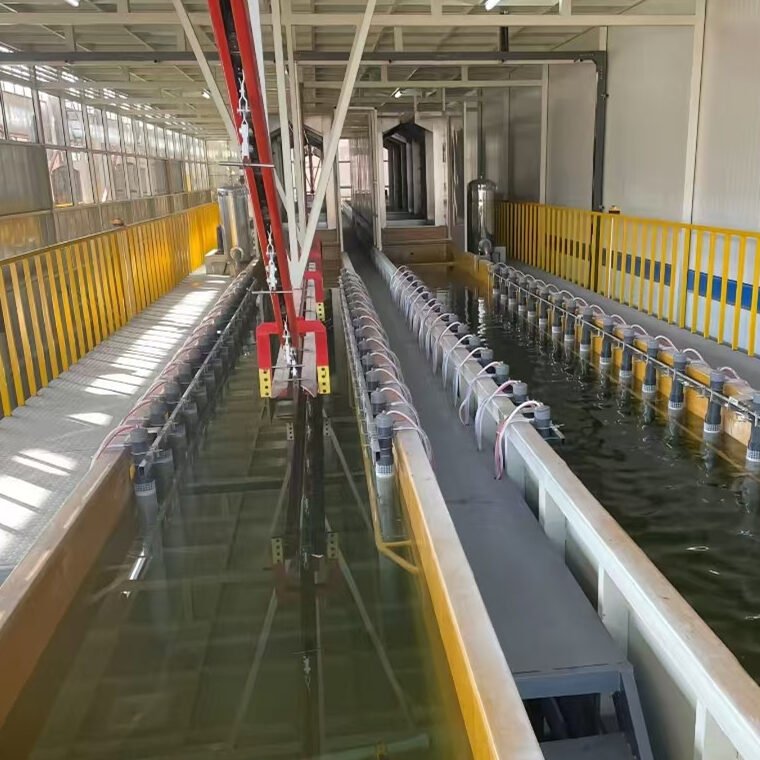
The five areas below are a practical starting point for an RFQ or purchase order.
1. Specify the Aluminum Alloy and Temper
The aluminum alloy is the base material, while the surface finish provides additional protection and appearance. Both should be considered together.
For architectural aluminum extrusions, 6063 is widely used because it offers good extrusion performance and is well suited to anodizing and coating. 6061 and 6005A may be selected when higher strength is required.
Do not treat alloy choice as a simple “marine grade” ranking. The final corrosion performance also depends on the profile design, surface condition, finish, pretreatment, installation, and exposure.
Common Aluminum Alloys for Coastal Aluminum Extrusions
| Alloy | Typical use | Buyer consideration |
|---|---|---|
| 6063-T5/T6 | Windows, doors, curtain walls, trims, frames | Good extrusion and finishing performance |
| 6061-T6 | Structural frames, brackets, machined parts | Higher strength than 6063 |
| 6005A-T6 | Structural profiles and solar systems | Useful where higher strength is needed |
| 5052 / 5083 | Sheet, marine parts, fabricated components | More common in sheet and plate than complex extrusions |
| 2024 / 7075 | Aerospace and high-strength parts | Not normally the first choice for exposed architectural extrusions |
For Aluminum extrusion orders, the supplier should provide the specified alloy, temper, heat/lot identification, and material certificate. ASTM B221 covers extruded aluminum bars, rods, wire, profiles, and tubes and refers to the applicable alloy and temper designations.
What should buyers specify for coastal aluminum extrusions?
For example:
6063-T6 aluminum extrusion, with alloy and temper confirmed by the material certificate.
Do not add an Fe or Cu limit that is different from the applicable alloy standard unless the drawing or material specification requires it. ASTM B221 states that the controlling chemical composition limits come from the applicable aluminum alloy designation and the Aluminum Association limits.
2. Specify the Finish and Applicable Standard
The three common choices are anodizing, powder coating, and PVDF coating. They are different systems, so they should not be compared only by coating thickness or salt-spray hours.
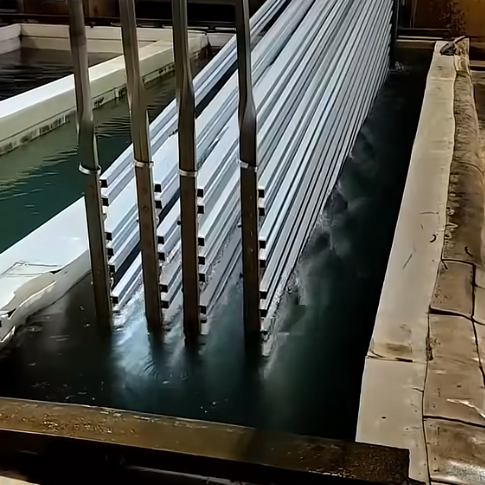
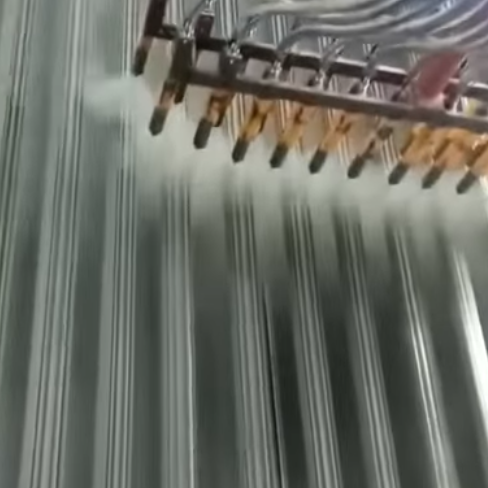

Coastal Finish Comparison
| Factor | Anodizing | Powder Coating | PVDF |
|---|---|---|---|
| Surface type | Anodic oxide | Organic coating | Fluoropolymer coating |
| Aluminum appearance | Strong | Depends on color | Depends on color |
| Color range | More limited | Wide | Wide |
| UV performance | Good when correctly specified | Depends on coating system | Strong for high-performance systems |
| Coastal use | Project-dependent | Project-dependent | Often used for demanding exterior architecture |
| Main specification point | Alloy, class, thickness, appearance | Pretreatment, coating system, thickness | Coating system, resin type, thickness, weathering |
| Typical application | Frames, trims, architectural profiles | Windows, doors, façades, frames | Façades and demanding exterior applications |
Anodizing
For architectural anodizing, AAMA 611 Class I requires a minimum oxide thickness of 18 μm on major exposed surfaces, while Class II requires 10 μm. These values should not be confused with a universal “coastal minimum.” The correct class depends on the project specification and exposure.
Therefore, instead of writing:
“Standard 10-micron anodizing will pit rapidly under airborne salt deposits.”
use:
For demanding exterior projects, buyers should state the required anodizing class and minimum oxide thickness instead of specifying anodizing by thickness alone.
This is more accurate and easier for a supplier to inspect.
PVDF Coating
For high-performance architectural PVDF, the specification should identify the actual coating system rather than simply saying “PVDF paint.”
For example, Arkema states that Kynar 500® FSF® PVDF-based finishes require a minimum of 70% PVDF resin by weight under its licensing system and are designed to meet AAMA 2605 performance requirements.
Arkema’s architectural specification also gives a typical two-coat system with a 0.20 mil primer plus a 1.0 mil color coat, or a three-coat system with additional layers.
Therefore, a better RFQ requirement is:
Factory-applied PVDF coating complying with the specified AAMA 2605 performance requirements, with the coating manufacturer’s documented resin system and dry-film thickness.
Do not specify only:
“70% Kynar 500.”
The coating system, approved applicator, pretreatment, film thickness, and test requirements also matter.
Powder Coating
For powder coating, buyers should specify the required performance class and pretreatment system.
AAMA 2604 is an intermediate-performance coating specification, while AAMA 2605 is the high-performance exterior specification.
For demanding coastal architectural work, a project may also specify QUALICOAT SEASIDE requirements.
QUALICOAT states that its specifications define minimum requirements for coating plants, coating materials, and finished products used in architectural applications.
This gives buyers a better way to write an RFQ than simply asking for:
“super durable powder coating.”
3. Key Step for Aluminum Coating: Pretreatment
When specifying finishes for architectural and industrial aluminum extrusions, the quality of the topcoat is only half the story. Long-term adhesion and real-world corrosion resistance rely heavily on proper surface preparation, qualified pretreatment processes, and objective testing criteria.
Here is how to ensure your aluminum profile specifications meet industry standards without falling for common specification myths.
Verify Pretreatment Before Applying the Finish
Surface preparation and pretreatment directly dictate coating adhesion and longevity. QUALICOAT specifications mandate that the raw aluminum surface must be thoroughly cleaned and free from oil, oxides, and contaminants before any organic coating is applied.
The QUALICOAT SEASIDE & Pre-Anodization Standard
For projects exposed to aggressive coastal environments, standard pretreatment may not offer sufficient defense against filiform corrosion. QUALICOAT defines enhanced pretreatment requirements under its SEASIDE endorsement.
For anodic pretreatment (Pre-Ox):
- Anodic Layer Thickness: The current QUALICOAT specification requires a pre-anodized layer of 4 μm to 10 μm for its qualified process.
- Quality Verification: The SEASIDE endorsement mandates regular inspection and standardized filiform-corrosion testing on finished products.
Technical Clarification:
A common industry misconception is that “Flash anodizing 3–8 μm completely blocks filiform corrosion.” This statement is overly absolute.
A more accurate specification:
“For demanding coastal applications, anodic pretreatment may be specified as part of a qualified SEASIDE coating system. While it significantly enhances surface protection beneath organic coatings, it should not be represented as a complete barrier against all filiform corrosion.”
What to Ask Suppliers of Extruded Aluminum Profiles?
Vague questions yield unverified results. Instead of asking a supplier, “Do you use a good pretreatment?”, request the following technical parameters to verify compliance easily:
- Pretreatment Type: Chemical conversion, pre-anodization, or chrome-free system used.
- Approved Chemical System: Brand name and chemical supplier documentation.
- QUALICOAT Approval Status: Official license number where required.
- SEASIDE / SEASIDE PRE-OX Certification: Verified endorsement status for coastal specs.
- Process Records: Bath chemistry logging and maintenance records.
- Coating Compatibility: System compatibility between the pretreatment and topcoat.
- Finished Product Test Reports: Third-party or internal batch testing results.
4. How to Use Salt Spray Testing Correctly?
Accelerated salt spray testing is an essential quality control tool, but salt-spray exposure hours cannot be directly translated into real-world outdoor service years.
Understanding International Testing Standards
- ISO 9227:2022 (NSS, AASS, and CASS testing) states that the standard does not define a universal exposure period or interpretation for every product. Crucially, ISO 9227 explicitly notes that these tests are not intended to rank different materials or predict long-term natural corrosion resistance.
- ASTM B117 reinforces this principle: standalone salt-spray results lack a reliable, direct correlation with performance in natural outdoor environments.
Avoid Common Specification Pitfalls
Do not include misleading equivalence claims in your engineering specifications, such as:
- ❌ “4,000 hours of salt spray equals 20 years outdoors.”
- ❌ “4,000 hours is better than 1,000 hours, so this finish will last longer in the field.”
Best Practice Specification Language:
“Salt spray test results shall be evaluated against the applicable product specification and acceptance criteria. Results shall not be converted directly into predicted outdoor service life.”
What to Include in Your RFQ (Request for Quote)
Replacing a single generic metric like “4,000-hour salt spray requirement” with specific quality control parameters creates a far stronger, verifiable purchase order.
Use this checklist in your RFQ documentation:
| Test / Inspection Item | What the Buyer Should Specify |
| Salt Spray Testing | Test method (e.g., ISO 9227 NSS/AASS), exposure time, and pass/fail acceptance criteria |
| Film Thickness | Minimum thickness or specified micron ($\mu\text{m}$) range |
| Adhesion Testing | Applicable test method (e.g., Cross-hatch/Tape test) and acceptable rating |
| Color Control | Approved physical master sample or target color standard (RAL/Delta E limits) |
| Gloss Level | Required gloss percentage and allowable tolerance range |
| Weathering | Required natural outdoor exposure or accelerated UV exposure standards |
| Filiform Corrosion | Applicable test method (e.g., ISO 4623 / QUALICOAT criteria) and acceptance limits |
| Visual Inspection | Allowable surface defect limits, visual distance, and appearance standards |
Need Guidance on Aluminum Finishing Specifications?

Contact our technical engineering team today to review your project requirements, verify pretreatment specifications, and request sample test reports.
5. Control Profile Geometry and Water Traps
Even the highest-quality coating cannot offset poor profile design. When aluminum extrusions trap water and salt, micro-environments form that accelerate localized corrosion—regardless of whether the finish meets specification.
To ensure long-term outdoor performance, evaluate these four critical design elements:
- Drainage Channels: Eliminate unnecessary pockets or flat areas where rainwater and cleaning solutions can collect.
- Deep Cavities: Review all enclosed spaces and internal drainage paths to prevent standing water during outdoor exposure.
- Edge Radii: Avoid excessively sharp external edges. Edge radii should be as generous as possible (following QUALICOAT guidelines) to ensure uniform coating coverage and prevent premature edge breakdown.
- Galvanic Isolation: Prevent direct electrical contact between aluminum and dissimilar metals (like stainless or carbon steel) in moist environments.
Best Practice for Dissimilar Metals:
Always specify suitable isolation materials—such as EPDM gaskets, non-conductive washers, isolating tapes, or specialized sealants—based on your project’s environmental exposure.
Procurement Checklist Summary for RFQs
A Better Coastal Aluminum Finish RFQ Checklist
Instead of writing vague PO requirements like “Coastal grade aluminum with high corrosion resistance,” provide suppliers with measurable, verifiable criteria.
Key Takeaway: Specify the complete finish system and quality control process—not just the coating brand or finish name.
| RFQ Item | Example Requirement |
|---|---|
| Alloy | 6063-T6 or 6061-T6, as required by design |
| Temper | T5 or T6 |
| Material Records | Heat / lot traceability and material certificate |
| Finish Type | Anodizing, powder coating, or PVDF |
| Anodizing Specs | AAMA 611 class and minimum oxide thickness |
| PVDF Specs | Applicable AAMA 2605 coating system |
| Powder Specs | Applicable AAMA / QUALICOAT requirement |
| Pretreatment | Required chemical or anodic pretreatment system |
| Color Control | Approved color sample or specified color standard |
| Film Thickness | Project-specific minimum / range |
| Corrosion Testing | Applicable ISO / ASTM method and acceptance criteria |
| Appearance | Define visible defects and color variation limits |
| Profile Design | Drainage and water-trap review |
| Inspection | Dimensional and finish inspection before shipment |

How to Calculate Aluminum Profile Cost: Estimate Aluminum Extrusion Price
How Vanway Tech Checks Coastal Aluminum Finish Quality
At Vanway Tech, finish quality is integrated into every stage of the extrusion process—never treated as just a final cosmetic touch. We enforce a rigorous, 5-step quality verification system to guarantee long-term durability in harsh coastal environments:
- Material & Alloy Verification: Full confirmation of specified alloy, temper, and heat/lot traceability certificates before production begins.
- Pre-Finish Extrusion Inspection: Thorough surface scanning to eliminate die lines, scratches, dents, and handling marks before coating or anodizing.
- Finish Specification Audit: Cross-checking project drawings against exact anodizing classes, coating systems, color standards, film thickness ranges, and pretreatment requirements.
- Final Product Testing & Dimensional Check: Comprehensive testing for visual appearance, color consistency, layer thickness, profile dimensions, cut lengths, and packaging integrity.
- Full Batch Traceability: Linking every finished shipment directly to its mill test report (MTR), heat number, and production batch.

Mill Finish Aluminum vs Clear Anodized Aluminum: How to Choose the Right Finish
The Vanway Advantage:
We deliver fully documented, batch-traceable quality verification—giving you absolute certainty rather than vague claims like “marine-grade finish.”
FAQs of Aluminum Finish
Q1. Which aluminum finish is best for coastal applications?
A: There is no single finish that is best for every coastal project. Anodizing, powder coating, and PVDF can all be suitable when the correct system is selected for the exposure and project requirements. For demanding architectural projects, buyers should compare the finish standard, pretreatment, weathering requirements, appearance, and maintenance needs.
Q2. Is PVDF always better than powder coating near the sea?
A: No. The answer depends on the coating system and project specification. A high-performance powder coating system can also provide strong outdoor performance. For projects that require high weather resistance and long-term color and gloss retention, a compliant AAMA 2605 PVDF system may be specified.
Q3. Can anodized aluminum be used near the coast?
A: Yes. Anodized aluminum can be used in coastal architectural applications when the alloy, anodizing class, thickness, appearance, and installation conditions are properly specified. AAMA 611 lists 18 μm minimum oxide thickness for Architectural Class I on major exposed surfaces and 10 μm for Class II.
Q4. Does 4,000-hour salt spray mean the aluminum will last 20 years outdoors?
A: No. Salt spray hours should not be converted directly into outdoor service years. ISO 9227 and ASTM B117 both state that salt spray results should not be used as a stand-alone prediction of long-term natural corrosion performance.
Q5. What should I specify for a coastal aluminum extrusion RFQ?
A: At minimum, specify the alloy, temper, finish, applicable finish standard, pretreatment, color, film or oxide thickness, test requirements, dimensional tolerances, and inspection requirements. For demanding projects, also request material and finish traceability.
Q6. What is QUALICOAT SEASIDE?
A: QUALICOAT SEASIDE is an additional quality requirement for aluminum coating processes intended for demanding outdoor exposure. The specification includes enhanced pretreatment requirements and testing of finished products. QUALICOAT also has a SEASIDE PRE-OX endorsement for systems using anodic pretreatment.
Q7. Is pre-anodizing required before powder coating?
A: Not for every project. It can be part of a qualified coastal coating system when the project requires enhanced pretreatment. QUALICOAT’s SEASIDE PRE-OX process uses an anodic pretreatment layer within a specified thickness range. The coating supplier and applicator should confirm that the coating system is suitable for the pretreatment.
Q8. What information should I send to Vanway Tech for a coastal aluminum project?
A: Send the profile drawing, alloy and temper, application, coastal exposure conditions, required finish, color, annual volume, and any project or test standard. If the project has a specific coastal or architectural specification, include it with the drawing. Vanway Tech can then review the extrusion, finish, and inspection requirements together.
Related Articals You May Like
How to make your Aluminum Solar Panel Frame more cost-effective in 2026?
Skived vs. Forged vs. Forged Aluminum Heat Sinks – Sourcing the Right Aluminum Heat Sink
Top-Rated Custom Extruded Aluminum Heat Sink Suppliers in USA & Canada in 2026
How to make your solar module frame aluminum extrusions more cost-effective?
Top 10 Custom PV Module Aluminum Frame Extruders in Gujarat & India (2026)
Aluminum Extrusion Die Cost Breakdown:What Affecting Pricing
How to Evaluate Aluminum Heat Sink Suppliers Reliable Or Not
Contact With Vanway Tech Team for Premium Aluminium Extrusion Products!
Enquire with UsConnect with Vanway Tech Team for Premium Aluminium Extrusion Products.
Contact InfoWe are looking forward to hearing from you!
-
Email: info@vanway-tech.com
-
Address: No. 588, Wuyi South Road, CSJ Moldware Town, Wujin, Changzhou, Jiangsu, China
Scan Below Codes to Contact Us Immediately.