Vanway Precision Materials Tech Co.,Ltd


Choosing the Best Surface Treatment for Aluminum Extrusion Profiles
Choosing the right surface treatment for aluminum extrusion profiles is critical to maximize their performance, durability, and aesthetic appeal in modern manufacturing and construction. Aluminum extrusion profiles are valued for their lightweight strength and design flexibility, but raw aluminum requires specialized finishing to resist corrosion and wear.
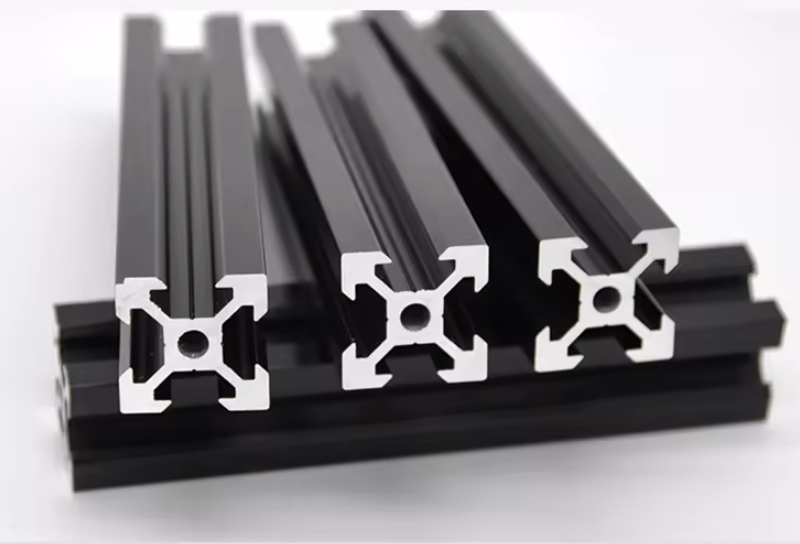
Understanding Surface Treatment for Aluminum Extrusion Profiles
Aluminum profiles naturally form a thin oxide layer (Al₂O₃) when exposed to air, providing basic corrosion protection. Surface finishing enhances this natural protection, improves wear resistance, adds color, and creates specific textures for functional or decorative purposes. The choice of surface treatment for your aluminum extrusion depends on several factors:
- Application requirements: Corrosion resistance, wear resistance, electrical insulation, thermal conductivity
- Environmental conditions: Exposure to saltwater, UV radiation, chemicals, temperature extremes
- Aesthetic preferences: Color, texture, reflectivity, gloss level
- Budget constraints: Initial cost, maintenance requirements, lifespan
- Regulatory compliance: RoHS, REACH, food safety, or industry-specific standards
Primary Surface Treatment Methods for Aluminum Extrusion Profiles
1. Anodizing: The Gold Standard for Aluminum Protection
Anodizing is the primary electrochemical surface treatment for aluminum extrusion profiles, creating a controlled, porous oxide layer that integrates with the base metal. This process transforms the aluminum profile into the anode in an electrolytic solution, where an electric current forms a durable, corrosion-resistant oxide film.
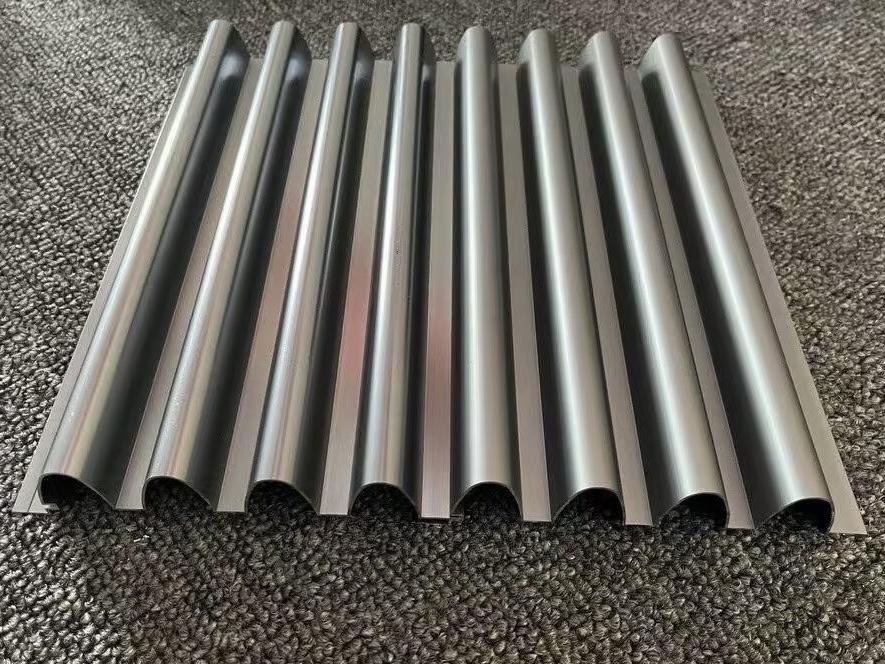
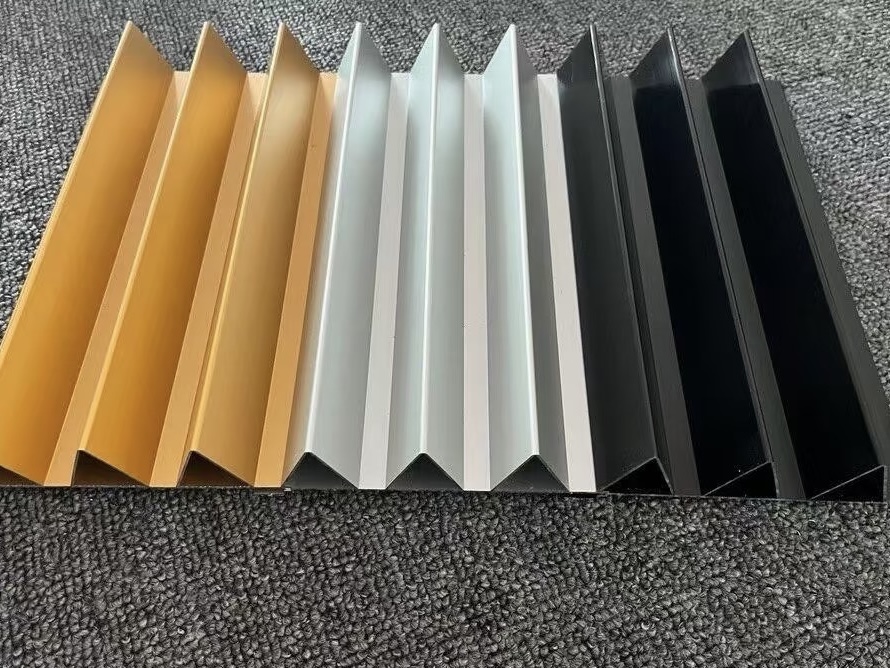
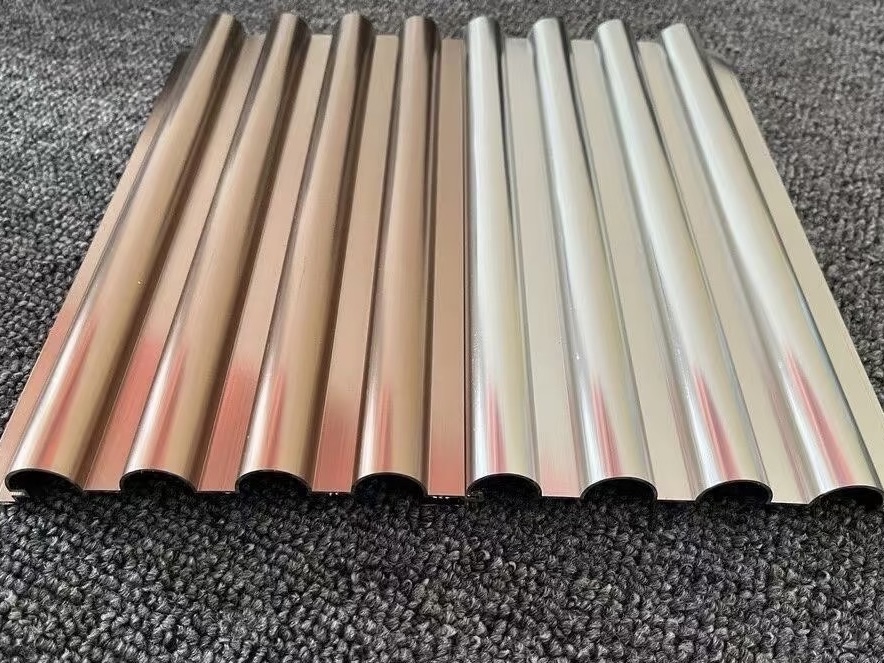
Types of Anodizing for Aluminum Profiles
| Anodizing Type | Process Parameters | Film Thickness | Key Properties | Ideal Applications |
| Type I (Chromic Acid) | 3-10% chromic acid, 25-30°C, 10-20V, 30-60 min | 2-10 μm | Excellent corrosion resistance, thin layer, good for tight tolerances | Aerospace components, precision parts, military applications |
| Type II (Sulfuric Acid) | 15-20% sulfuric acid, 18-22°C, 12-18V, 20-60 min | 5-25 μm | Versatile, cost-effective, dyeable, good adhesion | Architectural aluminum profiles, consumer electronics, furniture |
| Type III (Hard Anodizing) | 15-20% sulfuric acid, 0-10°C, 20-40V, 60-120 min | 25-100 μm | Rockwell C 60-70 hardness, extreme wear resistance | Industrial machinery, automotive components, hydraulic systems |
| Trivalent Anodizing | Chromium-free electrolytes, 20-30°C, 10-20V | 5-20 μm | RoHS-compliant, eco-friendly, comparable to Type II | Medical devices, food processing equipment, green building projects |
Benefits of Anodizing as a Surface Treatment for Aluminum Extrusion Profiles
- Superior adhesion: Oxide layer bonds chemically with aluminum, preventing peeling or chipping
- Enhanced corrosion resistance: Protects against saltwater, industrial chemicals, and UV radiation
- Dyeability: Type II anodized aluminum profiles can be dyed in over 100 colors, from natural silver to deep black
- Electrical insulation: Hard anodizing provides excellent dielectric properties (10¹⁰-10¹² Ω·cm)
- Sustainability: No VOC emissions, recyclable, and the oxide layer is non-toxic
Applications of Anodized Aluminum Profiles
- Architectural: Window frames, curtain walls, handrails, and decorative panels requiring long-term outdoor durability
- Electronics: Heat sinks, LED lighting fixtures, and electronic enclosures needing thermal conductivity and corrosion resistance
- Automotive: Exterior trim, wheel rims, and engine components requiring wear resistance
- Marine: Boat fittings, dock hardware, and offshore equipment needing saltwater corrosion protection
2. Powder Coating: Durable Color and Protection for Aluminum Extrusion
When choosing a surface treatment for aluminum extrusion profiles, powder coating is an electrostatic process that applies dry, free-flowing powder,followed by heat curing to form a hard, durable finish. This method offers exceptional color versatility and impact resistance for aluminum extrusion applications.
Powder Coating Process for Aluminum Profiles
- Pre-treatment: Aluminum profiles undergo cleaning, etching, and conversion coating to ensure adhesion
- Electrostatic application: Powder particles (10-90 μm) are charged and attracted to grounded aluminum profiles
- Curing: Profiles are heated to 160-200°C for 10-20 minutes, melting and cross-linking the powder
- Cooling and inspection: Finished aluminum profiles are cooled and checked for film thickness and quality
Types of Powder Coatings for Aluminum Extrusion
| Coating Type | Chemistry | Film Thickness | Key Properties | Ideal Applications |
| Thermoset Polyester | Cross-linking polyester resins | 50-100 μm | Good weatherability, color retention, cost-effective | Architectural aluminum profiles, furniture, general industrial use |
| Super Durable Polyester | High-performance polyester with UV stabilizers | 50-120 μm | Excellent weatherability (10+ years), fade resistance | Outdoor aluminum extrusion, coastal applications, solar panel frames |
| PVDF (Kynar 500) | Polyvinylidene fluoride resins | 50-150 μm | Superior weatherability (20+ years), chemical resistance | High-end architecture, coastal buildings, aerospace components |
| Epoxy | Epoxy resins | 60-150 μm | Exceptional corrosion and chemical resistance | Industrial equipment, chemical processing, interior applications |
| Hybrid (Polyester-Epoxy) | Polyester and epoxy blend | 50-120 μm | Balanced weatherability and corrosion resistance | General purpose, medium-duty outdoor use |
Advantages of Powder Coating as a Surface Treatment for Aluminum Extrusion Profiles
- Vast color options: Solid, metallic, matte, glossy, and textured finishes available
- Superior impact resistance: 2-4H pencil hardness, flexible coating absorbs shocks without cracking
- Eco-friendly: Zero VOC emissions, overspray can be recycled, reducing waste by 95%
- Cost-effective: One-step application, minimal maintenance, long lifespan
- Thick, uniform coverage: Even coating on complex aluminum extrusion shapes
Applications of Powder Coated Aluminum Profiles
- Construction: Window and door frames, curtain walls, railing systems, and architectural cladding
- Transportation: Bus and train interiors, trailer components, and electric vehicle charging stations
- Furniture: Outdoor patio sets, office partitions, and retail display fixtures
- Renewable energy: Solar panel frames, wind turbine components, and battery enclosures
3. Mechanical Surface Finishes: Enhancing Texture and Appearance
As a popular mechanical surface treatment for aluminum extrusion profiles, these processes modify the surface texture without adding a coating, creating specific aesthetic or functional properties. These methods are often used as pre-treatments for anodizing or powder coating, or as standalone finishes for aluminum extrusion.
Common Mechanical Finishing Techniques for Aluminum Profiles
| Technique | Process Details | Surface Roughness (Ra) | Key Benefits | Applications |
| Brushing | Abrasive belts create linear grain patterns (180-320 grit) | 0.4-1.6 μm | Clean, modern appearance, hides minor scratches | Architectural trim, appliance panels, electronic enclosures |
| Polishing | Progressive abrasive compounds for mirror finish | <0.1 μm | High reflectivity, decorative appeal | Automotive trim, lighting fixtures, decorative aluminum profiles |
| Sandblasting | Abrasive media (glass beads, aluminum oxide) at 50-100 psi | 1.6-6.3 μm | Uniform matte texture, improves adhesion for coatings | Industrial components, marine hardware, anti-slip surfaces |
| Tumbling/Barrel Finishing | Ceramic or plastic media for mass finishing | 0.8-3.2 μm | Deburring, edge rounding, uniform surface | Small aluminum extrusion parts, hardware, fasteners |
| Bead Blasting | Fine glass beads for smooth, satin finish | 0.8-1.6 μm | Preserves dimensional accuracy, creates non-reflective surface | Medical devices, food processing equipment, aerospace components |
Benefits of Mechanical Surface Treatment for Aluminum Extrusion Profiles
- Improved adhesion: Rough surface texture enhances bonding with coatings and adhesives
- Custom aesthetics: Creates unique textures not achievable with other methods
- Cost-effective: Simple processes with minimal material waste
- Functional properties: Can create anti-slip surfaces or improve heat dissipation
Applications of Mechanically Finished Aluminum Profiles
- Consumer electronics: Smartphone cases, laptop chassis, and tablet housings
- Medical equipment: Surgical instruments, diagnostic devices, and hospital furniture
- Food processing: Equipment frames, conveyor systems, and packaging machinery
- Automotive: Interior trim, dashboard components, and wheel covers
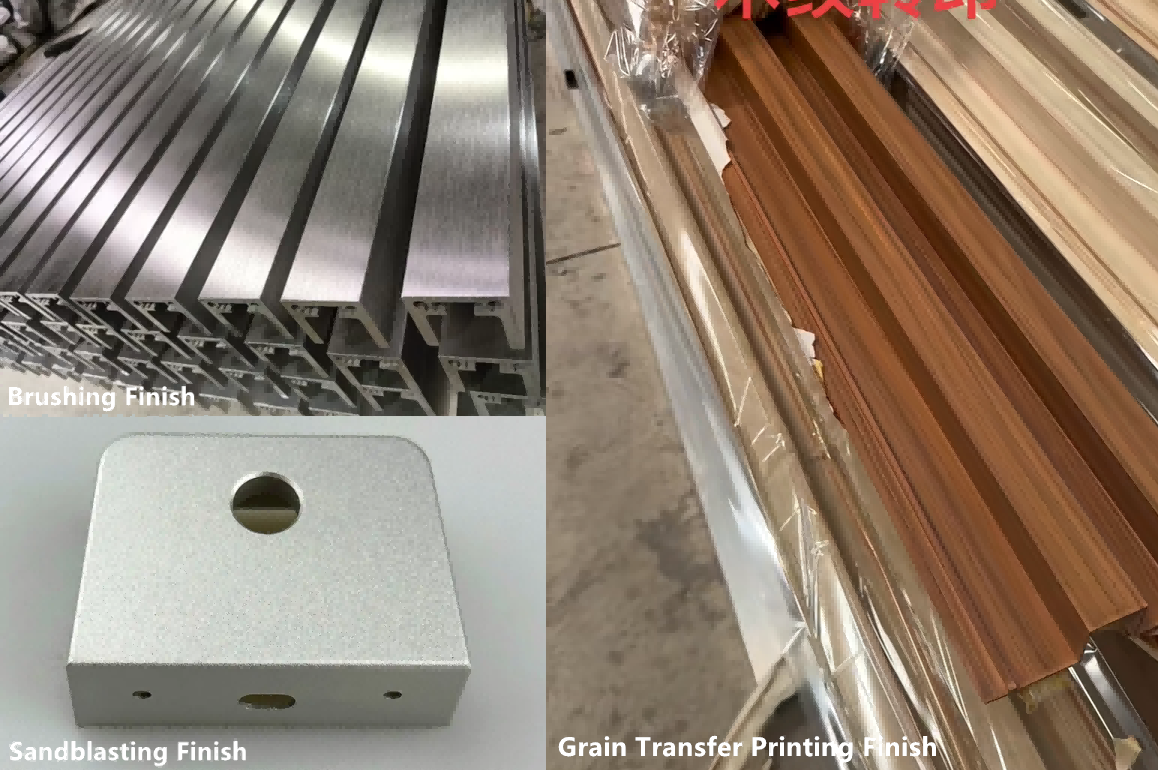
4. Chemical Surface Treatments: Passivation and Conversion Coatings
Applying a chemical surface treatment for aluminum extrusion profiles enhances the natural oxide layerof aluminum profiles or create a thin protective film, improving corrosion resistance and adhesion for subsequent coatings. Chemical processing offers a critical surface treatment for aluminum extrusion profiles operating in harsh environments.
Key Chemical Surface Treatments for Aluminum Profiles
| Treatment Type | Process Chemistry | Film Thickness | Corrosion Protection | Applications |
| Chromate Conversion | Hexavalent or trivalent chromium solutions | 0.05-0.5 μm | Excellent (CASS test 9+), self-healing properties | Aerospace, military, and marine aluminum profiles |
| Phosphate Conversion | Zinc or iron phosphate solutions | 0.1-1.0 μm | Good, improves paint adhesion | Automotive components, industrial machinery |
| Titanium-Zirconium Conversion | Chrome-free, RoHS-compliant solutions | 0.02-0.2 μm | Very good, eco-friendly alternative to chromate | Green building, medical, and food industries |
| Passivation | Nitric or citric acid solutions | 0.01-0.1 μm | Enhances natural oxide layer, reduces reactivity | Chemical processing, pharmaceutical equipment |
Benefits of Chemical Surface Treatments for Aluminum Profiles
- Enhanced corrosion resistance: Protects against pitting, crevice, and galvanic corrosion
- Improved adhesion: Creates a porous surface for better coating bonding
- Eco-friendly options: Chrome-free processes meet modern environmental standards
- Cost-effective: Thin films require minimal material and processing time
Applications of Chemically Treated Aluminum Profiles
- Marine industry: Boat hulls, deck fittings, and offshore platform components
- Chemical processing: Piping systems, storage tanks, and reactor vessels
- Medical devices: Surgical instruments, diagnostic equipment, and implantable devices
- Electronics: Printed circuit boards, heat sinks, and semiconductor manufacturing equipment
5. Advanced Surface Treatments for High-Performance Aluminum Profiles
When high durability is required, advanced surface treatment for aluminum extrusion profiles offers state-of-the-art protection beyond traditional methods, pushing the boundaries of what aluminum extrusion can achieve.
Cutting-Edge Surface Treatment Technologies for Aluminum Profiles
| Technology | Process Overview | Key Performance Metrics | Revolutionary Applications |
| Plasma Electrolytic Oxidation (PEO) | Electrochemical process creating ceramic-like oxide layer (50-200 μm) | Hardness 1000-2000 HV, corrosion resistance 1000+ hours salt spray | Aerospace components, high-performance automotive parts, medical implants |
| Nano-Ceramic Coating | Sol-gel process applying 10-100 nm ceramic layer | Thermal conductivity 200-250 W/m·K, corrosion resistance 2000+ hours salt spray | LED lighting, heat sinks, electronic packaging |
| Organic Acid Anodizing | Replaces sulfuric acid with eco-friendly organic acids | 20-50% energy reduction, improved color consistency | Green building, sustainable manufacturing, consumer electronics |
| Self-Healing Coatings | Microcapsules with healing agents activated by damage | 90% recovery of corrosion protection after scratch | Automotive exteriors, marine equipment, architectural cladding |
| UV-Cured Coatings | Solvent-free polymers cured with ultraviolet light | 90% VOC reduction, 30% faster processing | High-volume production, food packaging, medical devices |
Benefits of Advanced Surface Treatments for Aluminum Profiles
- Unmatched performance: Superior hardness, corrosion resistance, and thermal properties
- Sustainability: Reduced energy consumption, lower environmental impact
- Design flexibility: Enables new applications for aluminum extrusion in high-stress environments
- Longevity: Extended service life reduces replacement frequency and lifecycle costs
Applications of Advanced Surface Treated Aluminum Profiles
- Aerospace: Aircraft fuselage components, engine parts, and interior structures
- Renewable energy: Wind turbine blades, solar panel frames, and battery storage systems
- Medical technology: Orthopedic implants, surgical tools, and diagnostic equipment
- Automotive: Electric vehicle battery housings, motor components, and lightweight structural parts
Vanway-Tech丨 Premium Quality Extrueded Aluminum Profiles Manufacturer and Exporter From China Since 2015

Ready to optimize your project? Talk to Vanway Tech engineers and get your custom aluminum extrusion sample started.
Comparative Analysis: Choosing the Right Surface Treatment for Your Aluminum Profile Project
To help you choose the best surface treatment for aluminum extrusion profiles, here is a comprehensive performance comparison, here’s a comprehensive comparison of the most popular methods:
| Performance Metric | Anodizing (Type II) | Powder Coating (PVDF) | Mechanical Brushing | Chemical Passivation | PEO Coating |
| Corrosion Resistance | Excellent (500-1000h salt spray) | Superior (1000-2000h salt spray) | Moderate (100-300h salt spray) | Good (300-500h salt spray) | Exceptional (2000+h salt spray) |
| Wear Resistance | Good (Type II), Excellent (Type III) | Moderate (2-4H pencil) | Low to Moderate | Low | Exceptional (1000+ HV) |
| Color Options | Limited (dyeable, 50+ colors) | Unlimited (solid, metallic, textured) | Limited (natural aluminum tones) | None (transparent) | Limited (natural gray/black) |
| Film Thickness | 5-25 μm | 50-150 μm | 0 μm (texture only) | 0.01-0.5 μm | 50-200 μm |
| Environmental Impact | Low (no VOCs, recyclable) | Very Low (no VOCs, overspray recycled) | Low (minimal waste) | Medium (chemical disposal) | Medium (energy-intensive) |
| Cost (per m²) | $8-15 | $10-20 | $3-8 | $2-5 | $25-50 |
| Lifespan (Outdoor) | 15-20 years | 20-30 years | 5-10 years | 10-15 years | 30+ years |
| Best For | Architectural, electronics, marine | High-end architecture, coastal areas | Decorative, interior applications | Pre-treatment, chemical environments | Aerospace, high-performance industrial |
Step-by-Step Guide: Surface Treatment for Aluminum Extrusion Profiles
- Define Performance Requirements: Identify critical factors like corrosion resistance, wear resistance, thermal conductivity, and electrical insulation for your aluminum profile application.
- Assess Environmental Conditions: Consider exposure to saltwater, UV radiation, chemicals, temperature fluctuations, and humidity levels.
- Determine Aesthetic Needs: Choose color, texture, gloss level, and reflectivity requirements for your aluminum extrusion project.
- Evaluate Budget Constraints: Balance initial treatment costs with long-term maintenance expenses and expected lifespan.
- Check Regulatory Compliance: Ensure compliance with industry standards (RoHS, REACH, AAMA, etc.) and local building codes.
- Consult with Aluminum Extrusion Experts: Partner with experienced manufacturers like Vanway-Tech to leverage their expertise in selecting the optimal surface treatment for your specific application.
Conclusion: Elevating Aluminum Profile Performance with the Right Surface Finish
Aluminum extrusion surface finishing is a critical step in maximizing the value, durability, and functionality of aluminum profiles across industries. From anodizing’s natural protection to powder coating’s vibrant colors, mechanical finishing’s texture, chemical treatment’s corrosion resistance, and advanced technologies like PEO’s ceramic-like performance, each method offers unique benefits for specific applications.
By understanding the technical parameters, performance characteristics, and ideal use cases of each surface treatment, you can make informed decisions that enhance your aluminum profile projects’ performance, aesthetics, and lifespan. For specialized applications or complex requirements, collaborating with a trusted aluminum extrusion partner ensures you select the ideal surface treatment for aluminum extrusion profiles tailored to your project requirements., whether for architectural, automotive, electronic, or industrial applications.
Frequently Asked Questions (FAQ)
Q1: What is the best surface treatment for aluminum extrusion profiles used outdoors? For extreme outdoor or high-UV environments, PVDF (Fluoropolymer) liquid coating or Super Durable Powder Coating compliant with AAMA 2605 / AAMA 2604 standards is recommended. For marine or coastal regions requiring metal feel, Type III Hardcoat Anodizing or Trivalent Chromate Conversion provides exceptional saltwater corrosion protection.
Q2: How thick should anodizing be on aluminum profiles? Standard decorative and indoor anodizing (Type II) typically ranges from 5 to 25 μm. For heavy-duty industrial or abrasive applications (Type III Hardcoat), a thickness of 25 to 100 μm is applied to ensure high surface hardness.
Q3: Can aluminum extrusion profiles be both mechanically finished and anodized? Yes. Mechanical finishing (such as brushing or sandblasting) is commonly used as a pre-treatment before anodizing. Brushing creates a satin texture, while sandblasting removes die lines and creates a uniform matte finish prior to the anodizing process.
Q4: What is the difference between anodizing and powder coating for aluminum profiles? Anodizing is an electrochemical process where the oxide layer grows directly from the aluminum base, providing superior wear resistance and a natural metallic feel without peeling. Powder Coating applies a polymer resin layer over the aluminum, offering an almost unlimited range of solid/textured colors and higher impact resistance.
Q5: Are surface treatments for aluminum profiles RoHS and REACH compliant? Yes. Modern chemical surface treatments use Trivalent Chromium (TCP) or chrome-free (Titanium-Zirconium) passivation processes that are fully RoHS and REACH compliant, eliminating toxic hexavalent chromium.
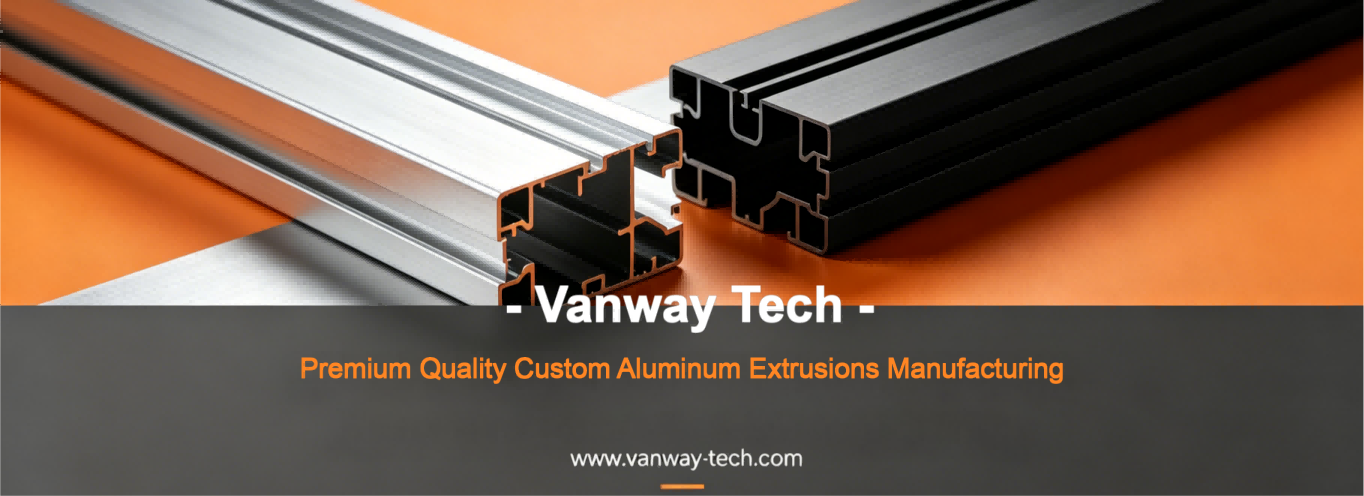
Contact With Vanway Tech Team for Premium Aluminium Extrusion Products!
Enquire with UsConnect with Vanway Tech Team for Premium Aluminium Extrusion Products.
Contact InfoWe are looking forward to hearing from you!
-
Email: info@vanway-tech.com
-
Address: No. 588, Wuyi South Road, CSJ Moldware Town, Wujin, Changzhou, Jiangsu, China
Scan Below Codes to Contact Us Immediately.