Vanway Precision Materials Tech Co.,Ltd


Aluminum Profile Alloys & Tempers: Complete Types, Properties & Applications Guide
Aluminum Profile Alloys & Tempers play a critical role in modern engineering, offering an unbeatable combination of lightweight strength, corrosion resistance, and design flexibility. The performance of these profiles is primarily determined by two key factors: alloy composition and heat treatment temper. This guide explores the most commonly used aluminum alloys for extrusion, their temper designations, mechanical properties, and ideal applications, helping you make informed material selections for your projects.
Understanding Aluminum Profile Alloys & Tempers
The Alloy Numbering System
To better understand aluminum profile alloys & tempers, note that aluminum alloys are classified using a four-digit numbering system established by the Aluminum Association and ISO standards:
- 1xxx Series: 99%+ pure aluminum (excellent corrosion resistance, low strength)
- 2xxx Series: Copper as the main alloying element (high strength, poor corrosion resistance)
- 3xxx Series: Manganese as the main alloying element (moderate strength, good formability)
- 5xxx Series: Magnesium as the main alloying element (excellent corrosion resistance, weldable)
- 6xxx Series: Magnesium and silicon as main alloying elements (balanced strength, extrudability, and corrosion resistance)
- 7xxx Series: Zinc as the main alloying element (highest strength, aerospace applications)
- 8xxx Series: Other elements (e.g., lithium, iron) as main alloying agents
Temper Designation Explained
Temper designations follow the alloy number with a dash and describe the thermal or mechanical treatment applied to achieve specific properties:
- F: As fabricated (no special treatment after shaping)
- O: Annealed (softest state, maximum ductility)
- H: Strain-hardened (cold worked)
- H1: Strain-hardened only
- H2: Strain-hardened and partially annealed
- H3: Strain-hardened and stabilized
- T: Heat-treated (solution heat treatment followed by aging)
- T4: Solution heat-treated and naturally aged
- T5: Artificially aged after cooling from hot working
- T6: Solution heat-treated and artificially aged (maximum strength)
- T651: T6 with stress relief by stretching
Common Aluminum Profile Alloys & Tempers for Extrusions
6xxx Series Alloys: The Workhorses of Extrusion
When evaluating aluminum profile alloys & tempers, The 6xxx series (magnesium-silicon alloys) dominates the market due to their exceptional balance of extrudability, strength, corrosion resistance, and cost-effectiveness.
| Alloy | Key Composition | Primary Properties | Most Common Tempers |
| 6063 | Mg: 0.45-0.9%, Si: 0.2-0.6% | Excellent extrudability, superior surface finish, good anodizing response | T5, T6, T4 |
| 6061 | Mg: 0.8-1.2%, Si: 0.4-0.8%, Cu: 0.15-0.4%, Cr: 0.04-0.35% | Higher strength than 6063, good machinability, weldable | T6, T651, T4 |
| 6005/6005A | Mg: 0.4-0.6%, Si: 0.6-0.9% | Stronger than 6063, easier to extrude than 6061 | T5, T6 |
| 6082 | Mg: 0.6-1.2%, Si: 0.7-1.3%, Mn: 0.4-1.0% | High strength, excellent mechanical properties, European standard equivalent to 6061 | T6, T651 |
| 6463 | Mg: 0.45-0.9%, Si: 0.2-0.6% (lower iron content) | Superior surface finish, “architectural” alloy for polished applications | T5, T6 |
6063: The Architectural Standard
Among various aluminum profile alloys & tempers, 6063 is the most widely used alloy for architectural applications, including window frames, door systems, curtain walls, and decorative extrusions. Its exceptional extrudability allows for complex cross-sections, while its high silicon content ensures excellent anodizing results with uniform color and luster. The T5 temper is standard for most architectural uses, providing a good balance of strength (yield strength: 160-180 MPa) and dimensional stability.
6061: The Industrial Workhorse
6061 offers higher strength than 6063 (yield strength: 240-270 MPa in T6 temper) and is preferred for structural applications requiring greater load-bearing capacity. Common uses include:
- Industrial machine frames and workbenches
- 3D printer frames and CNC machine components
- Transportation equipment (trailer frames, vehicle components)
- Solar panel mounting systems and renewable energy structures
Other Commonly Used Extrusion Alloys
| Alloy Series | Key Advantages | Typical Applications |
| 3003 (3xxx) | Excellent corrosion resistance, good formability, moderate strength | Heat exchangers, chemical equipment, decorative trim, sign frames |
| 5052 (5xxx) | Superior corrosion resistance (marine environments), weldable | Boat building, marine components, liquid storage tanks, architectural panels |
| 2024 (2xxx) | High strength, good fatigue resistance | Aerospace structures, aircraft components, high-stress applications (requires corrosion protection) |
| 7075 (7xxx) | Ultra-high strength (yield strength: 500+ MPa in T6), good fatigue resistance | Aerospace, defense, high-performance sports equipment, precision machinery |
| 7020 (7xxx) | Good extrudability for high-strength applications | Heavy-duty structural components, automotive crash structures |
Key Heat Treatment Tempers and Their Applications


T5 Temper: The Most Common for General Use
As one of the key aluminum profile alloys & tempers options, the T5 temper involves cooling from the extrusion process followed by artificial aging without solution heat treatment. It offers:
- Strength: Moderate (6063-T5: 160-180 MPa yield strength)
- Cost-effectiveness: Lower production cost than T6
- Dimensional stability: Excellent for long profiles
- Ideal applications: Architectural frames, general-purpose structures, non-critical mechanical components
T6 Temper: Maximum Strength for Structural Applications
When comparing aluminum profile alloys & tempers for heavy loads, the T6 temper is achieved through solution heat treatment (heating to 520-540°C), rapid quenching, and artificial aging at 170-180°C. It provides:
- Strength: Maximum achievable for the alloy (6061-T6: 240-270 MPa yield strength)
- Hardness: Significantly higher than T5
- Fatigue resistance: Improved for dynamic load applications
- Ideal applications: Load-bearing structures, industrial machinery, transportation components, high-stress applications
T4 Temper: Formability with Potential for Further Processing
T4 temper involves solution heat treatment and natural aging at room temperature. It offers:
- Ductility: High (excellent for bending, forming, and fabrication)
- Strength: Increases over time with natural aging
- Ideal applications: Components requiring post-extrusion forming, then aging to achieve higher strength
H-Tempers: Strain-Hardened Alloys
H-tempers are used for non-heat-treatable alloys (1xxx, 3xxx, 5xxx series) where strength is increased through cold working:
- H14: Quarter-hard (3003-H14: yield strength ~145 MPa)
- H16: Half-hard (3003-H16: yield strength ~170 MPa)
- H18: Full-hard (3003-H18: yield strength ~200 MPa)
- Ideal applications: Heat exchangers, roofing, siding, and components requiring high formability with moderate strength
Applications for Aluminum Profile Alloys & Tempers
Architectural and Building Applications
| Application | Recommended Alloy | Preferred Temper | Key Reason |
| Window and door frames | 6063, 6463 | T5 | Excellent extrudability, surface finish, anodizing response |
| Curtain walls and facades | 6063, 6005A | T5 | Lightweight, corrosion-resistant, aesthetic appeal |
| Structural supports | 6061, 6082 | T6 | Higher strength for load-bearing capacity |
| Interior decorative elements | 6063, 6463 | T5 | Superior surface finish, customizable appearance |
Industrial and Manufacturing Applications
| Application | Recommended Alloy | Preferred Temper | Key Reason |
| Machine frames and workbenches | 6061, 6082 | T6 | High strength, rigidity, and stability |
| Automation equipment | 6061, 6005A | T6 | Precision, durability, and compatibility with fasteners |
| 3D printer and CNC frames | 6061 | T6 | High strength-to-weight ratio, dimensional accuracy |
| Conveyor systems | 6063, 6061 | T5/T6 | Lightweight, corrosion-resistant, easy assembly |
Transportation and Renewable Energy Applications
| Application | Recommended Alloy | Preferred Temper | Key Reason |
| Electric vehicle components | 6061, 6082 | T6 | Lightweight, high strength, crash resistance |
| Solar panel mounting systems | 6063, 6061 | T5/T6 | Corrosion resistance, structural integrity, cost-effectiveness |
| Battery pack housings | 6061, 6082 | T6 | Thermal conductivity, strength, lightweight design |
| Marine components | 5052, 5083 | H32/H34 | Superior corrosion resistance in saltwater environments |
Aerospace and High-Performance Applications
| Application | Recommended Alloy | Preferred Temper | Key Reason |
| Aircraft structures | 2024, 7075 | T3/T4, T6 | Ultra-high strength, fatigue resistance |
| Satellite components | 7075, 7020 | T6 | Lightweight, high strength, dimensional stability |
| High-performance sports equipment | 7075, 6061 | T6 | Strength-to-weight ratio, durability |
Reach out to the Vanway Tech engineering team to discuss flexible batch options or get a straightforward quote on your next run.

How to Choose the Right Alloy and Temper
Step 1: Define Your Application Requirements
- Mechanical needs : Evaluate aluminum profile alloys & tempers based on required yield strength, tensile strength, and stiffness
- Environmental conditions: Consider exposure to corrosion, temperature extremes, and UV radiation
- Fabrication requirements: Evaluate extrudability, formability, machinability, and weldability
- Aesthetic needs: Surface finish, anodizing compatibility, and color retention
- Cost constraints: Balance performance with budget considerations
Step 2: Match Requirements to Alloy Properties
Use the following decision framework to select the right aluminum profile alloys & tempers for your needs:
- High strength needed: 6061-T6, 6082-T6, 7075-T6 (aerospace)
- Excellent surface finish: 6063, 6463 (architectural)
- Corrosion resistance critical: 5052, 6063, 3003 (marine/chemical)
- Weldability required: 5052, 6063, 6061 (avoid 2xxx and 7xxx series)
- Complex extrusions: 6063, 6463 (superior flow properties)
Step 3: Verify with Industry Standards
Ensure your selection meets relevant industry standards:
- ASTM B221: Standard specification for aluminum and aluminum-alloy extruded bars, rods, and profiles (North America)
- DIN EN 755: European standard for aluminum and aluminum alloy extruded profiles
- ISO 6892: Tensile testing of metallic materials
- AAMA 606.2: Voluntary specification for aluminum extrusions for architectural applications
Frequently Asked Questions (FAQ)
What is the difference between 6061 and 6063 aluminum profiles?
6061 contains more magnesium and copper, making it stronger (yield strength: 240-270 MPa in T6) than 6063 (160-180 MPa in T6). When selecting aluminum profile alloys & tempers, 6063 offers better extrudability and surface finish, ideal for architectural applications, while 6061 is preferred for structural and industrial uses requiring higher strength.
Why is T5 temper more common than T6 for architectural applications?
T5 temper is more cost-effective to produce (no separate solution heat treatment) and provides sufficient strength for most architectural uses. It also offers excellent dimensional stability for long profiles, reducing warping and twisting issues common in T6 temper with complex cross-sections.
Can I weld 6061-T6 aluminum profiles?
Yes, 6061-T6 can be welded using TIG or MIG welding processes, but the heat-affected zone will experience a reduction in strength (returning to T4 or O temper). Post-weld heat treatment (PWHT) can restore some strength, but it may affect dimensional stability.
How does the anodizing process affect different aluminum alloys?
6xxx series alloys (especially 6063 and 6463) produce the best anodizing results with uniform, clear, or colored finishes due to their magnesium-silicon composition. 5xxx series alloys may develop a yellowish tint, while 2xxx and 7xxx series require special pre-treatment for acceptable results.
What is the shelf life of aluminum profiles in different tempers?
Properly stored aluminum profiles (indoors, dry, protected from moisture) have an indefinite shelf life. T4 temper profiles will naturally age over time, increasing strength but reducing formability. T5 and T6 tempers are stable and maintain their properties indefinitely when stored correctly.
Conclusion
Choosing the right aluminum alloy and temper is critical for optimizing performance, cost, and longevity of your extrusion projects. The 6xxx series (6063, 6061, 6082) offers the best balance for most applications, with T5 and T6 tempers providing the ideal combination of strength and cost-effectiveness. For specialized needs, 3xxx, 5xxx, 2xxx, and 7xxx series alloys offer unique properties to meet specific requirements, from corrosion resistance to ultra-high strength.
By understanding aluminum profile alloys & tempers and their relationship with application requirements, you can confidently select the perfect aluminum profile for your project, ensuring optimal performance and value.
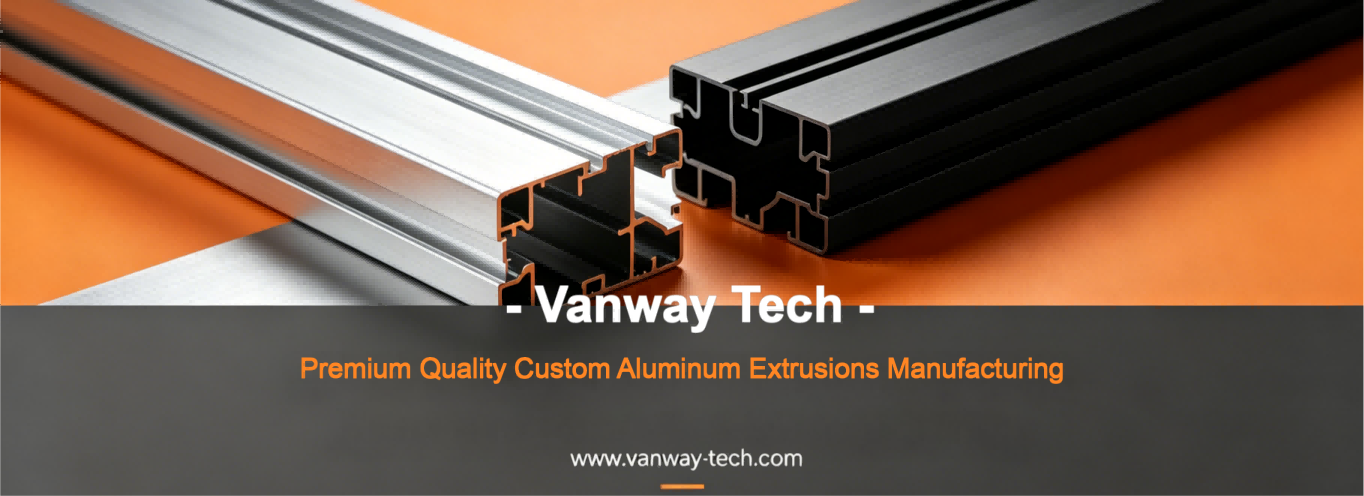
Contact With Vanway Tech Team for Premium Aluminium Extrusion Products!
Enquire with UsConnect with Vanway Tech Team for Premium Aluminium Extrusion Products.
Contact InfoWe are looking forward to hearing from you!
-
Email: info@vanway-tech.com
-
Address: No. 588, Wuyi South Road, CSJ Moldware Town, Wujin, Changzhou, Jiangsu, China
Scan Below Codes to Contact Us Immediately.