Vanway Precision Materials Tech Co.,Ltd


The Complete Guide to Aluminum Extrusion Process: 10 Steps from Billet to Finished Profile
The Complete Guide to the Aluminum Extrusion Process: 10 Steps from Billet to Finished Profile
Manufacturers transform raw aluminum alloy into functional, complex shapes through the advanced extrusion process. First, you can think of this process like squeezing toothpaste from a tube. However, instead of toothpaste, our factory uses solid aluminum cylinders, and instead of a plastic nozzle, we use custom-machined steel dies.
Therefore, Understanding the aluminum extrusion process and how an extrusions manufacturer operates helps you optimize your product designs. Below, we detail the 10 exact steps our factory takes to turn a raw billet into a precision-engineered profile.
Step 1: Engineers Prepare and Heat the Die
To begin, our engineering team designs and machines a custom H13 steel die. Next, technicians place this die into a pre-heating oven. Specifically, they heat the die to approximately 400°C to 500°C. Because this pre-heating prevents the solid steel from cracking when the press applies massive pressure later.
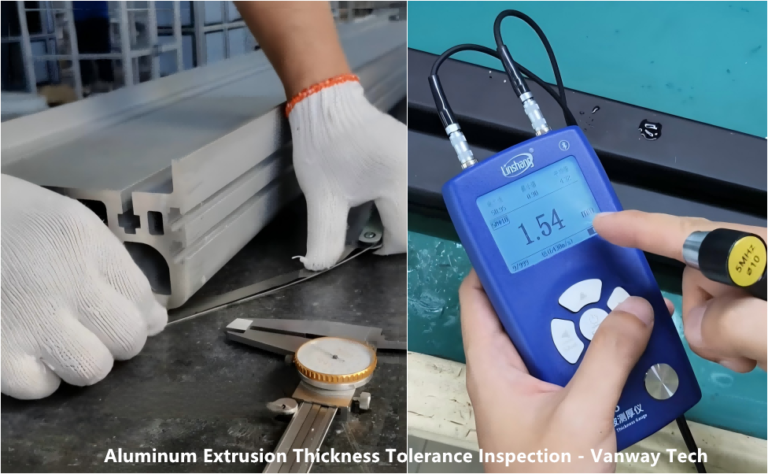
Overcoming tolerance challenges in the aluminum extrusion process starts with precise die control and temperature management.
Step 2: The Furnace Heats the Solid Billet
Meanwhile, a specialized furnace heats the raw aluminum billet. A billet is a solid, cylindrical block of aluminum alloy. Consequently, the furnace raises the billet’s temperature until it becomes malleable, but not liquid.
For instance, different alloys require different heating profiles. You can verify global material standards through the The Aluminum Association.
| Alloy Grade | Billet Heating Temperature Range | Material State During Extrusion | Primary Application |
| 6063 | 420°C – 500°C | Soft, easily flows through complex dies | Architectural, Heatsinks |
| 6061 | 450°C – 520°C | Firm, requires higher press pressure | Structural Framing |
| 7075 | 460°C – 530°C | Very stiff, difficult to extrude | Aerospace Components |
Step 3: Operators Apply Lubrication
Once the billet reaches the correct temperature, a mechanical transfer system moves it to the extrusion press. Before loading the billet, operators apply a specialized lubricant (release agent) to the billet and the extrusion ram. As a result, this lubricant prevents the hot aluminum from sticking to the steel machinery.
Step 4: The Hydraulic Ram Applies Pressure
Next, the factory’s heavy-duty hydraulic ram pushes a dummy block against the hot billet. Specifically, this ram generates up to 5,000 tons of forward pressure. Therefore, the intense pressure forces the aluminum block directly against the container walls and the steel die.
Step 5: The Profile Emerges from the Die
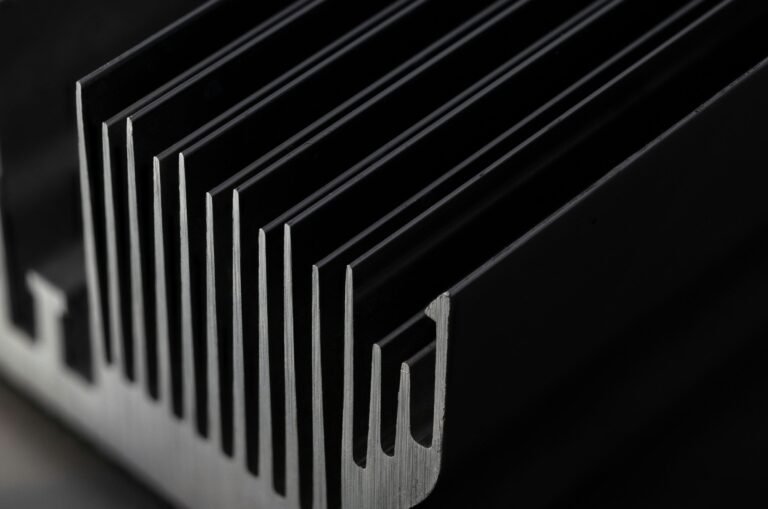
Consequently, the solid aluminum has nowhere else to go. The ram forces the material through the precise openings of the die. Instantly, a key phase of the aluminum extrusion process is complete as the metal emerges on the other side as a fully formed profile.Thus, the shape matches your exact design specifications.
Step 6: Cooling Systems Quench the Profile
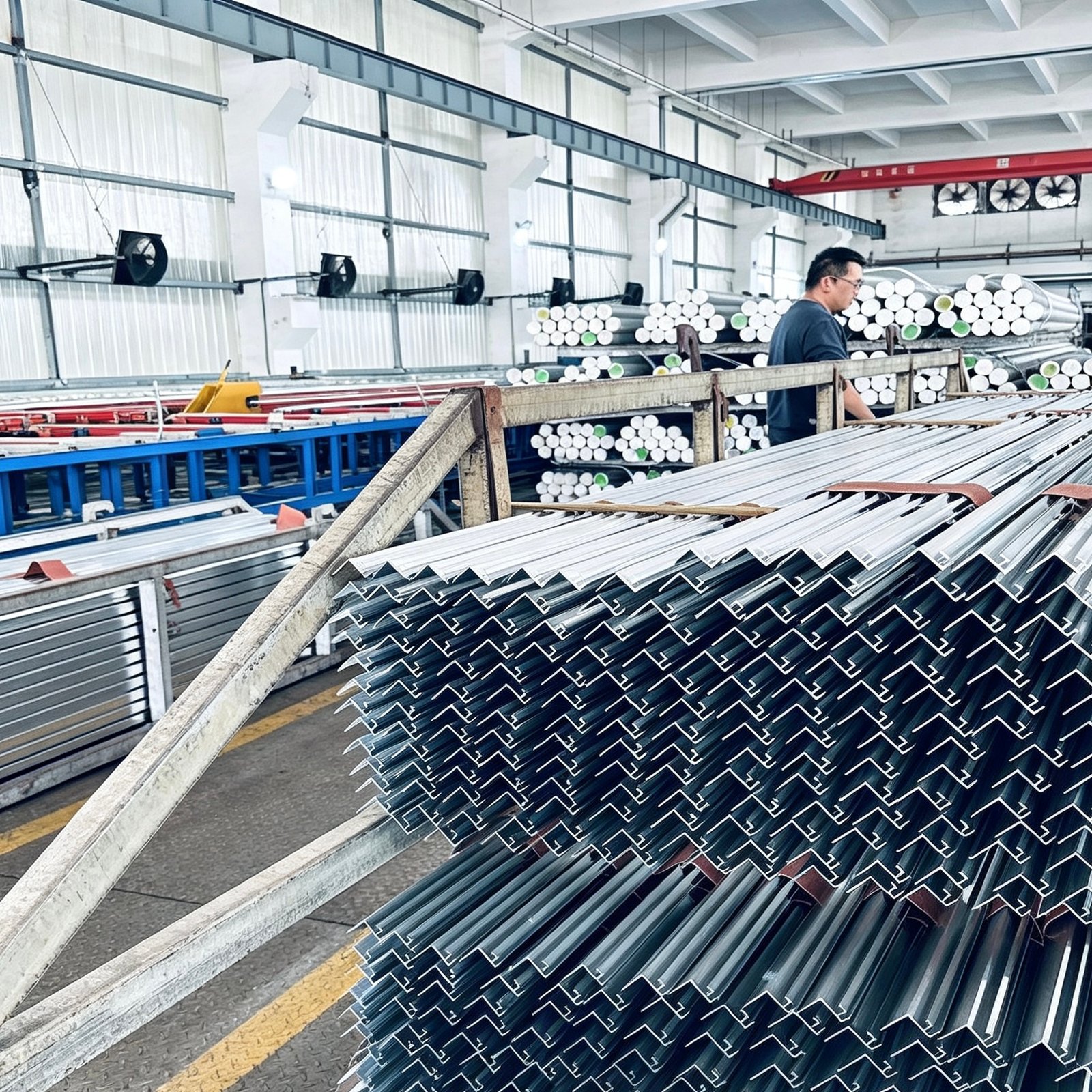
Immediately after the profile exits the die, it requires rapid cooling. Therefore, the extrusion press pushes the hot profile along a run-out table. Simultaneously, advanced quenching systems cool the metal. Because rapid cooling locks in the metallurgical properties of the alloy.
| Quenching Method | Cooling Medium | Cooling Speed | Best For (Alloy Types) |
| Air Quenching | High-velocity industrial fans | Moderate | 6063 (Thin walls, complex shapes) |
| Water Spray | Pressurized water nozzles | Fast | 6061 (Thicker structural profiles) |
| Water Bath | Complete submersion | Very Fast | High-strength alloys (2000 & 7000 series) |
Step 7: The Hot Saw Shears the Extrusion
Eventually, the emerging profile reaches the end of the run-out table.At this point, a specialized hot saw shears the profile to separate it from the continuous aluminum extrusion process.Even so, the aluminum remains relatively warm and soft at this stage.
Step 8: The Stretcher Straightens the Metal
After the shearing process, mechanical pullers transfer the profiles onto a specialized cooling bed. Once the profiles reach room temperature, operators move them to the stretcher. Next, the stretching machine grips both ends of the profile and pulls it forcefully. As a result, this pulling action perfectly straightens the aluminum and realigns its internal grain structure.
Step 9: The Finish Saw Cuts Profiles to Length
Following the stretching phase, conveyor belts transport the perfectly straight profiles to the finish saw. Here, technicians program the saw to cut the extrusions into their final commercial lengths (typically 3 to 6 meters). Furthermore, our factory guarantees strict length tolerances according to ASTM International Standards.
Step 10: Aging Ovens Harden the Aluminum
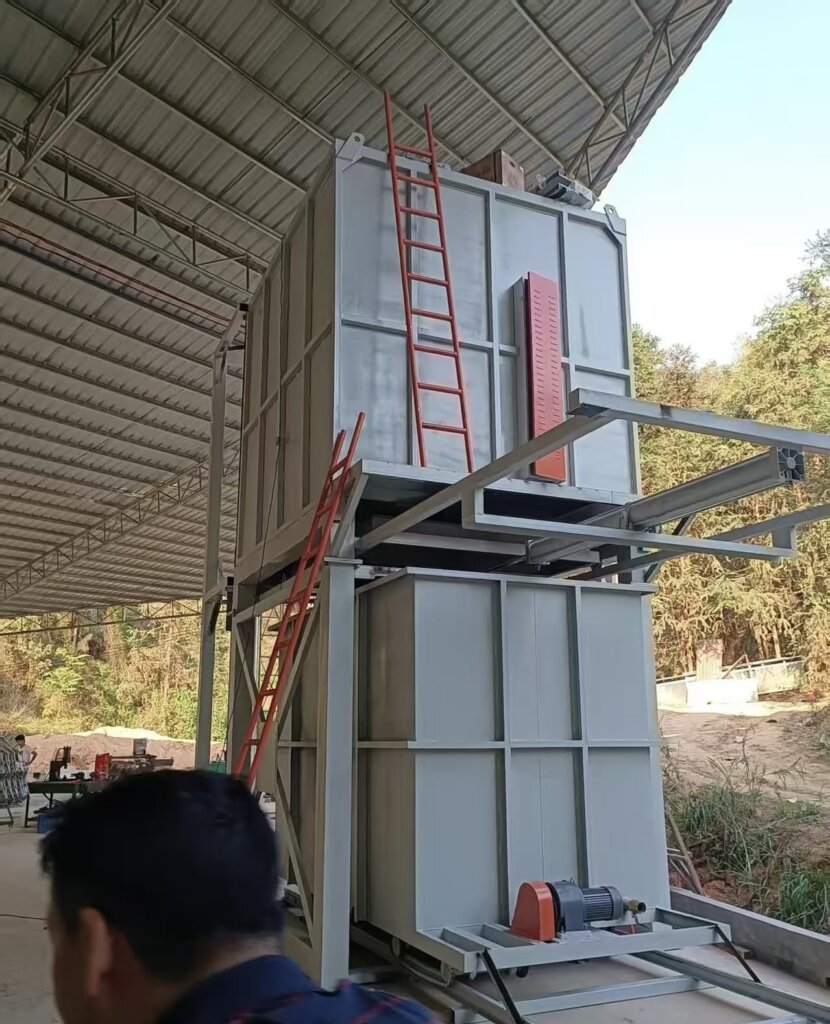
Finally, the aluminum profiles still need to reach their maximum mechanical strength. Therefore, factory workers load the cut profiles into large aging ovens. During this artificial aging process, the heat precisely aligns the alloy’s internal particles. Ultimately, this step transitions the aluminum from a softer T4 temper to a fully hardened T5 or T6 temper.
| Temper State | Aging Temperature | Approximate Time in Oven | End Result |
| T5 | 175°C – 185°C | 6 to 8 hours | Good strength, excellent surface finish |
| T6 | 185°C – 195°C | 8 to 10 hours | Maximum structural strength |
In conclusion, every step of the aluminum extrusion process requires absolute precision.When you partner with a dedicated aluminum extrusions factory, you ensure that your profiles meet exact tolerances from the first billet to the final cut.n aluminum extrusion process can produce higher precision, better surface and more durable extruded aluminum profile to meet the growing demand of construction, automation, new energy and transportation industries worldwide.
Vanway-Tech: Your trusted partner for superior
Aluminum Extrusion Solutions from China.
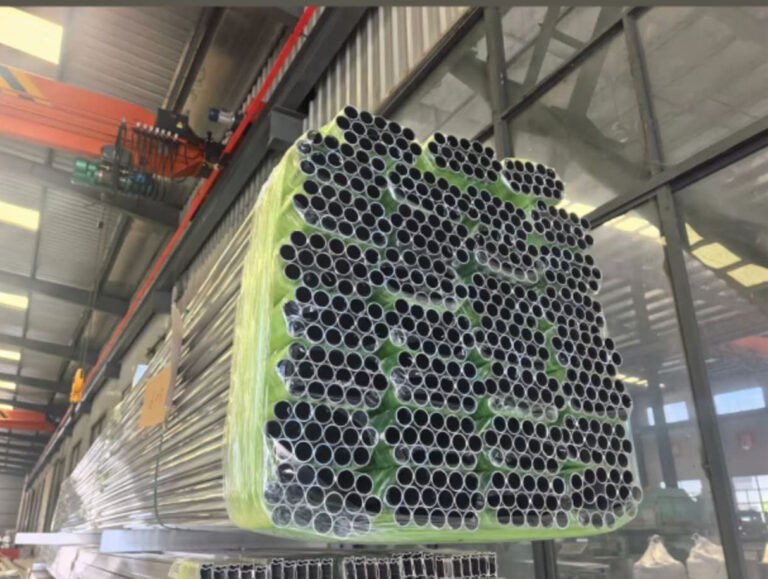
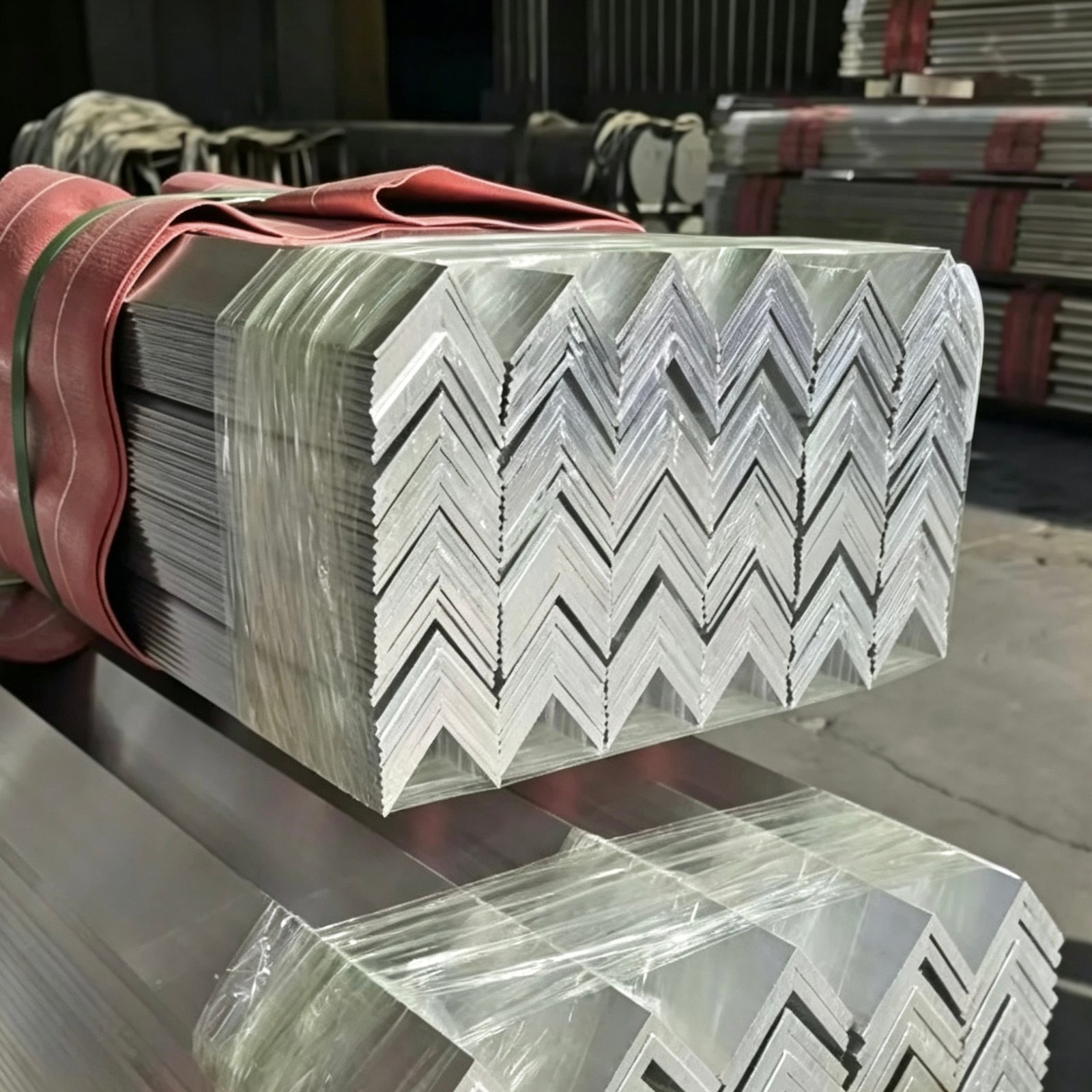
Vanway Precision Materials Tech Co.,Ltd is a trusted leader in mastering the full aluminum extrusion process to deliver premium aluminum profiles.It offers custom, industrial, architectural options, angle, channels, tubes and precision extruded products for industrial, infrastructure and downstream sectors.
With years of expertise in aluminium fabrication and extrusion design, we are committed to continuous innovation in custom aluminium profile solutions, delivering reliable OEM & ODM services across the entire aluminium industry. We provide precision anodized and powder coated aluminium extrusions to meet the diverse demands of international clients in construction, renewable energy, automotive, furniture and machinery sectors.
Established in 2015, our advanced production base is equipped with cutting-edge extrusion presses, CNC machining centers and automated production lines, supported by strict quality control systems for dimensional accuracy and durability. This ensures our custom aluminium extrusions feature superior precision and efficiency, ideal for curtain wall frames, door & window systems, industrial assembly lines and infrastructure reinforcements.
Contact Vanway Tech today for tailored one-stop aluminium extrusion solutions.
FAQ Section
Q1: What is the ideal temperature for heating aluminum billets during extrusion?
A: The heating temperature typically ranges between 420°C and 530°C (788°F to 986°F), depending on the alloy grade. For example, standard 6063 alloy is usually heated to around 420°C–500°C to achieve optimal malleability without melting the material.
Q2: What is the difference between T5 and T6 temper in aluminum extrusions?
A: The primary difference lies in the cooling method and tensile strength. T5 temper is cooled from an elevated temperature shaping process and artificially aged, offering good strength and excellent surface quality. T6 temper undergoes solution heat treating, quenching, and artificial aging, resulting in maximum mechanical strength and structural hardness.
Q3: Why is quenching necessary immediately after aluminum extrusion?
A: Quenching (rapid cooling via air fans, water spray, or water bath) rapidly drops the temperature of the extruded profile. This process “locks in” the desired metallurgical grain structure and alloy elements in solution, preventing premature precipitation and ensuring the metal reaches its intended strength during the subsequent aging process.
Q4: How does stretching improve the quality of extruded aluminum profiles?
A: After cooling, extrusions often have natural twists or minor bends. The stretching process mechanically pulls both ends of the profile to straighten line deviations, relieve internal stresses, and align the grain structure, ensuring precise dimensional tolerances.
Q5: Can custom dies be reused for multiple aluminum extrusion production runs?
A: Yes. Custom steel dies (typically machined from durable H13 tool steel) are designed for long-term production. With proper pre-heating, maintenance, and controlled extrusion pressure, a single die can produce thousands of meters of high-precision aluminum profiles.
Contact With Vanway Tech Team for Premium Aluminium Extrusion Products!
Enquire with UsConnect with Vanway Tech Team for Premium Aluminium Extrusion Products.
Contact InfoWe are looking forward to hearing from you!
-
Email: info@vanway-tech.com
-
Address: No. 588, Wuyi South Road, CSJ Moldware Town, Wujin, Changzhou, Jiangsu, China
Scan Below Codes to Contact Us Immediately.