Vanway Precision Materials Tech Co.,Ltd


Global Aluminum Ingot Price Forecast & Market Analysis: July 2026
By: The Vanway Tech Metallurgical Engineering Team
Reviewed by: Quality Control Division, Vanway Precision Materials Tech Co., Ltd.
Published: June 29th,2026
Global Aluminum Ingot Price Trends & Market Forecast (July 2026)

Contact Vanway Tech today for your custom anodizing aluminum extrusions manufacturing.
Aluminum Prices Outlook July 2026: LME Trends & Market Analysis
Executive Summary As we head into July 2026, the global aluminum ingot market is characterized by a complex interplay of tight structural supply, soaring green economy demand, and macroeconomic volatility. Supported by a long-term shift toward electric vehicles (EVs), solar photovoltaic (PV) systems, and a steady recovery in infrastructure, aluminum demand remains exceptionally robust. However, severe capacity ceilings, high energy costs, and escalating regulatory trade barriers continue to bottleneck production. For July 2026, London Metal Exchange (LME) aluminum prices are projected to consolidate within a bullish high-end range of $3,400 to $3,800/ton, maintaining an overall upward momentum.
1. Key Driving Factors: Bullish Market Catalysts
A. Structural Supply Deficits
The global primary aluminum market has entered a phase of sustained structural deficits in 2026, with supply shortfalls estimated at hundreds of thousands of tons. China, the world’s largest aluminum producer, has officially hit its strict 45-million-ton domestic capacity ceiling. Consequently, the market can no longer rely on rapid Chinese expansion to cushion surges in global demand.
B. Persistent Energy Crises & Smelter Disruptions
Electricity constitutes a major fraction of aluminum smelting costs, making production highly vulnerable to energy constraints:
- European Hurdles: High industrial electricity tariffs in Europe continue to make the restarting of previously mothballed smelters economically unviable.
- Unexpected Outages: Key international supply hubs, such as the Mozal smelter in Mozambique, have faced recurring power grid vulnerabilities, drastically tightening immediate spot availability.
C. Boom in Green Technology Sectors
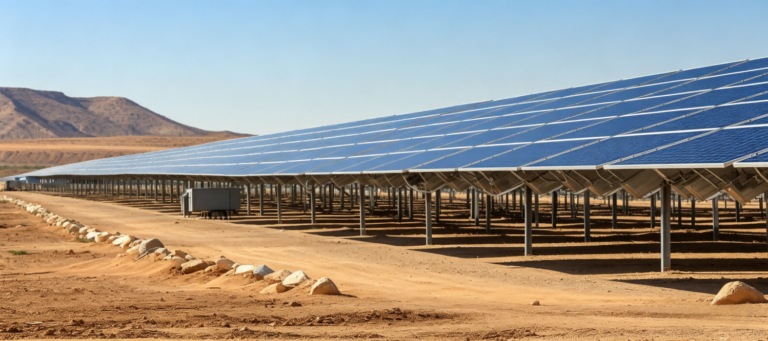
The green transition is the primary engine behind aluminum’s 2026 price surge. Automakers heavily prioritize high-purity aluminum extrusions for vehicle lightweighting to maximize EV battery ranges. Concurrently, massive investments in global solar panel racking systems and green power grids provide a highly resilient price floor.
D. The “Green Premium” & CBAM Trade Barriers
The European Union’s Carbon Border Adjustment Mechanism (CBAM) enters a pivotal enforcement phase in 2026, introducing a permanent “Green Premium” into Western markets. Low-carbon aluminum, smelted using renewable hydro-power, is commanding massive premiums—ranging from $100 to $200 per ton—as multinational corporations scramble to secure compliant supply chains. US tariffs and CBAM regulations are further polarizing global pricing.
2. Downside Risks: Bearish Indicators to Watch
While the bulls currently dominate the market, procurement managers should monitor several cooling factors throughout July:
- Manufacturing PMI Slowdowns: Any contraction or stagnation in global manufacturing Purchasing Managers’ Index (PMI) data—particularly out of China or the Eurozone—could temporarily dampen industrial and construction-grade aluminum consumption.
- Forthcoming Capacity Additions: Emerging production facilities in Indonesia and India are scheduled to slowly scale up primary aluminum and alumina outputs later in the year, which may ease long-term market psychology.
- DXY Dollar Index Volatility: Central bank monetary policy decisions and interest rate shifts in mid-2026 will directly influence commodities. A sudden strengthening of the US Dollar (DXY) could cap LME price breakouts.
3. July 2026 Technical Outlook & Price Ranges
According to mid-year revised projections from leading financial institutions like Goldman Sachs and Morgan Stanley, LME aluminum has firmly broken above its historic $3,000/ton resistance level. The overall market sentiment for July is constructive, treating dips as buying opportunities.
💡 Key Technical Levels for July 2026:
- Core Support Zone ($3,400 – $3,500): This serves as a formidable price floor. Even in the event of profit-taking or weaker industrial data, strong physical spot buying is expected to trigger a rebound here.
- Projected Median Pivot ($3,591): The estimated short-term equilibrium price where heavy volume trading and position rolling will occur during the first half of July.
- Major Resistance Ceiling ($3,800 – $4,000): The target for momentum traders. If China experiences additional environmental curtailments or if major shipping lines face further geopolitical blockades, aluminum will directly retest the $3,800 barrier by late July.
4. Strategic Sourcing & Hedging Recommendations
- Procurement Timing: Because July prices are expected to consolidate at elevated levels with new capacities looming later in Q3/Q4, buyers should avoid panic-buying during sudden intraday price spikes.
- Account for Physical Premiums: Import managers in emerging markets (such as South Africa, Egypt, and South America) must aggressively factor local physical delivery premiums, freight surcharges, and green verification costs into their final budgets.
- Utilize Hedging Tools: Downstream manufacturing firms are highly encouraged to leverage LME forward contracts or Contracts for Difference (CFDs) to lock in raw material costs for the remainder of Q3, neutralizing the risk of a sudden 5%–7% price surge caused by unexpected power grid failures at major smelters.
When engineers design structural profiles for harsh outdoor environments, marine applications, or high-end electronics, material degradation poses a significant threat. Raw aluminum naturally forms a thin oxide layer; however, this spontaneous barrier fails to withstand severe atmospheric corrosion or heavy mechanical wear. Consequently, industrial projects demand a controlled, heavy-duty electrochemical upgrade.
To prevent these common problems, top-tier product designers always choose anodized aluminum extrusions.
This simple guide explains our clear quality standards, how the chemical process works, and the exact testing methods Vanway Tech uses to give your products perfect surface protection.
What is Anodizing for Aluminum Extrusions?
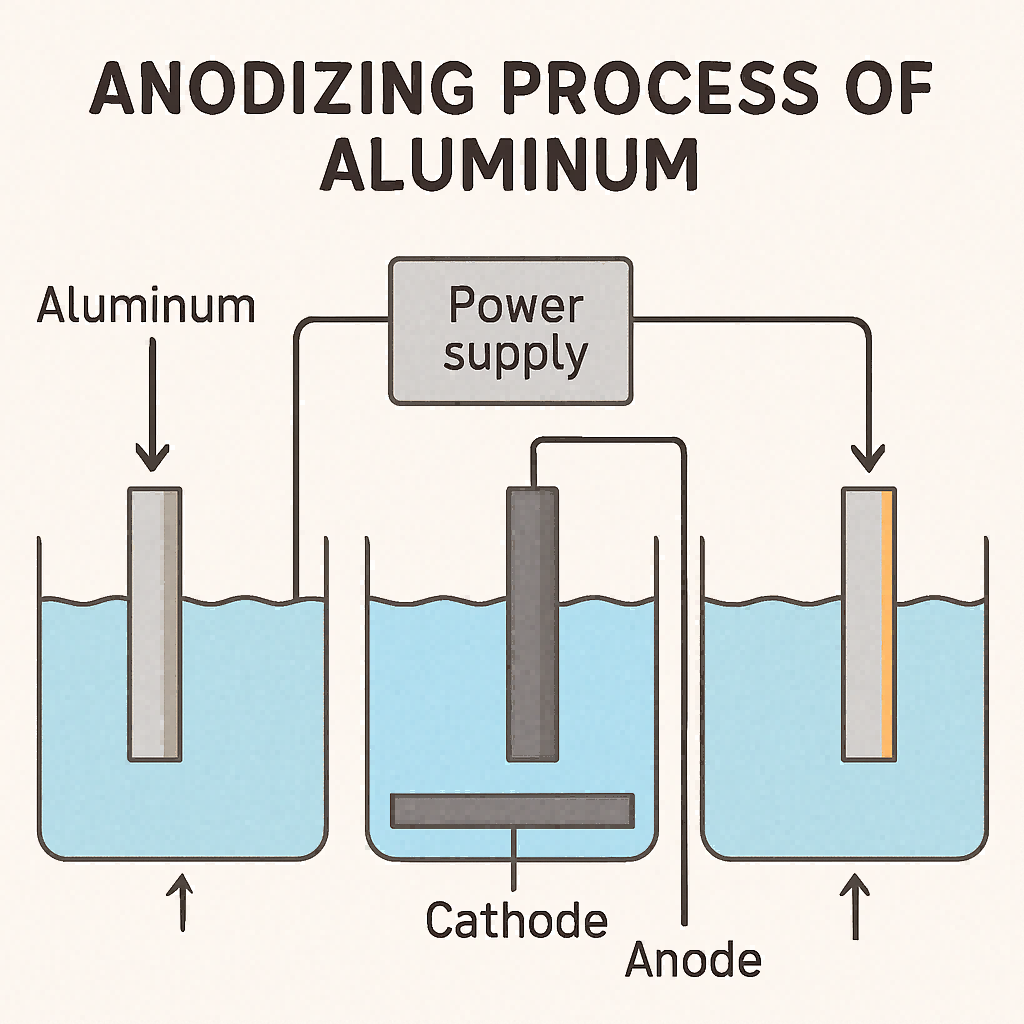
Anodizing does not mean applying a topical layer of paint or plating to the metal surface. Instead, it represents an electrochemical process that converts the aluminum substrate itself into a highly durable, non-hazardous aluminum oxide ($Al_2O_3$) layer.
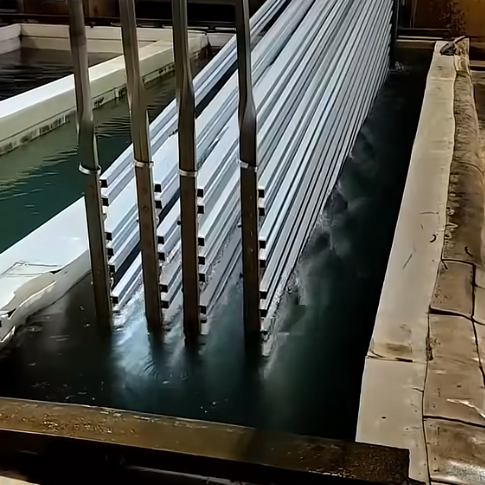
During production, technicians submerge the precision-cut profiles into an acid electrolyte bath. By passing a direct electrical current (DC) through the solution, the aluminum profile acts as the anode (the positive electrode). Consequently, the process releases oxygen ions from the electrolyte. These ions immediately bond with the surface aluminum atoms, creating a fully integrated, porous crystalline structure that integrates seamlessly with the underlying metal.
Critical Global Engineering Standards
To ensure that this oxide film can survive punishing real-world stresses, global engineering bodies enforce strict regulatory frameworks. Rather than relying on guesswork, global procurement teams evaluate manufacturers against certified parameters.
Specifically, industrial projects rely on the following international standards to govern film thickness, density, and corrosion benchmarks:
- Military Specifications: Aerospace and heavy-duty defence applications mandate strict compliance with the U.S. Military Specification MIL-A-8625. This standard strictly defines Type II (Sulfuric Acid Anodizing) and Type III (Hardcoat Anodizing) structural criteria.
- Architectural Standards: The architectural and construction sectors rely heavily on the AAMA 611 Standard Specification, which dictates performance requirements for clear and colored anodic coatings on architectural aluminum.
- General Testing Metrics: Laboratories worldwide evaluate overall oxide coating weight, thickness uniformity, and abrasion degradation by utilizing the comprehensive ASTM B244 Testing Framework.
Anodizing Standards Of Aluminum Extrusions
| Finish Designation | Primary Regulatory Code | Target Film Thickness | Hardness Rating (Vickers) | Key Production Indicator | Main Benefit |
| Architectural Class II | AAMA 611 | 10 – 15 um | ~250 HV | Mid-level sulfuric bath | Cost-effective UV protection |
| Architectural Class I | AAMA 611 | 18 – 25 um | ~300 HV | Controlled ambient bath | High coastal weather resistance |
| Military Type II | MIL-A-8625 | 5 – 25 um | 250 – 350 HV | Dye-receptive porosity | Superior coloring and corrosion proofing |
| Military Type III (Hard) | MIL-A-8625 | 50 – 100 um | 600 – 700 HV | Low temp, high voltage | Extreme abrasion and wear resistance |
Primary Types of Anodizing Surface Finishes
Engineers can manipulate the chemical bath concentration, current density, and fluid temperature to produce distinctly different mechanical finishes. Vanway Tech specializes in executing these core variations.
1. Type II Anodizing (Standard Decorative & Protective)
Type II anodizing utilizes a sulfuric acid bath at room temperature to generate a clean, highly uniform oxide layer. Because the resulting layer is inherently porous before sealing, it accepts organic or inorganic dyes beautifully.
- Thickness Range: Typically measures between 8 microns to 25 microns ($\mu m$).
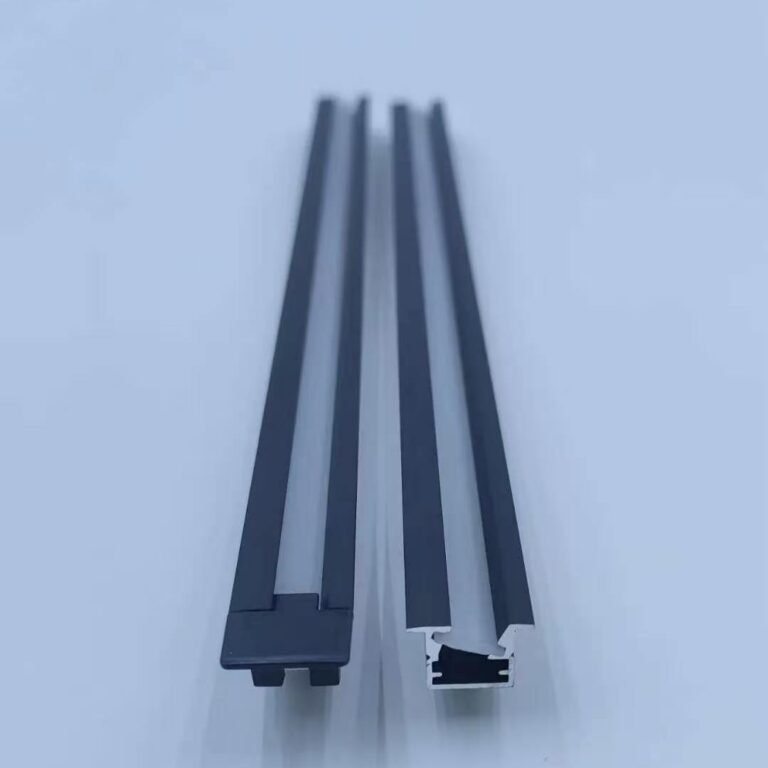
- Best Applications: Ideal for custom aluminum profiles used in consumer electronics, LED lighting channels, and architectural window frameworks where aesthetics and moderate corrosion resistance matter equally.
2. Type III Hardcoat Anodizing (Industrial Wear Resistance)
Hardcoat anodizing drops the electrolyte bath temperature close to freezing while significantly scaling up the electrical voltage. This aggressive approach accelerates oxide growth, forming an ultra-dense, highly compact ceramic-like exterior.
- Thickness Range: Reaches significantly deeper, typically running from 50 microns to over 100 microns ($\mu m$).
- Best Applications: Crucial for rugged heavy-machinery slides, aerospace valves, and high-load structural T-slot components that require maximum scratch and wear resistance.
3. Bright Dip Anodizing (High-Gloss Mirror Finish)
Prior to entering the electrochemical phase, technicians treat the aluminum with a specialized mixture of hot phosphoric and nitric acids. This chemical polishing removes microscopic surface imperfections, creating an intensely reflective finish.

How Vanway Tech Makes and Tests Anodized Aluminum Extrusions
As a fully certified, all-in-one aluminum extrusions manufacturer, Vanway Tech removes quality risks from your business. We handle every important step—from raw aluminum shaping to precision CNC cutting and final chemical finishing—inside our own highly checked factory.
Factory Capabilities
First, we use advanced, automated anodizing machines that carefully control the electricity and chemicals. This high-tech system allows us to complete large orders while keeping the exact same color and coating thickness on every single piece.
Second, we do all our drilling, milling, and punching before the aluminum goes into the chemical tanks. Because we do this, the protective layer completely covers every freshly cut edge, screw hole, and corner. As a result, your parts get total protection with no raw metal left exposed.
Simple Quality and Testing Methods
To meet our strict ISO 9001 quality rules, our testing team checks every batch of anodized parts using safe electronic tools and real-world stress tests.
1. Coating Thickness Test
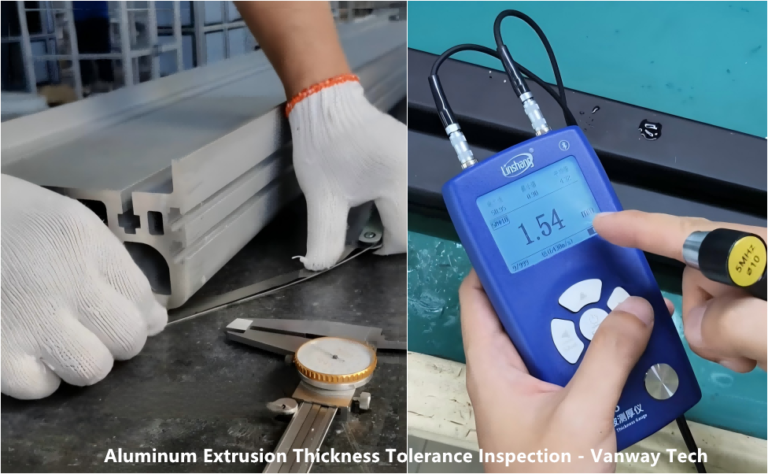
Our team uses smart electronic tools that follow the international ISO 2360 quality standard. This quick test instantly measures the thickness of the protective layer in microns. This guarantees your parts perfectly match your exact building or military project needs.
2. Salt Spray Test (Rust and Weather Test)
To see how your parts will handle decades of bad weather or salty sea air, we put samples inside a special testing room. We spray them continuously with strong saltwater, following the standard ASTM B117 rules. Our anodized parts easily last over 1,000 hours in this test without showing a single spot of rust.
3. Coating Weight Test (Acid Dissolution)
When your project needs extreme precision, we double-check the actual weight of the coating. We weigh a sample piece, use a safe acid mix to clean off the anodized layer, and weigh the bare metal again. This simple test tells us the exact weight of the coating per square meter, making sure it perfectly meets the ISO 3210 sealing quality standard.
Vanway Tech 丨A Trusted Global Expert Anodizing Aluminum Extrusions Manufacturing
Selecting the correct anodizing class requires careful material engineering that directly dictates your product’s field performance and lifespan. By partnering with Vanway Tech, you gain access to an experienced team of metallurgists who optimize your cross-sectional designs for flawless fluid drainage, uniform coating thickness, and structural integrity.
We proudly serve global OEMs in the renewable energy, automotive, and automation fields, delivering fully certified profiles that seamlessly pass international compliance audits including CE, RoHS, and SGS.
Do you want to shield your industrial components from premature field failure?
Explore our complete array of custom aluminum surface treatment options, or contact the technical experts at Vanway Tech today at info@vanway-tech.com to submit your engineering blueprints for a comprehensive, complimentary Design for Manufacturability (DFM) assessment.

Aluminum Extrusion Processing Capability of Vanway Tech’s
Contact With Vanway Tech Team for Premium Aluminium Extrusion Products!
Enquire with UsConnect with Vanway Tech Team for Premium Aluminium Extrusion Products.
Contact InfoWe are looking forward to hearing from you!
-
Email: info@vanway-tech.com
-
Address: No. 588, Wuyi South Road, CSJ Moldware Town, Wujin, Changzhou, Jiangsu, China
Scan Below Codes to Contact Us Immediately.