

Vanway Precision Materials Tech Co.,Ltd


Aluminum Extrusion Processing Capability
Aluminum Extrusion Processing Capability – Vanway Tech
I. Basic Forming Operations
Continuous Profile Generation
The Extrusion Phase
First and foremost, Vanway Tech initiates the manufacturing journey because this crucial step dictates the final geometric shape. Specifically, Vanway Tech executes the Aluminum Extrusion Process as its primary manufacturing method for the vast majority of industrial components. During the Aluminum Extrusion Process, Vanway Tech heavily loads heated aluminum billets into a powerful hydraulic press. Subsequently, Vanway Tech applies immense thrust, and therefore, the company pushes the softened metal through a precise steel die. As soon as Vanway Tech cools and straightens the material, the company consistently obtains continuous lengths of profiles exclusively through this highly efficient Aluminum Extrusion Process.
Technical Parameters for Extrusion
Furthermore, Vanway Tech strictly monitors the operational parameters during the Aluminum Extrusion Process because quality control remains paramount.
| Parameter Category | Standard Value / Range | International Standard Reference |
| Billet Heating Temperature | 400°C – 500°C | ISO 209:2007 (Aluminum Alloys) |
| Press Capacity | 600 – 5000 Tons | ASTM B221 (Extruded Profiles) |
| Quenching Method | Forced Air / Water Bath | Aluminum Association Standards |
II. Deep Processing and Machining
Physical Structure Alteration
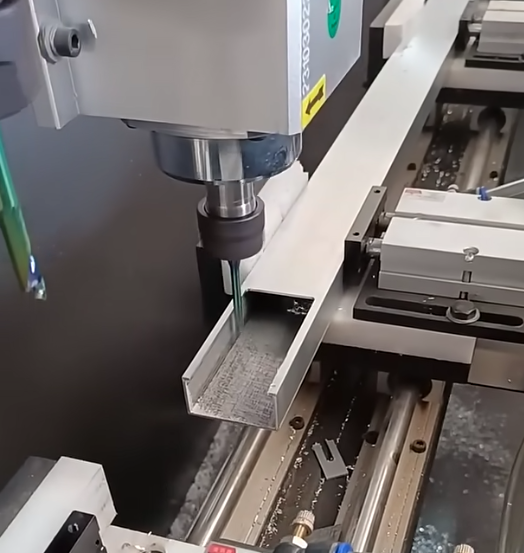
CNC Milling
In addition, whenever customers demand complex internal geometries, Vanway Tech rigorously utilizes CNC machining centers. Therefore, Vanway Tech actively mills, slots, and engraves the solid materials that it previously formed via the Aluminum Extrusion Process.
What we can do
Deep Processing and Machining
On Aluminum Extrusion
Vanway Precision Materials Tech Co.,Ltd
01.
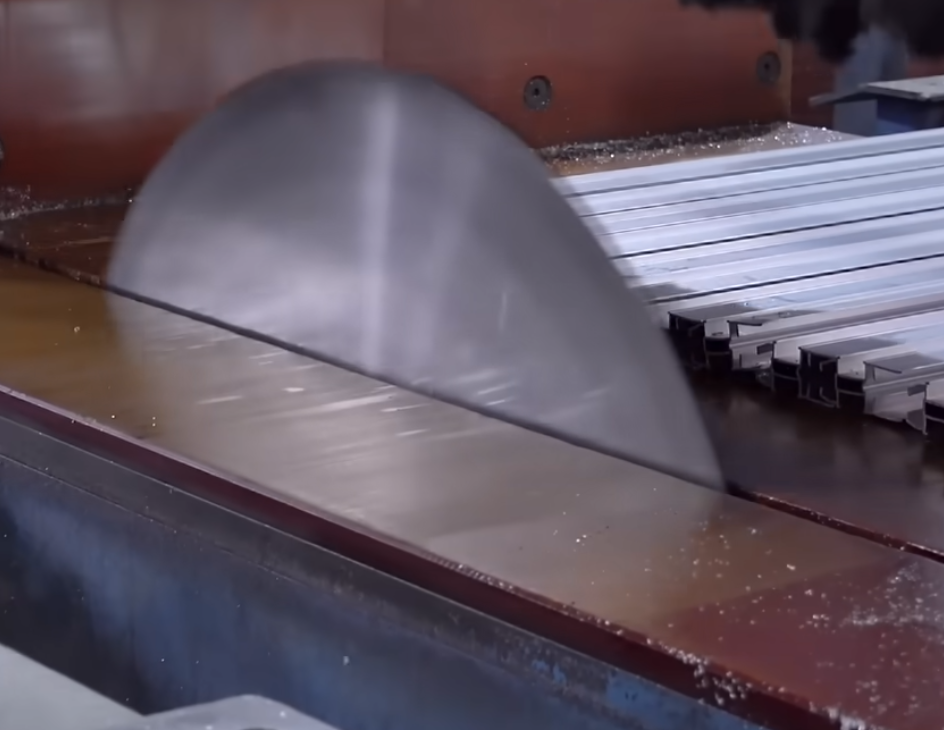
Precision Cutting
Furthermore, immediately after Vanway Tech completes the initial Aluminum Extrusion Process, the company vigorously advances to deep machining. Thus, Vanway Tech physically transforms the long raw materials into finished components that clients can directly assemble. Initially, Vanway Tech expertly uses precision double-head saws, and consequently, the company slices the long bars generated by the Aluminum Extrusion Process into exact measurements.
02.
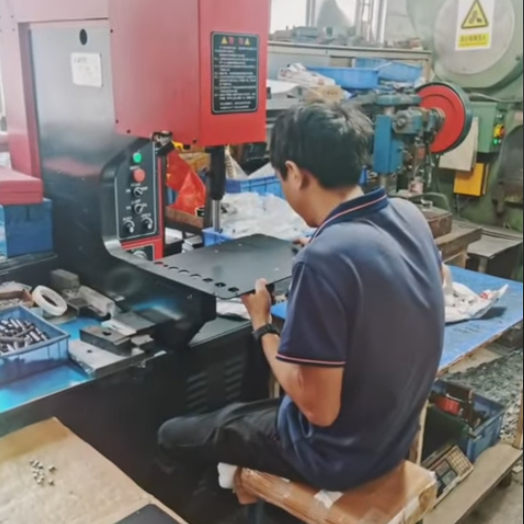
Stamping
Moreover, Vanway Tech vigorously operates automated punch presses alongside specialized molds because the company needs to rapidly punch functional holes and slots. Since this stamping method delivers extreme efficiency, Vanway Tech heavily relies on it to standardize the bulk outputs of the Aluminum Extrusion Process.
03.
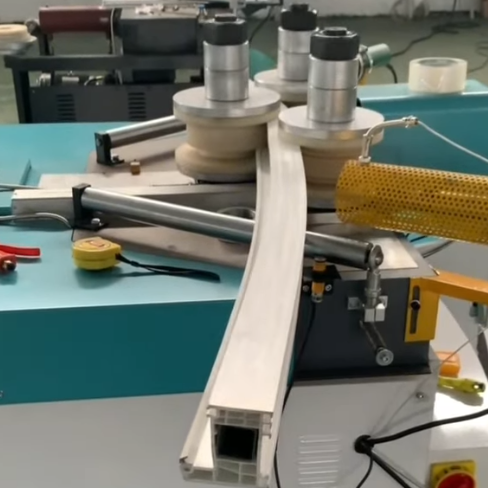
Bending
Meanwhile, for scenarios requiring curved structural frameworks, Vanway Tech expertly bends the profiles. By carefully supporting the interior cavities, Vanway Tech actively bends the standard outputs of the Aluminum Extrusion Process into specific arcs without ever causing surface wrinkles.
III. Surface Treatment Protection
Texture and Coating Application
Surface Treatment Protection
Anodizing
Finally, because raw aluminum oxidizes easily and remains relatively soft, Vanway Tech strictly applies advanced surface treatments right after it finalizes the Aluminum Extrusion Process and the subsequent cutting steps. Consequently, Vanway Tech significantly enhances the metal’s corrosion resistance and surface hardness. Following this, Vanway Tech conducts precise anodizing. Through controlled electrolysis, Vanway Tech artificially generates a dense oxide film, and moreover, the company dyes the material into elegant colors.
Sandblasting
To begin with, Vanway Tech frequently sandblasts the profiles. Vanway Tech shoots high-speed abrasives at the aluminum because the company wants to completely eliminate the mechanical lines that the Aluminum Extrusion Process naturally leaves behind.
Powder Coating
Additionally, Vanway Tech expertly sprays statically charged resin powder onto the profiles and subsequently bakes them at high temperatures. Therefore, Vanway Tech achieves a highly durable coating that protects the underlying material created by the Aluminum Extrusion Process.
Electrophoresis
Lastly, building directly upon the anodized foundation, Vanway Tech covers the surface with a transparent resin film via electrophoresis. Ultimately, Vanway Tech delivers a bright, ceramic-like surface that powerfully shields the final products of the Aluminum Extrusion Process against UV rays and harsh environments.
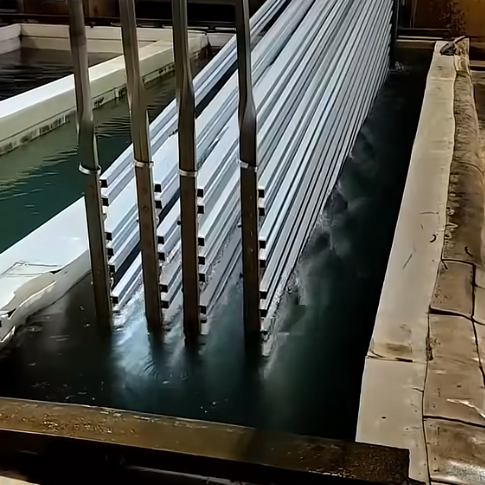
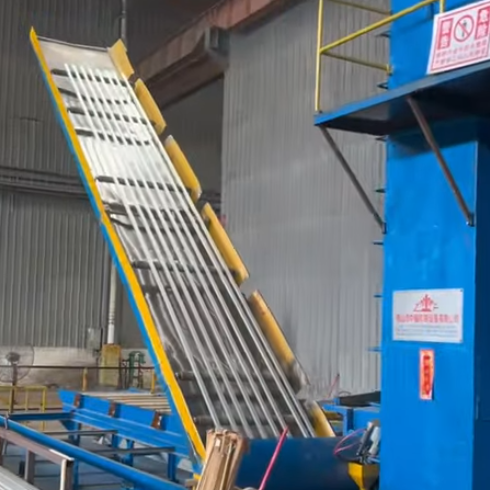
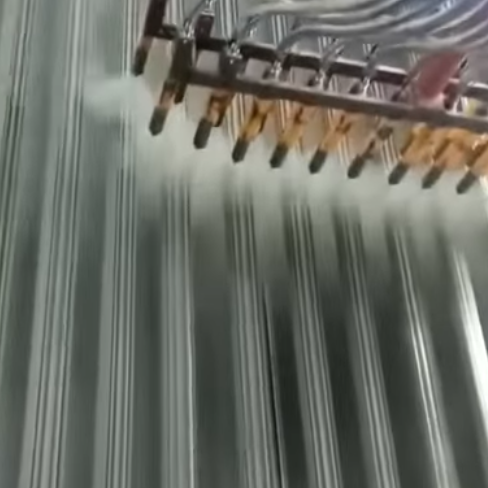
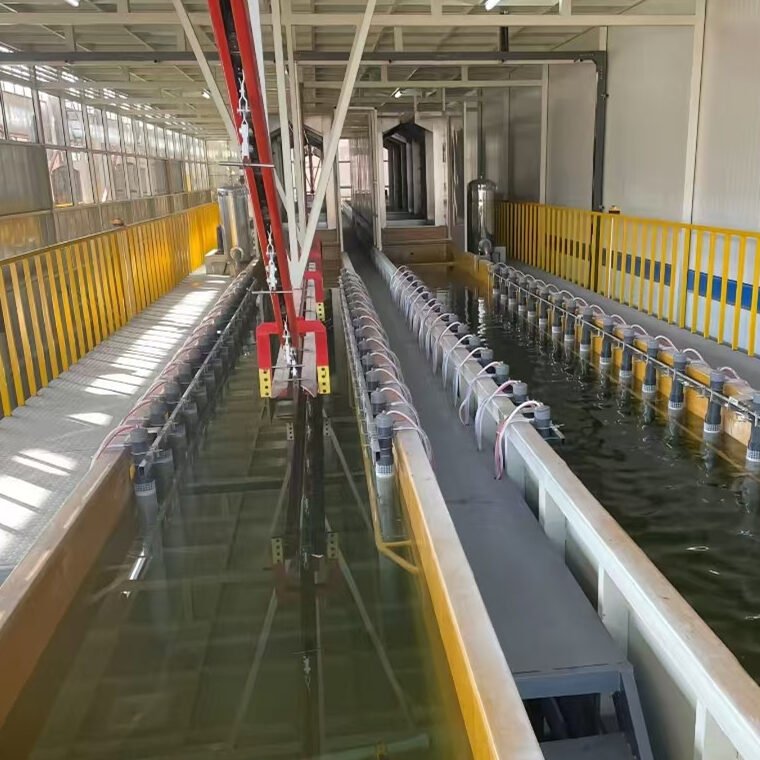
Anodizing Sandblasting Powder Coating Electrophoresis
What’s the difference between Anodizing and Electrophoretic Coating Process On Aluminum Extrusion Surface?
In the surface treatment of aluminum profiles, Anodizing and Electrophoretic Coating (Electrophoresis) are two highly mainstream and closely related technologies. In fact, the electrophoresis process is typically performed on top of an anodized base layer. While both methods aim to enhance corrosion resistance, wear resistance, and aesthetic appeal, they differ significantly in physical properties, visual texture, and application scenarios.
Here is a detailed breakdown of the differences and application comparisons between these two processing methods:
I. Processing Principles and Characteristics
- Anodizing: This is an electrochemical process. The aluminum profile is placed as an anode in an acidic electrolyte. When an electric current is applied, an oxidation reaction occurs on the surface of the aluminum substrate, naturally generating a dense, hard layer of aluminum oxide (Al₂O₃) film.
- Characteristics: The film layer “grows” directly out of the aluminum substrate, creating an exceptionally strong bond. It preserves the original metallic texture of the aluminum, and the surface typically features a matte or metallic luster.
- Electrophoresis: This process must generally be built upon the foundation of anodizing. After the profile completes anodizing (but before the sealing stage), workers submerge it into a tank of water-soluble resin paint. Driven by an electric field, charged resin particles uniformly adhere to and deposit onto the surface and into the pores of the anodized film. Finally, high-temperature baking cures the coating into a protective layer.
- Characteristics: Adding this extra resin coating gives the surface a warm, smooth luster akin to ceramics or piano lacquer. The paint film features excellent leveling properties, which effectively mask the extrusion lines on the aluminum surface.
II. Core Parameters and Performance Comparison
The following table outlines the direct differences in physical parameters and performance between the two processes:
| Comparison Dimension | Anodizing | Electrophoresis |
| Film Composition | Single inorganic aluminum oxide (Al₂O₃) film | Dual-layer structure: underlying oxide film + surface resin paint film |
| Appearance & Texture | Strong metallic feel, mostly matte or semi-gloss, slightly textured touch | High gloss (glossy or matte options available), ultra-smooth, warm texture |
| Typical Film Thickness | 10μm – 25μm | Total thickness 16μm – 30μm (including the underlying oxide film) |
| Surface Hardness | Extremely high (up to 200-300 HV), exceptional resistance to physical scratching | High (typically 2H – 3H pencil hardness), slightly lower than pure oxide film |
| Corrosion/Weather Resistance | Good, but susceptible to damage in strong acid/alkali or high salt spray environments | Excellent; dual-layer protection significantly enhances resistance to acids, alkalis, UV rays, and salt spray |
| Color Variety | Relies on electrolytic coloring; fewer color options (common: silver-white, bronze, black, champagne) | Richer color choices with highly uniform color depth; less prone to color variance |
| Production Cost | Moderate | Higher (involves more process steps, baking energy consumption, and paint material costs) |
III. Application Scenario Comparison
Due to these distinct variations in performance and appearance, industrial and consumer goods sectors utilize these methods for different applications:
1. Typical Applications of Anodizing
Because of its extremely high surface hardness, excellent heat dissipation, and stark technological metal aesthetic, anodizing excels in scenarios emphasizing functionality, wear resistance, or raw metallic finishes:
- 3C Electronics: Smartphone casings (such as classic all-metal unibodies), laptop shells, and tablet frames.
- Industrial Automation: Assembly line aluminum profile frames and machine equipment enclosure structures (usually silver-white or black anodized).
- Heat Dissipation Components: CPU heatsinks and LED lighting dissipation housings (the oxide film does not hinder, and can even assist, thermal radiation).
- Standard Construction Materials: Conventional indoor partitions, commercial storefronts, and standard window profiles.
2. Typical Applications of Electrophoresis
Due to its ultimate corrosion resistance, outstanding self-cleaning ability (the smooth surface resists dust accumulation), and premium lacquer texture, electrophoresis excels in harsh environments or high-end decorative scenarios:
- High-End System Doors & Windows: Sunroom structures and heavy-duty sliding doors for luxury residences (especially champagne electrophoresis, which delivers an understated luxury feel).
- Coastal & Humid Environments: Curtain wall profiles for seaside buildings and exterior louvers (due to extreme resistance to salt spray corrosion).
- Bathroom & Interior Decoration: Shower room borders and high-end wardrobe sliding rails (the smooth surface resists moisture and ensures a much quieter sliding action).
- Automotive Components: Premium roof racks or external trim pieces with strict weather-resistance requirements.
Summary
If you prioritize cost-effectiveness, scratch resistance, and a pure metallic industrial style, anodizing stands as the preferred choice. Conversely, if your product must withstand sun and rain in harsh outdoor environments, or demands a smooth, warm, and premium texture, electrophoresis serves as the superior upgrade solution.
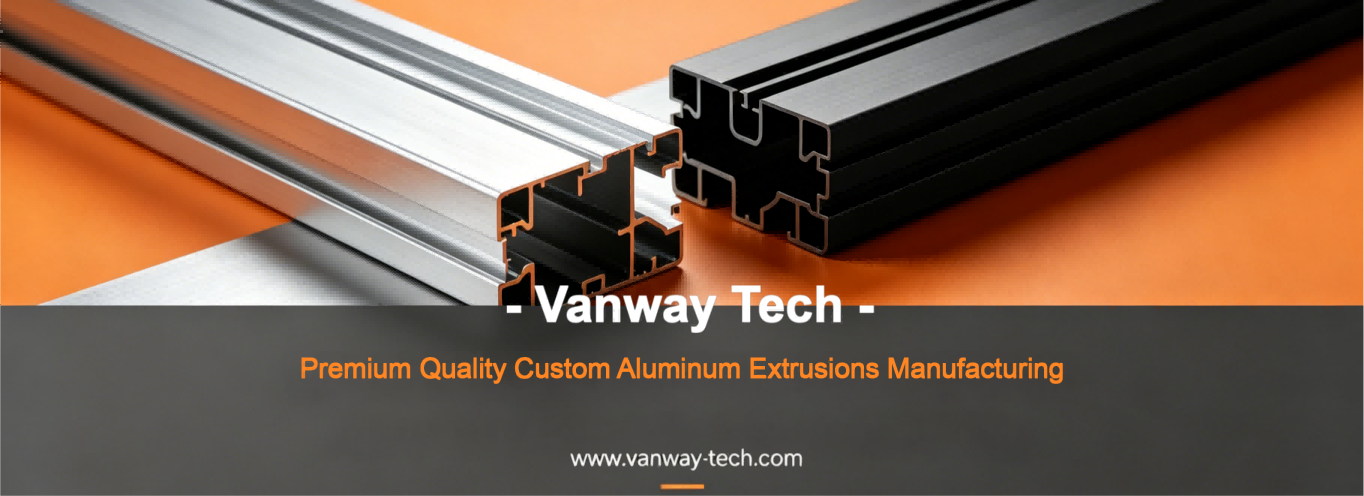
Vanway-Tech: Your trusted partner for superior
Aluminum Extrusion Solutions from China.
Vanway Precision Materials Tech Co.,Ltd is a trusted leader in premium aluminum extrusion profiles. It offers custom, industrial, architectural options, angle, channels, tubes and precision extruded products for industrial, infrastructure and downstream sectors.
With years of expertise in aluminium fabrication and extrusion design, we are committed to continuous innovation in custom aluminium profile solutions, delivering reliable OEM & ODM services across the entire aluminium industry. We provide precision anodized and powder coated aluminium extrusions to meet the diverse demands of international clients in construction, renewable energy, automotive, furniture and machinery sectors.
Established in 2015, our advanced production base is equipped with cutting-edge extrusion presses, CNC machining centers and automated production lines, supported by strict quality control systems for dimensional accuracy and durability. This ensures our custom aluminium extrusions feature superior precision and efficiency, ideal for curtain wall frames, door & window systems, industrial assembly lines and infrastructure reinforcements.
Contact Vanway Tech today for tailored one-stop aluminium extrusion solutions.